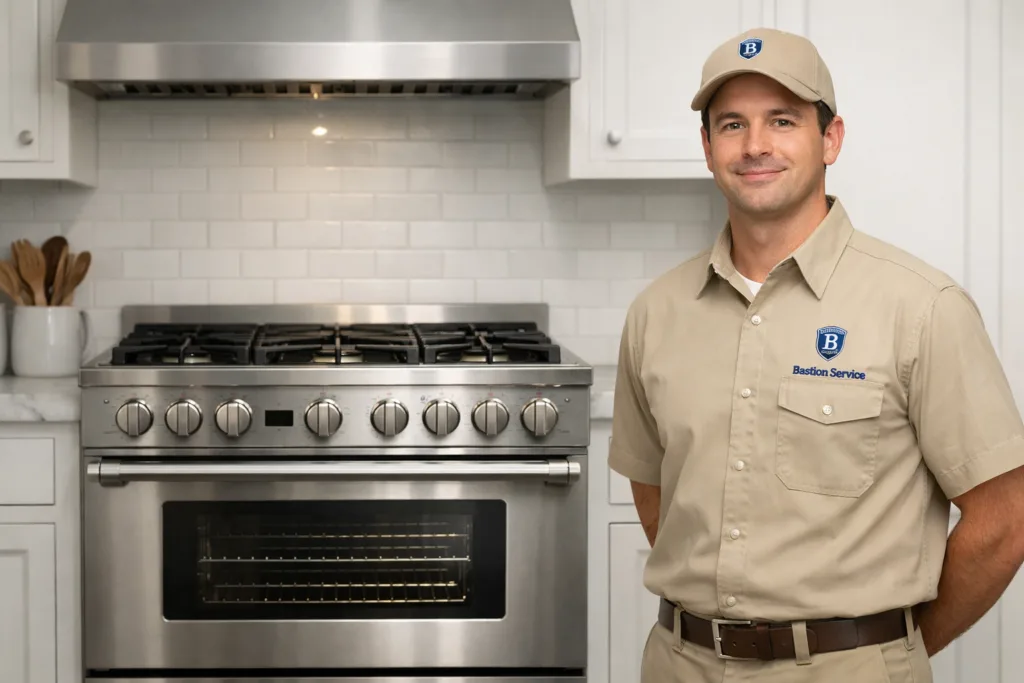
Oven problems rarely stay limited to one symptom. A Viking unit that starts with slow preheating may soon show uneven baking, longer cook times, or temperature drift that makes familiar recipes unreliable. The key is matching the symptom pattern to the actual failed component instead of assuming every heating issue comes from the same part.
Common Viking oven symptoms and what they can mean
Several different faults can create similar cooking problems. That is why useful service begins with testing the heating system, sensor readings, controls, and related electrical connections.
Not heating at all
If the oven will not heat, the cause may be different depending on whether the model is electric or gas. Electric units may have a failed bake element, broil element, wiring issue, thermal protection problem, or control failure. Gas models often point to an igniter problem, but power supply or control issues can create the same no-heat complaint.
If the display appears normal but the cavity never gets warm, that usually suggests the oven is receiving some power but not completing the heating cycle properly.
Slow preheating
An oven that eventually reaches temperature but takes far too long often has a weakening heating component, an igniter that is no longer drawing properly, or a sensor issue that is confusing the control. Homeowners may first notice this when meals that used to be ready on time begin running late even though the settings have not changed.
Slow preheat can also be an early warning sign. The oven may still work well enough to seem usable, but the underlying part can continue deteriorating until the oven starts underheating or stops heating altogether.
Uneven baking or roasting
When one rack cooks faster than another, cookies brown unevenly, or casseroles come out overdone on the edges and undercooked in the middle, the problem may involve heat distribution, element performance, sensor accuracy, or door sealing. In some cases, the oven is technically heating, just not in a balanced way.
- Food browning more on one side can suggest uneven heat delivery.
- Burned bottoms with pale tops may point to bake or broil system imbalance.
- Roasts that vary from front to back can indicate airflow or temperature consistency issues.
Temperature swings
Some cycling is normal in any oven, but wide temperature swings are not. If the cavity becomes much hotter or cooler than the setting, a faulty sensor, calibration issue, or control problem may be affecting how the oven reads and responds to temperature changes.
Home cooks in Playa Vista often notice this through inconsistent results rather than through the display itself. The same recipe may turn out differently from one week to the next even when using the same cookware and timing.
Display or control problems
If the control panel is unresponsive, the clock resets, buttons work intermittently, or the oven starts and stops unexpectedly, the issue may be in the user interface, control board, internal wiring, or power path. These problems can interrupt heating even when the rest of the oven appears physically sound.
Erratic controls should not be ignored, especially if the oven shuts off during use or behaves unpredictably.
Door and seal issues that affect cooking performance
Not every oven problem starts with an element or igniter. If the door does not close tightly, heat can escape and force the appliance to work harder to maintain temperature. That can lead to longer cook times, poor browning, and an oven exterior that feels hotter than usual.
Possible causes include:
- Worn or damaged door gasket
- Hinge wear or misalignment
- Latch issues on certain models
- Door fit problems after long-term use
Even a small sealing issue can affect performance, particularly during baking and roasting where stable heat matters most.
Signs the problem may be getting worse
Some Viking oven issues stay intermittent before becoming obvious failures. It is usually wise to arrange service when you notice symptoms such as:
- Preheat times getting longer over several weeks
- Recipes suddenly requiring extra cooking time
- Repeated undercooking or overcooking at normal settings
- Burning smells not related to food residue
- Breaker trips during oven use
- The oven shutting off before cooking is finished
When a component weakens, nearby parts can be affected too. A struggling igniter, unstable control, or overheating connection can turn one repair into a broader one if the oven keeps being used in that condition.
When to stop using the oven
It is best to stop using the unit and schedule service promptly if you notice burning insulation odors, visible sparking, repeated breaker trips, failure to regulate temperature, or a door that will not close securely. The same applies if a gas model shows delayed ignition or inconsistent lighting behavior.
These are not just convenience issues. They can point to electrical or ignition faults that should be evaluated before the oven is used again.
Repair or replace?
Many Viking ovens are good repair candidates when the issue is limited to a specific part and the appliance is otherwise in solid condition. Repair tends to make sense when the cabinet, cavity, door, and core cooking functions are still in good shape and the problem can be traced to an identifiable failure.
Replacement becomes more likely when there is extensive electrical damage, multiple major faults at once, or a longer history of recurring breakdowns. Age matters, but condition matters more. A single failed component in an otherwise well-kept oven is very different from a unit with several systems declining at the same time.
What homeowners should note before service
If you are scheduling Viking oven repair in Playa Vista, a few details can make diagnosis faster and more accurate. Try to note:
- Whether the oven is gas or electric
- If the problem affects bake, broil, or both
- Whether the oven eventually reaches temperature or never gets there
- If the issue is constant or intermittent
- Any display codes, resets, or unusual sounds
- Whether the door feels loose or does not seal evenly
That information helps narrow the likely causes and supports a practical repair plan based on how the oven is actually failing in daily use.
Why symptom-based diagnosis matters
An oven that is too cool, too hot, or inconsistent can mislead homeowners into replacing the wrong part first. The better approach is to look at the full pattern: how the oven starts, how quickly it heats, whether it holds temperature, and how it behaves over a complete cooking cycle.
For households in Playa Vista, that kind of focused evaluation is often the fastest way to determine whether the fix is straightforward, whether related components should be checked, and whether the oven is worth repairing now before the problem spreads.