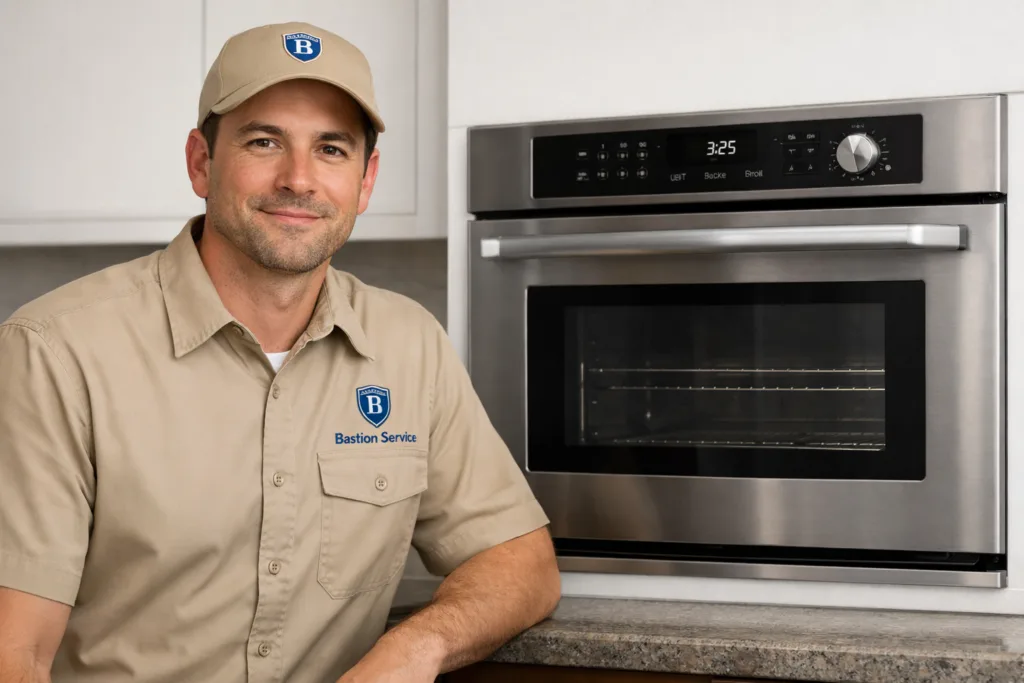
Cooking problems tend to show up before a GE oven fails completely. Cookies brown on one side, casseroles take far longer than expected, or preheat seems to run forever without reaching the selected temperature. Those patterns usually point to a specific heating, sensing, ignition, or control issue rather than a vague “bad oven” diagnosis.
For homeowners in Playa Vista, the most useful repair visit is one that matches the symptom to the likely failure point. That matters because the same complaint can come from very different parts depending on whether the oven is electric or gas, freestanding or built in, and whether the problem affects baking, broiling, temperature control, or the door system.
Common GE oven symptoms and what they often mean
Oven will not heat
If the display turns on but the oven stays cold, the cause often depends on the oven type. On electric models, a failed bake element, damaged wiring, or relay issue may stop the unit from producing heat. On gas models, a weak igniter can glow without pulling enough current to open the gas valve fully. In both cases, the oven may look like it started normally while never actually building usable heat.
Slow preheat
Long preheat times are often blamed on heavy cookware or frequent door opening, but when the delay becomes consistent, the problem may be more technical. A weakening igniter, partially failing element, inaccurate temperature sensor, or control issue can all extend preheat. Homeowners usually notice this when weeknight meals suddenly take much longer than they used to.
Uneven baking
When the back of a tray burns while the front stays pale, or one rack cooks faster than another, the oven may not be regulating heat correctly. Common causes include sensor drift, uneven element performance, convection problems on equipped models, or heat loss from a door that is not sealing well. Repeated uneven results are a sign that the appliance needs more than a simple temperature adjustment guess.
Temperature swings during cooking
All ovens cycle on and off to maintain heat, but large swings can create undercooked centers, scorched tops, and inconsistent roasting. If a GE oven seems too hot one day and too cool the next, the issue may involve the sensor circuit, control calibration, relay behavior, or a heating component that is failing intermittently.
Broiler works but bake does not
This symptom is especially helpful during diagnosis because it narrows the problem. If broil still operates but bake does not, the failure may be isolated to the bake element, bake igniter, related wiring, or the control output for that function. It does not always mean the entire oven is at the end of its life.
Display problems or unresponsive controls
A dead panel, flashing code, or buttons that stop responding can interrupt cooking even when the heating system itself is still intact. Depending on the model, the source may be a user interface fault, main control failure, power supply problem, or a heat-related issue that has affected electronics over time.
Signs the problem should not be ignored
Some oven issues are more than an inconvenience. Stop using the appliance and arrange service if you notice any of the following:
- The oven trips the breaker repeatedly
- There is sparking, arcing, or a burning electrical smell
- A gas oven has delayed ignition or fails to ignite consistently
- The door will not unlock after a cycle
- Error codes return after resetting power
- The cabinet around the oven becomes unusually hot
If there is a strong gas odor, do not continue testing the oven. Safety comes first, and the cause should be addressed before the appliance is used again.
Door, latch, and self-clean problems
GE ovens can also develop problems that are less about heat production and more about access and control. A door that will not close fully can leak heat and create poor baking results. A latch that stays engaged after self-clean can leave the oven unusable. In some cases, the root issue is mechanical wear in the hinge or latch assembly. In others, the lock motor, switch, or control system is failing to recognize the door position correctly.
Self-clean cycles tend to put extra stress on components because of the extreme temperatures involved. When an oven starts acting up immediately after self-clean, technicians often look closely at the latch circuit, sensor behavior, and electronic control response.
Electric vs. gas GE oven repair issues
Electric and gas ovens often produce similar cooking complaints, but the repair path is different.
- Electric ovens: more likely to involve bake or broil elements, terminal connections, thermal limits, and relay control issues.
- Gas ovens: more likely to involve igniters, gas valve response, flame performance, and ignition timing problems.
This is one reason symptom-based testing matters. “Not heating” is not really a single diagnosis. It is the starting point.
When repair is usually worth considering
Many GE oven failures are reasonable to repair when the problem is limited to one main component or circuit. Sensor replacements, igniter failures, latch problems, certain element issues, and some control-related faults can often be addressed without replacing the entire appliance. Repair is usually easier to justify when the oven cabinet, insulation, door structure, and overall cooking performance have otherwise been solid.
Replacement becomes a more serious discussion when there are multiple failures at once, major control and wiring damage, recurring breakdowns, or repair costs that are hard to justify for the oven’s age and condition. A good diagnosis helps separate a fixable defect from a unit that is declining in several areas at the same time.
What homeowners in Playa Vista can watch for before service
A few details can make the problem easier to pinpoint:
- Whether the issue affects bake, broil, or both
- Whether the oven eventually reaches temperature or never gets close
- Whether the problem began suddenly or gradually
- Any error code shown on the display
- Whether the issue started after a self-clean cycle or power interruption
- Whether the oven is gas or electric
Even simple observations like “preheat stalls around 300 degrees” or “the bottom element never glows” can help narrow the likely cause faster than a general complaint that the oven is just not working right.
GE oven repair for daily household cooking problems
Most oven service calls are not about a completely dead appliance. They are about unreliable cooking results that make normal meal prep frustrating. If pizzas come out pale, baked dishes need extra time every week, or roasting temperatures no longer feel trustworthy, the oven may still run but no longer perform the way it should.
That is where a practical repair plan matters. The goal is not just to get power back to the unit, but to restore consistent baking and roasting performance so the oven can be used with confidence again in a Playa Vista home.