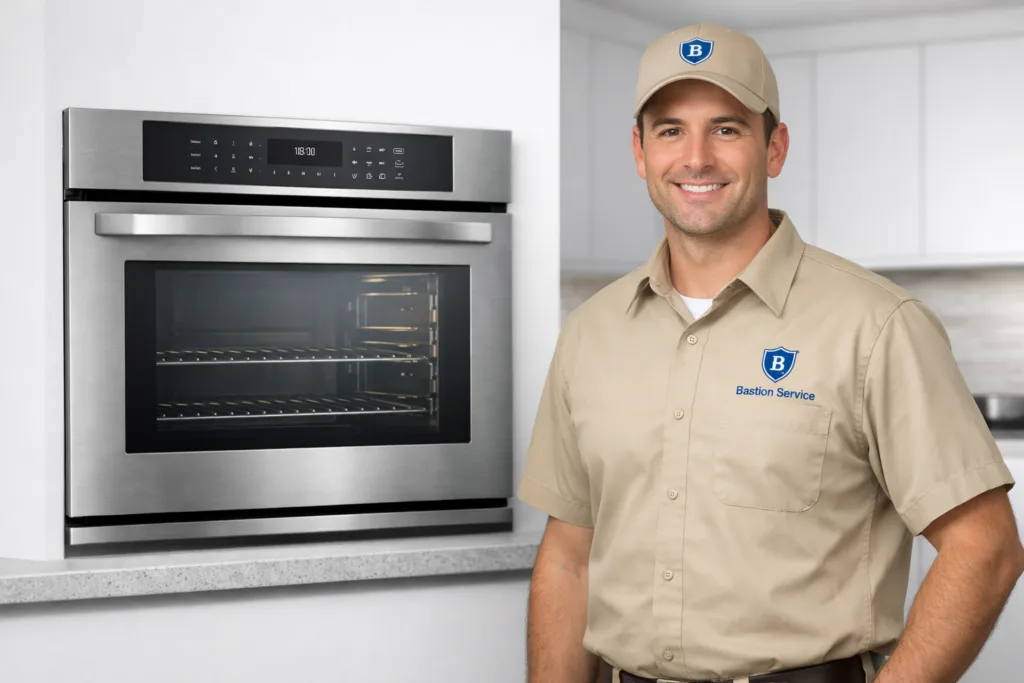
Cooking problems usually show up before an oven fails completely. A Summit oven may still turn on, light up, and seem normal at first glance while struggling to hold temperature, preheat on time, or bake evenly. Paying attention to those early changes can help prevent ruined meals and reduce the chance of a larger component failure.
Common Summit oven symptoms and what they often mean
Oven not heating at all
If the oven appears to start but never gets hot, the cause can vary by model and fuel type. Electric units may have a failed bake element, a damaged broil element, a sensor problem, or a control issue. On gas models, a weak or failed igniter is a common reason the oven will not heat properly. In some cases, the display works normally even though the heating circuit is not.
When this happens, homeowners often notice that the oven light, clock, and controls still respond, which can make the problem seem smaller than it is. If the cavity stays cool or only reaches a low temperature, the issue usually needs hands-on testing rather than guesswork.
Uneven baking
Cookies browning on one side, casseroles staying cold in the center, or repeated undercooking at standard settings can point to temperature regulation problems. A weak heating element, inaccurate sensor, failing igniter, poor heat circulation, or a door seal that is no longer holding heat can all lead to uneven results.
Uneven baking is often treated like a minor annoyance, but it can be one of the clearest signs that a Summit oven is no longer cycling heat the way it should. If rotating pans has become necessary every time you cook, the oven may be compensating for a developing fault.
Slow preheating
Long preheat times are a common warning sign. An oven that once reached temperature quickly but now takes much longer may have a heating component that is weakening rather than fully failed. That is especially true if it eventually gets hot enough, but only after a noticeable delay.
Slow preheating can also overlap with uneven baking and poor temperature recovery after the door is opened. If dinner takes longer than recipe timing allows and the problem keeps getting worse, the oven is usually due for service.
Temperature swings or overheating
If food burns at normal settings, the selected temperature does not match actual cooking results, or the oven seems to run too hot and then too cool, the problem may involve the sensor, electronic control, or calibration. Some homeowners first notice this as inconsistent results from one meal to the next even when they use the same pan and recipe.
Temperature swings matter because they affect more than convenience. Repeated overheating can stress internal parts, while wide fluctuations can make baking unreliable and lead to wasted food.
Controls not responding properly
An unresponsive keypad, flashing display, intermittent error code, or oven that starts and stops unexpectedly may indicate a control board or interface issue. Sometimes the problem is isolated to one button or function. In other cases, the control behaves inconsistently across multiple settings.
Control issues can be frustrating because they may seem random. If the oven works one day and not the next, or if commands do not register reliably, it is usually best not to wait for a complete failure before having it checked.
Door, hinge, gasket, or light problems
Not every repair starts with a heating complaint. A loose door, worn gasket, broken hinge, or interior light issue can affect everyday use and sometimes contribute to poor cooking performance. Heat escaping around the door can make preheating slower and baking less consistent, especially during longer cook cycles.
Signs the problem is getting worse
Some symptom patterns suggest the oven is moving from occasional inconvenience to active malfunction. Watch for changes like these:
- Preheat times getting longer over several weeks
- The oven reaching temperature on some days but not others
- Food finishing too early or staying undercooked at familiar settings
- Error codes that appear more often
- The appliance shutting off during use
- Heat leaking from the door more than it used to
- Burning smells that continue beyond normal first-use residue
Intermittent problems are easy to put off, but they are often the hardest to live with because results become unpredictable. In a household kitchen, that usually means wasted ingredients and more stress around meals.
When to stop using the oven and schedule service
Some issues call for prompt attention rather than continued trial and error. It is smart to stop normal use if the oven is tripping power, sparking, producing a persistent electrical smell, failing to regulate heat, or showing signs of damaged wiring or controls. The same is true if the door no longer closes properly or the oven overheats enough to scorch food unexpectedly.
For many households in Playa Vista, the tipping point is simple: the oven can no longer be trusted for normal daily cooking. Once that happens, repair becomes less about convenience and more about restoring safe, predictable use.
What affects the repair decision
Not every Summit oven problem points to replacement. Many issues are limited to a specific part or circuit, such as an igniter, element, sensor, gasket, hinge, or control-related component. When the rest of the appliance is in solid condition, those repairs are often worth considering.
Replacement becomes more likely when the oven has multiple unrelated failures, severe control problems combined with age-related wear, or a repair path that approaches the value of the appliance. The condition of the cavity, door, racks, insulation, and controls all matter when deciding whether further investment makes sense.
Repairs that are often straightforward
- Single heating component failures
- Temperature sensor replacement
- Igniter-related heating problems
- Door gasket or hinge issues
- Interior light and some switch-related faults
Repairs that may require closer evaluation
- Intermittent control board failures
- Repeated electrical issues
- Multiple symptoms affecting heat, controls, and door function at once
- Recurring breakdowns after earlier repairs
Helpful observations to note before service
If possible, it helps to pay attention to the exact symptom pattern before the appointment. Details like these can make troubleshooting easier:
- Whether the oven is electric or gas
- If the display powers on normally
- Whether broil works when bake does not, or vice versa
- How long preheating now takes compared with before
- If the problem happens every time or only occasionally
- Any recent error codes, odors, or breaker trips
- Whether the door closes tightly and seals as expected
Even a few clear notes can help connect the complaint to the most likely cause faster.
What homeowners in Playa Vista typically want to know
Most people are not looking for a technical lecture. They want to know what failed, whether the oven is safe to use, and whether the repair is worth doing. That is why symptom-based service matters. A practical evaluation should connect the cooking problem you are seeing with the component or system most likely responsible, then explain the next step in plain language.
For households in Playa Vista, the goal is usually straightforward: get the Summit oven back to stable, usable performance without wasting time on the wrong repair path.