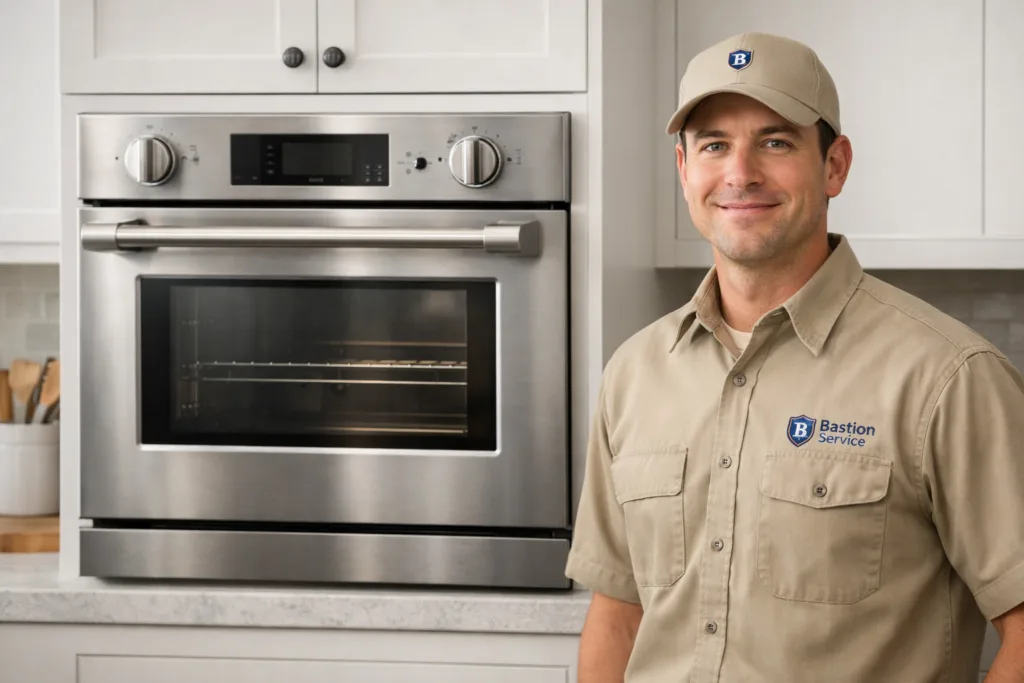
Cooking problems usually show up before a Wolf oven fully fails. You might notice longer preheat times, trays that brown unevenly, temperature swings during baking, or a control panel that responds inconsistently. Those clues matter because the same symptom can come from different causes, including ignition trouble, sensor drift, element failure, fan issues, relays, or control problems.
For homeowners in Culver City, the best next step is to treat the symptom pattern as a diagnosis guide. Knowing whether the oven is not heating at all, heating weakly, or cycling unpredictably helps narrow the repair path and prevents replacing parts based on guesswork.
What common Wolf oven symptoms often mean
Oven does not heat or takes too long to preheat
When the oven stays cold, struggles to reach temperature, or preheats much more slowly than usual, the likely causes depend on the model type. Electric units may have a failing bake element or a control issue. Gas models often point to a weak igniter that glows but does not draw enough current to open the gas valve properly. A faulty temperature sensor or board problem can also make the oven appear to heat without ever reaching the selected setting.
Homeowners often first notice this through undercooked food, repeated need to add cooking time, or an oven that says it is ready when it clearly is not. If the problem has become gradual rather than sudden, that can be especially helpful in identifying worn components.
Uneven baking, hot spots, or unreliable temperatures
If one side of a dish browns faster than the other, cookies bake unevenly across the same sheet, or roasting results have become inconsistent, the issue may involve temperature regulation rather than total heat loss. A sensor that reads inaccurately, a weakened heating circuit, convection fan trouble, or calibration drift can all affect how evenly the oven performs.
This type of problem is frustrating because the oven still seems usable, but results are no longer predictable. In many cases, the appliance needs testing under operating conditions to confirm whether the temperature shown on the display matches what the cavity is actually doing.
Control panel problems or intermittent operation
A Wolf oven that will not start, shuts off mid-cycle, beeps unexpectedly, or shows error messages may have an electronic control fault, keypad issue, latch problem, or power supply interruption. Intermittent faults are especially important to catch early because they often begin as occasional glitches before becoming complete no-start failures.
If the display dims, buttons stop responding, or the oven only works after repeated attempts, the repair should focus on the electrical and control side of the appliance rather than just the heating components.
Door not closing properly
A loose, misaligned, or partially open oven door can affect more than comfort. Heat loss changes baking performance, increases preheat time, and can cause the oven to run longer than necessary. Worn hinges, damaged gaskets, latch issues, or door alignment problems may all be part of the cause.
If the door feels heavy, does not seal evenly, or opens and closes differently than before, it is worth having the problem addressed before it places added stress on surrounding parts.
How symptom timing helps narrow the cause
When the issue appears can be as important as the issue itself. A problem that happens from the first minute of preheat is different from one that appears only after the oven has been running for a while.
- Fails immediately: often points to power, control, igniter, or element problems.
- Starts normally, then drifts: may suggest sensor, relay, overheating, or regulation issues.
- Only acts up during convection: can indicate fan, airflow, or related control faults.
- Only happens occasionally: may involve intermittent wiring, board issues, or a component nearing failure.
If you have noticed a repeatable pattern, sharing it during service can make troubleshooting faster and more accurate.
Signs the oven should not keep being used
Some issues are inconvenient, while others justify stopping use until the oven is checked. Continued operation can sometimes turn a manageable repair into a larger one.
- A gas smell that does not clear quickly
- Sparking, tripped breakers, or burning odors
- The oven shutting off unexpectedly during cooking
- A door that will not stay closed securely
- Severe overheating or temperatures far above the selected setting
If a gas model has a strong or persistent gas odor, stop using it immediately. For electrical warning signs such as smoke, visible sparking, or repeated breaker trips, the safest choice is also to stop operation until the cause is identified.
Repair or replacement: what usually makes sense
Many Wolf ovens are worth repairing when the problem is tied to a specific failed component and the rest of the unit remains in good shape. A single igniter issue, sensor fault, hinge problem, or control-related repair is very different from an appliance with multiple major failures, extensive wear, or a history of repeated breakdowns.
Repair is often the better choice when:
- The oven has been performing well aside from the current fault
- The issue can be traced to one main component or system
- The cabinet, door, and cooking performance have otherwise remained solid
- The repair cost is reasonable compared with the condition of the appliance
Replacement may deserve stronger consideration when:
- Several systems are failing at the same time
- Previous repairs have not restored dependable operation
- Major control and heating issues overlap
- The oven shows clear age-related deterioration beyond a single repairable fault
What homeowners in Culver City should expect from a service visit
A useful appointment should do more than confirm that the oven is malfunctioning. It should identify the failed part or system, explain how that failure connects to the symptoms you have been seeing, and clarify whether repair is practical based on the oven’s overall condition.
For a premium appliance like Wolf, that means looking at the full operating picture: heat production, temperature response, control behavior, door sealing, and any error or shutdown patterns. Once the source of the problem is narrowed down, it becomes much easier to decide whether to move forward now or plan next steps for the appliance.
Simple checks before scheduling oven repair
There are a few basic observations that can help, as long as they are done safely and without disassembling the appliance.
- Confirm the oven is set to the correct cooking mode
- Note whether the issue happens in bake, broil, or convection
- Watch whether preheat completes unusually fast or unusually slowly
- Pay attention to whether the display shows errors or resets
- Check whether the door closes evenly and seals tightly
These details can be especially useful if the problem is intermittent. A short description of what happens, when it happens, and whether it is getting worse can make the repair process more efficient.
Focused help for Wolf oven problems
Wolf ovens are designed for stable, accurate cooking, so even a modest change in performance is worth paying attention to. If baking results have changed, preheat has become unreliable, or the controls no longer act normally, addressing the issue early can help limit additional wear and restore more consistent cooking performance in your Culver City home.