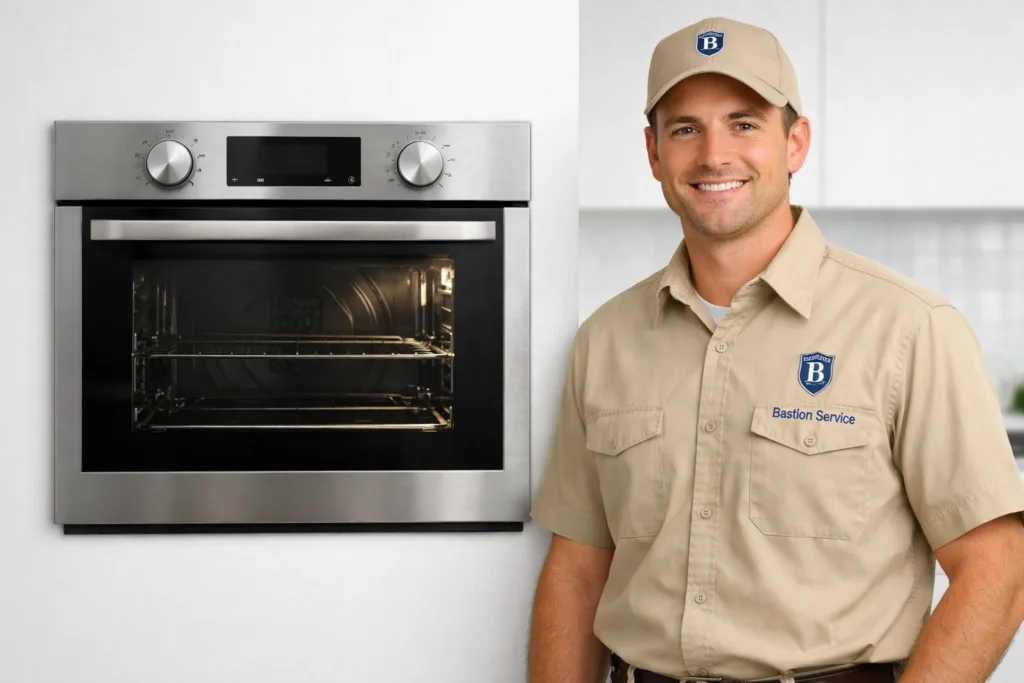
Cooking problems that seem similar on the surface can come from very different oven failures. An Asko oven that will not preheat, runs hot, cools off mid-cycle, or bakes unevenly may be dealing with an element issue, a sensor reading problem, a convection fault, a door seal problem, or an electronic control failure. The fastest path to a sensible repair decision is to match the symptom pattern to the system most likely causing it.
Common Asko oven symptoms in Culver City homes
Homeowners in Culver City often notice oven trouble first through meal results rather than a dramatic breakdown. Cookies brown too fast on one side, casseroles need extra time, or the oven seems to take much longer than it used to just to reach temperature. Those early signs matter because they often appear before a complete heating failure.
Other calls start with more obvious issues: the oven turns on but stays cold, the broil works while bake does not, the display shows an error, or the unit shuts off before cooking is finished. In each case, the repair approach depends on which functions still work normally and which ones do not.
What specific symptoms often point to
Oven will not heat at all
If the oven powers on but never gets warm, the problem may involve a failed bake element, broil element, temperature sensor, wiring connection, thermal protection component, or the main control. On some units, one failed circuit can make the oven appear completely dead even though the display still responds.
A useful clue is whether any cooking mode still functions. If broil works but bake does not, that narrows the issue differently than an oven where every heating mode fails.
Slow preheating
Slow preheat often means the oven is heating, but not efficiently. A weak element, inaccurate sensor, control issue, or convection problem can all contribute. Some owners assume a slow oven is simply aging, but a noticeable change in preheat time usually points to a repairable fault rather than normal behavior.
Uneven baking or roasting
When food cooks unevenly, heat may not be circulating or regulating correctly. Common causes include partial element failure, poor temperature feedback, a weak convection fan, or heat loss around the door. If pans need to be rotated more than before, or one rack consistently cooks faster than another, the oven is not holding a stable cooking environment.
Temperature swings
All ovens cycle on and off to maintain heat, but large swings can lead to undercooked centers, scorched edges, and inconsistent results from the same recipe. This symptom often points to a sensor reading out of range, calibration drift, or an electronic control issue that is not managing the heat cycle properly.
Display, keypad, or control faults
Flickering displays, unresponsive buttons, random beeping, and repeated fault codes can indicate trouble with the user interface, control board, or internal electrical connections. These issues are more than an inconvenience if the oven starts, stops, or resets unexpectedly during cooking.
Door problems
A door that will not close fully, will not lock, or feels misaligned can affect both performance and safety. Heat escaping through a poor seal can cause long cook times and uneven baking. If the latch does not behave normally during self-clean or the hinges feel strained, forcing the door usually makes the repair more complicated.
Signs the oven should not keep being used
Some symptoms justify stopping use until the appliance has been checked. That includes tripping the breaker, sparking, strong burning smells coming from the oven itself, visible wire damage, or overheating that seems beyond normal cooking heat. These issues can damage more components and create safety concerns if ignored.
Repeated error codes also deserve prompt attention, especially if the oven cancels cycles, loses power intermittently, or locks up during use. Even when the unit still works part of the time, unstable operation tends to get worse rather than correct itself.
How repair decisions are usually made
Repair is often a reasonable choice when the issue is limited to one system, such as a heating element, sensor, fan motor, latch assembly, or a specific electrical fault. If the oven is otherwise in good condition and the problem has a clear source, fixing the failed part can restore normal daily cooking without turning into a larger project.
Replacement becomes more worth considering when there are multiple major failures, recurring control problems, extensive wear inside the cavity, or evidence that several systems are declining at once. The goal is not just to get the oven running for the moment, but to decide whether the repair is likely to restore reliable use for a Culver City household.
What to note before scheduling service
A few details can make oven diagnosis much more efficient. It helps to note:
- Whether the problem affects bake, broil, convection, self-clean, or all modes
- Whether the oven fails every time or only after it has been running for a while
- Any error code shown on the display
- Whether preheating is slow, incomplete, or stops midway
- Any unusual fan noise, clicking, burning smell, or door alignment issue
- Whether the breaker has tripped during use
These details often help separate a heating problem from a control problem and can reduce unnecessary part replacement.
Why symptom-based diagnosis matters for Asko ovens
Modern ovens can fail in ways that look deceptively similar. An inaccurate temperature complaint, for example, might come from a sensor issue, a weak element, a control fault, or heat escaping from the door. Replacing parts by guesswork can quickly become more expensive than the repair itself. A symptom-based inspection is the best way to determine what failed, what is still working, and whether the repair path makes sense.
Asko oven repair in Culver City for everyday cooking problems
For homeowners in Culver City, the real issue is usually not just that the oven is misbehaving, but that normal cooking becomes hard to trust. Whether the problem is no heat, uneven baking, slow preheat, control trouble, or temperature instability, the next step should be based on the exact symptom pattern and the condition of the appliance as a whole. That gives you a practical repair plan instead of trial and error.