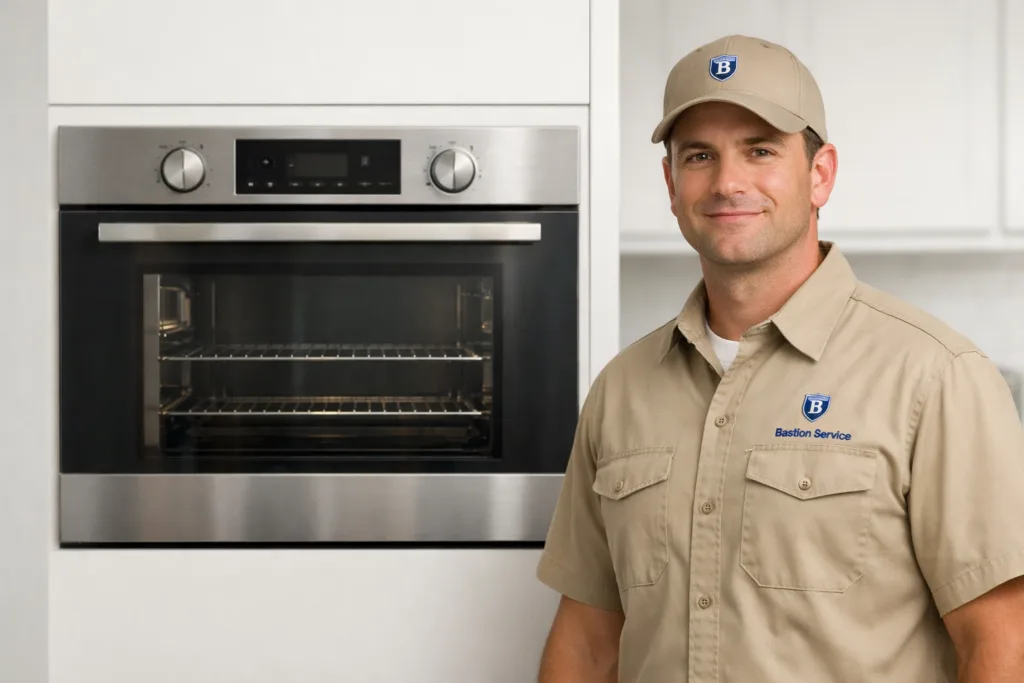
Miele ovens are built for consistent cooking, so changes in performance usually show up in everyday use fairly quickly. A tray of cookies that suddenly bakes unevenly, a roast that takes much longer than expected, or a control panel that starts acting unpredictably can all point to different underlying faults. In a Culver City home, the most useful next step is to match the symptom to the likely system involved rather than assuming every heating problem comes from the same part.
Common Miele oven problems homeowners notice
Oven issues are often easier to understand when grouped by how they affect cooking. Some problems are obvious right away, while others build gradually over time.
Not heating at all
If the oven powers on but the cavity stays cool, the failure may involve a heating element, temperature sensor, relay, electronic control, or internal wiring problem. In some cases, the display and lights work normally while the oven never begins a proper heat cycle. That difference matters because it helps narrow the fault to the heating side rather than a complete power issue.
Slow preheat
A long preheat time can mean the oven is heating only partially, reading temperature incorrectly, or failing to energize one part of the heating system consistently. Homeowners often notice this first when weeknight meals take longer or when the preheat signal sounds before the oven is actually ready.
Uneven baking
When one side of a pan browns faster than the other, or the bottom of food cooks faster than the top, the cause may involve airflow, convection fan performance, sensor drift, or incomplete broil or bake operation. This symptom is especially frustrating because the oven still appears to be working, just not accurately.
Temperature running too hot or too cool
If recipes that used to work suddenly burn or come out underdone, the oven may be cycling outside its intended range. A faulty sensor, control issue, or calibration-related problem can all create noticeable temperature swings. Premium ovens are designed for precision, so even moderate variation can affect results.
Display errors or non-responsive controls
Flashing indicators, unexplained beeping, frozen controls, or repeated error messages usually point to an electronic issue rather than a basic cooking-performance problem. Sometimes a reset briefly restores operation, but recurring control faults generally indicate that the oven needs a closer look.
Door, latch, or self-clean related trouble
A door that will not close properly can let heat escape and make cooking inconsistent. Problems that begin during or after self-clean may involve a lock mechanism, heat-stressed component, hinge issue, or damaged gasket. If the door is misaligned, even a normally functioning heating system can struggle to maintain temperature.
Why the same symptom can have different causes
One reason oven repair gets misdiagnosed is that similar symptoms can come from completely different failures. Slow preheat, for example, might be caused by a weakening element, a sensor giving the wrong temperature reading, or a control board that is not sending power steadily. Uneven baking could point to a convection problem, but it might also come from incomplete top heat or a sealing issue at the door.
That is why symptom-based evaluation matters. Replacing parts based on guesswork can waste time and money while leaving the actual problem untouched.
Signs the oven should be serviced soon
Some issues can wait briefly without major risk, but others tend to worsen with continued use. It is a good idea to schedule service when you notice:
- Preheat taking much longer than normal
- Food cooking unevenly from rack to rack
- Repeated error codes or random shutdowns
- Controls that respond only part of the time
- Temperature that does not match the setting
- A door that will not seal or latch correctly
If the oven trips power, overheats, shuts off mid-cycle, or behaves unpredictably from one use to the next, delaying service can increase wear on related components.
When continued use may make the repair worse
An oven does not always fail all at once. A weak heating circuit may force longer run times. A poor door seal may cause the appliance to work harder just to hold temperature. An intermittent sensor or relay problem can produce cycling problems that eventually affect electronic controls.
Homeowners in Culver City often keep using the oven as long as it still heats somewhat, but that can turn a limited repair into a broader one. If performance has clearly changed, especially if cooking results are becoming unreliable, it is usually better to have the issue assessed before regular use continues.
Repair or replace?
With a Miele oven, replacement is not always the first or best answer. The decision often depends on the age of the appliance, overall condition, the specific failed part, and whether the repair is likely to restore stable everyday performance. A single isolated component failure may make repair sensible. Multiple electronic faults, heavy wear, or repeated recurring issues can shift the math in the other direction.
For many households, the key question is not simply whether the oven can be fixed, but whether the repair path is reasonable for the appliance’s condition and expected use.
What to note before scheduling oven service
A few details can make diagnosis much more efficient. Before service, it helps to pay attention to what the oven is doing and when the symptom appears.
- Does the oven heat at all, or just partially?
- Is the broil function working normally?
- Does convection run when selected?
- Are there any error codes on the display?
- Did the issue begin suddenly or gradually?
- Did it start after self-clean or a power interruption?
- Is the problem the same on every cooking mode?
These observations can help distinguish between a heating fault, a sensor problem, a door issue, or a control-related failure.
What homeowners in Culver City can expect from a useful diagnosis
A helpful service visit should do more than identify that the oven is “not working right.” It should connect the symptom pattern to the most likely failing system, explain whether continued use risks more damage, and clarify whether repair is practical. For Miele oven repair in Culver City, that kind of specific assessment is what helps homeowners make a confident decision instead of relying on trial and error.