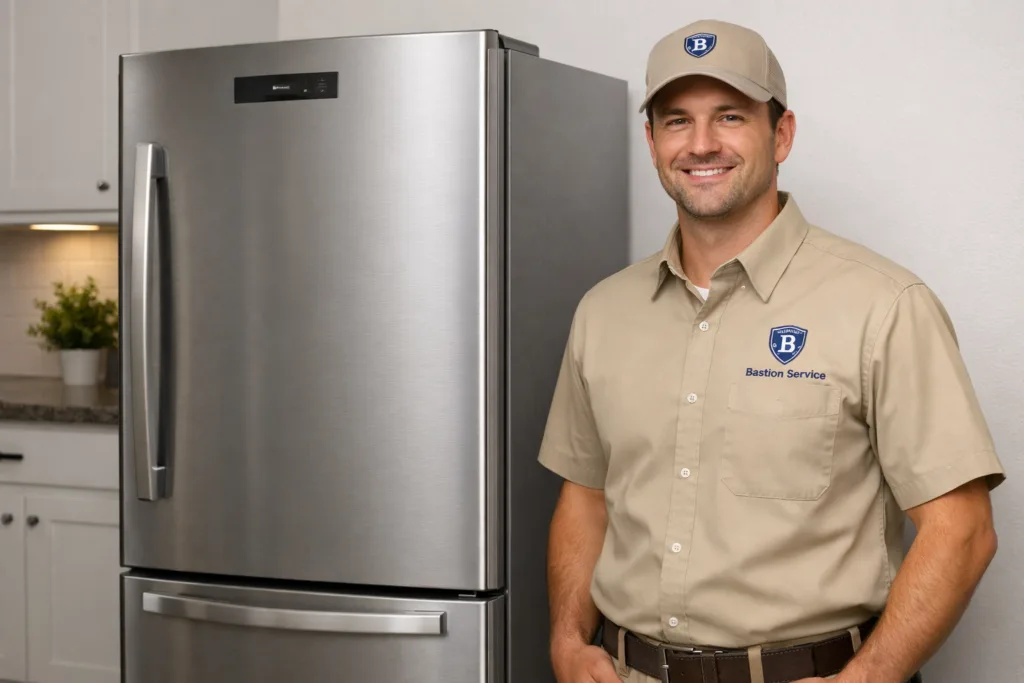
Freezer problems rarely stay small for long. If a GE unit begins running without getting cold enough, develops frost where it should not, or starts making new noises, the symptom pattern usually points to a specific system that needs attention. In many Los Angeles households, the best next step is finding out whether the issue involves airflow, defrost operation, door sealing, fan motors, controls, or the cooling system itself.
Common GE freezer symptoms and what they may indicate
Many freezer complaints look similar at first. Food softens, ice cream turns slushy, or frost appears along the back wall. But the underlying cause can be very different from one appliance to the next. Understanding the symptom helps narrow down whether the repair is likely to be straightforward or more involved.
Not freezing well
If the freezer runs but temperatures stay too warm, a few causes are especially common. Poor airflow from a failing evaporator fan can keep cold air from circulating evenly. Ice buildup behind the interior panel can also block airflow, even while the appliance sounds like it is still operating normally. In other cases, the issue may come from a sensor, control board, start component, or a compressor that is no longer performing the way it should.
Signs this problem is getting worse include:
- Food softening in one section before the rest of the freezer
- Long run times without reaching normal temperature
- Cold spots mixed with warmer shelves or bins
- Motor noise with weak or inconsistent cooling
Frost or ice buildup
Heavy frost is often a clue that moisture is entering the compartment or that the defrost system is not clearing ice properly. A worn gasket, a door that does not sit squarely, or containers preventing the door from closing fully can all allow warm air inside. When frost forms repeatedly on the evaporator cover or rear interior wall, defrost components become more likely suspects.
Frost matters because it does more than create a messy interior. As ice builds, airflow drops, temperatures become uneven, and fan blades may begin hitting the ice. What starts as a frost complaint can quickly turn into a cooling complaint.
Water leaks or thaw-and-refreeze cycles
Water near the base of the freezer may come from a blocked defrost drain, partial thawing, or a door left slightly open long enough to create excess moisture. Some homeowners notice puddles one day and normal cooling the next, which can make the problem seem temporary. In reality, intermittent operation is often harder on a freezer than a complete failure because the cause can worsen over time.
Repeated thawing and refreezing can point to:
- An unstable fan motor
- A sensor or control issue
- A start problem affecting the compressor
- Defrost trouble that restricts airflow, then partially clears
Buzzing, clicking, rattling, or fan noise
Not every sound means a repair is needed, but new or persistent noise should be taken seriously when it appears alongside temperature changes. Repeated clicking without proper cooling can suggest a start relay or compressor-related problem. A scraping or grinding sound may happen when a fan blade is contacting ice. Rattling can be something simple, but it can also show up when a motor or mounting component is wearing out.
Noise is especially useful during diagnosis because it helps separate a cooling complaint caused by airflow restriction from one tied to electrical start components or a sealed-system issue.
Why GE freezer diagnosis needs to match the exact symptom
Two freezers can show the same outward problem and still need completely different repairs. A unit that seems to have a thermostat issue may actually be packed with hidden frost behind a panel. A freezer with a sealing complaint may really have a hinge or leveling issue that prevents the door from seating correctly. One model may rely on a sensor and control response that differs from another GE design, even when the homeowner describes the same temperature problem.
That is why part replacement based on guesswork often leads to extra cost and extra downtime. A symptom-based approach is more useful because it helps answer the questions homeowners actually care about:
- Is the freezer still safe to use right now?
- Could waiting make the repair more expensive?
- Is this likely to be an isolated repair or part of broader appliance wear?
When the problem is urgent
Some freezer issues should not be postponed. If the cabinet is fully warm, food is softening quickly, the compressor struggles to start, or the unit is running continuously without recovering temperature, service is usually time-sensitive. Delaying in those situations can lead to food loss and may put added stress on motors, controls, and starting components.
It also makes sense to schedule service promptly when:
- Frost keeps returning after manual clearing
- The door gasket is torn or no longer sealing well
- Water is collecting around or under the appliance
- Fan noise grows louder over several days
- The freezer cycles unpredictably or seems to shut off too soon
Repair or replace?
Many GE freezer problems are repairable when the fault is limited to a fan motor, defrost component, gasket, drain issue, sensor, or start device. Those repairs are different from major cooling-system failures or multiple age-related problems happening at once. The right decision depends on the condition of the appliance as a whole, not just the most obvious symptom.
Repair often makes sense when the freezer has been reliable overall and the issue can be traced to one system. Replacement becomes a more serious consideration when there is compressor trouble, sealed-system decline, repeated electronic failures, or several worn components appearing together. For Los Angeles homeowners, the practical choice usually comes down to cost, expected reliability after repair, and how much life the appliance is likely to have left.
What homeowners can check before service
Before assuming the problem is major, a few simple checks can help rule out basic causes:
- Confirm the door is closing fully and not being blocked by food containers
- Look for gaps or tears in the door gasket
- Check whether frost is concentrated in one area or spread throughout the compartment
- Listen for the evaporator fan and note whether the sound is steady, weak, or scraping
- Pay attention to whether the unit runs constantly or stops too often
These observations are helpful because they make it easier to describe the issue accurately. Even small details, such as whether the freezer cooled normally overnight and warmed up during the day, can help identify the likely repair path faster.
A focused approach for GE freezer repair in Los Angeles
The most useful service visit is one built around the actual complaint, whether that is weak freezing, repeated frost, leaking, noisy operation, or unstable cycling. Bastion Service helps Los Angeles homeowners sort out what the symptoms are pointing to and whether repair is the sensible next step for the appliance. When the cause is identified correctly, the decision becomes much simpler: fix the isolated fault, monitor the unit if the issue is minor, or consider replacement if the freezer is showing broader signs of decline.