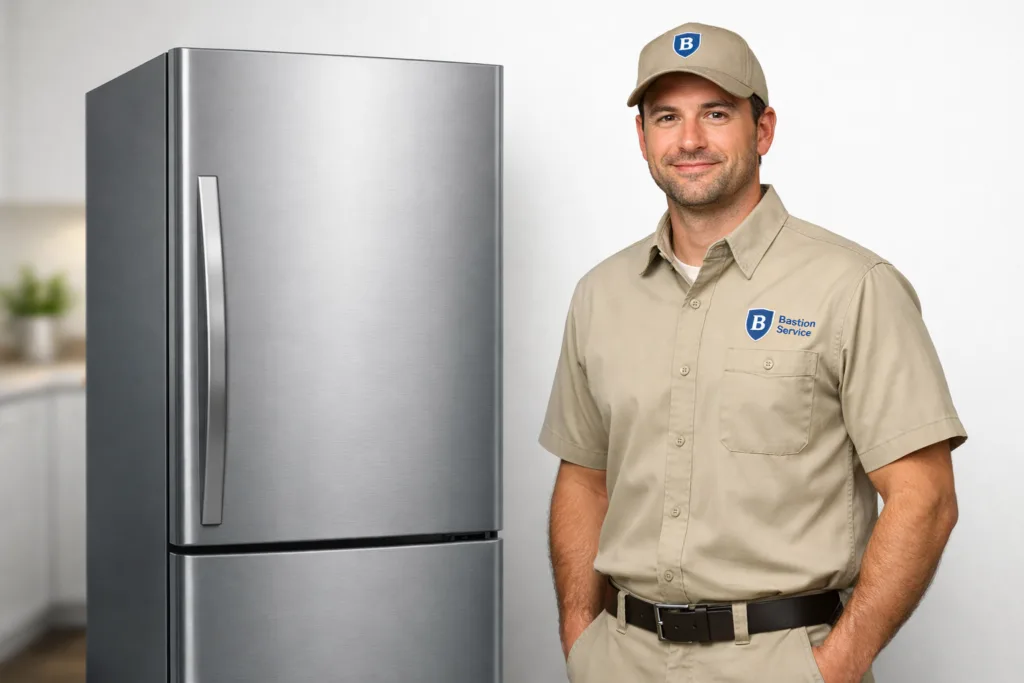
Food loss usually starts before a freezer fully quits. If you notice softer frozen items, a back wall covered in frost, puddling near the appliance, or a motor sound that has changed, the pattern of those symptoms matters. Kenmore freezer issues often trace back to airflow restrictions, defrost failures, door sealing problems, control faults, or start-component trouble, and each one creates a different repair path.
Signs your Kenmore freezer needs attention
Many freezer failures build gradually. A unit may seem to recover after you close the door, only to drift warm again later. You might also see heavier frost around shelves, hear the fan struggle, or find that the freezer runs for long stretches without reaching a steady temperature. In Los Angeles homes, these symptoms can show up in kitchen units as well as secondary freezers placed in garages or utility areas where surrounding heat affects performance.
Early service is especially important when you notice any of the following:
- Food softening or thawing at the edges
- Frost coating the rear panel or air vents
- Water collecting under drawers or on the floor
- Clicking, buzzing, or louder-than-usual fan noise
- A freezer that runs constantly but still feels too warm
- Interior lights working while cooling performance drops
What common freezer symptoms can mean
Not freezing well
If the freezer is on but no longer keeping foods solid, the problem may involve reduced evaporator airflow, a failing fan motor, dirty condenser conditions, a sensor or control problem, or a defrost issue that has started choking off cold-air movement. A gradual loss of cooling often points in a different direction than a sudden no-cool condition, which is why symptom timing helps narrow the diagnosis.
Heavy frost buildup
Thick frost is more than a cosmetic issue. It can block vents, trap moisture, and force the system to run harder. Common causes include a torn or loose door gasket, a door that does not close squarely, frequent warm-air intrusion, or a failed defrost component. When frost builds behind the back panel, air may no longer circulate properly through the compartment, making the freezer seem inconsistent from shelf to shelf.
Water leaks
Water inside or beneath a Kenmore freezer often comes from a blocked defrost drain or from melting ice caused by unstable cooling. In some cases, frost forms first, then melts and refreezes in the wrong areas. Leaks should not be ignored, because moisture problems can spread, create slip hazards, and contribute to additional ice buildup.
Clicking, buzzing, or fan noise
A repetitive clicking sound can point to a start issue or electrical fault that prevents normal compressor operation. Buzzing may be related to a struggling motor or a component trying to engage. Fan noise can mean ice is interfering with the blade, the motor bearings are wearing out, or a panel is vibrating because frost has expanded behind it. New sounds paired with warming temperatures usually deserve prompt diagnosis.
Runs nonstop
When a freezer seems to run all day, it is usually trying to compensate for a problem rather than working normally. Warm air entering through a poor seal, restricted airflow, dirty heat-dissipating surfaces, or an unresolved defrost issue can all keep the system from cycling off as it should.
Completely stopped cooling
If the cabinet has power but no cooling, the failure may involve controls, fan operation, start components, or the refrigeration system itself. If there is no power at all, the inspection usually begins with supply, connections, and electrical continuity before moving deeper into the appliance.
Why frost and airflow problems are often connected
One of the most common reasons a freezer stops holding temperature is that air can no longer move the way it should. Cold air may still be produced, but if frost covers the evaporator area or blocks vents, the compartment warms unevenly. Homeowners often first notice this as ice cream turning soft, bins frosting up, or the top and bottom sections feeling different.
This is also why a freezer can appear to have several unrelated issues at once. Frost may lead to fan noise, poor cooling, extra moisture, and long run times all at the same time. Fixing the root cause matters more than addressing only the most visible symptom.
Household conditions that can affect performance
Use patterns and placement matter, especially in Los Angeles where indoor temperatures can vary from room to room. A freezer in a hot garage, a unit packed so tightly that vents are blocked, or a household that opens the door frequently may put extra strain on cooling performance. Those conditions do not automatically mean the appliance is failing, but they should be considered during service so normal usage factors are separated from actual part failure.
A few practical checks homeowners can make include:
- Confirm the door closes fully and the gasket is not folded or torn
- Leave space around interior vents for airflow
- Watch for frost returning quickly after manual removal
- Listen for a fan rubbing against ice
- Notice whether warming happens all the time or only during hotter parts of the day
When waiting can make the repair worse
Some freezer problems become more expensive if the unit keeps running in a failed state. A fan forced to work through ice buildup can burn out. A compressor that repeatedly tries to start may suffer additional wear. Constant operation can also mask the seriousness of the issue until food is already lost. If your Kenmore freezer is no longer maintaining a safe freezing temperature, it is better to stop guessing and have the cause identified.
Recurring thaw-and-refreeze cycles are another warning sign. Even if the freezer seems to recover for a while, unstable temperatures usually mean the underlying problem has not gone away.
Repair or replace?
That decision depends less on the symptom and more on the failed part, the age of the appliance, and the overall condition of the freezer. Repairs are often worthwhile when the issue involves components such as fans, controls, sensors, gaskets, drains, or defrost parts. Replacement becomes a stronger consideration when the cabinet is in poor shape, the freezer has repeated major problems, or the diagnosed fault involves a high-cost refrigeration repair.
The most useful way to decide is to compare the repair path with the appliance’s condition and expected remaining life. A well-kept freezer with an isolated component failure is very different from an older unit with multiple signs of decline.
What homeowners should expect from service
A proper visit should focus on how the freezer is actually behaving in the home: how temperatures are changing, where frost is appearing, whether airflow is present, how the door seals, and what the compressor and fans are doing during operation. That kind of symptom-based evaluation helps determine whether repair is practical and avoids unnecessary part swapping.
For households dealing with soft food, ice buildup, leaking, or unusual operating noise, Kenmore freezer repair in Los Angeles is most effective when the diagnosis follows the symptom pattern rather than assumptions. That gives homeowners a clearer idea of the fault, the likely correction, and whether the unit is worth repairing.