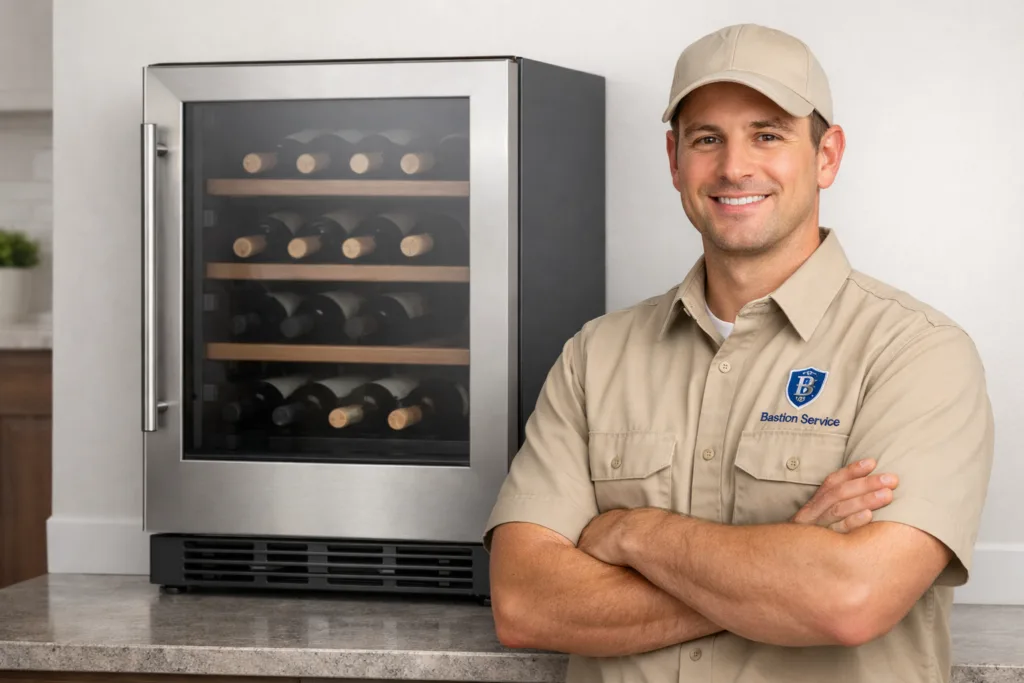
A Summit wine cooler that runs warm, collects moisture, or starts making new sounds usually needs attention before the issue affects both the appliance and the bottles inside. In Playa Vista homes, symptom patterns matter. A unit that feels slightly off may have an airflow or control problem, while one that runs constantly without recovering temperature can point to a more serious refrigeration fault.
Common Summit wine cooler problems homeowners notice
Many wine cooler issues look similar at first, but the repair path depends on what the appliance is actually doing day to day. Looking at cooling behavior, noise, condensation, and run time helps narrow the cause.
Not cooling enough
If the cabinet is warmer than the setting, the problem may involve dirty condenser coils, blocked airflow, a weak fan motor, a faulty temperature sensor, or an issue with the compressor system. Some units still cool a little but never fully reach the selected temperature. Others may start cold and gradually drift warm. That difference often helps determine whether the fault is a control issue or a deeper refrigeration problem.
Homeowners often first notice this problem when bottles no longer feel consistently chilled or when the unit seems to run for long stretches with little temperature improvement. Built-in installations can also struggle if ventilation is restricted around the cabinet.
Overcooling or freezing
A Summit wine cooler that gets too cold can be just as problematic as one that runs warm. This symptom often points to sensor trouble, control board failure, or internal airflow issues that prevent the cabinet from regulating temperature properly. If frost starts forming where it normally would not, the appliance should be checked before continued use causes more stress on components.
Water inside the cabinet or on the floor
Condensation and leaking can come from several sources, including a clogged drain, a door gasket that no longer seals well, humidity entering around the door, or a unit that is not sitting level. In some cases, homeowners notice water only after the door has been opening more often than usual. In others, the moisture returns repeatedly even with normal use, which usually means the cause has not been corrected.
Fan noise, rattling, or vibration
Buzzing, clicking, humming, rattling, and cabinet vibration can all come from different places. A worn fan motor, loose mounting hardware, compressor strain, or uneven flooring may be responsible. A sound that appears only during startup can mean something different from a sound that continues through the full cooling cycle. When the noise grows louder over time, it is often worth addressing before another part is affected.
Controls not responding normally
If the display is inconsistent, settings do not hold, interior lights behave oddly, or the unit seems to ignore temperature adjustments, the issue may be tied to the interface, control board, or wiring. Electrical irregularities can also create symptoms that look like cooling failure even when the refrigeration system itself is not the original problem.
What symptoms usually suggest about the repair
Wine coolers are compact refrigeration appliances, so one failed part can create several symptoms at once. For example, a fan problem can cause warm temperatures, excess run time, and uneven cooling. A bad door seal can lead to condensation, temperature swings, and frost. A control issue may make the unit overcool one day and run warm the next.
That is why diagnosis matters before parts are replaced. The most helpful service call confirms whether the issue is mainly related to airflow, controls, drainage, door sealing, or the sealed system. From there, it becomes much easier to decide if the repair is minor, moderate, or no longer cost-effective.
When to stop using the wine cooler
It is smart to pause normal use and schedule service if you notice any of the following:
- The cabinet is no longer holding a safe, consistent storage temperature.
- Bottles are freezing or frost is building up inside.
- Water keeps returning inside the unit or on the floor.
- The compressor seems to run almost nonstop.
- The cooler smells hot, trips power, or shuts off unpredictably.
- Noise has changed suddenly and is getting worse.
Continuing to run a struggling appliance can increase wear on fan motors, controls, and compressor components. Moisture problems can also affect nearby flooring, built-in millwork, or surrounding finishes.
Repair or replacement: how the decision usually gets made
Many Summit wine cooler problems are still worth repairing when the cabinet is in good condition and the issue is limited to a fan, sensor, thermostat-related control part, door gasket, or drain system. These repairs are often more straightforward than major refrigeration failures and can restore normal operation without replacing the whole unit.
Replacement becomes more likely when the wine cooler has repeated cooling complaints, multiple failing parts, heavy age-related wear, or compressor and sealed-system trouble that changes the overall value of the repair. Homeowners in Playa Vista usually make the best decision once the failed component, labor scope, and expected reliability are all clear.
What a service visit should help you understand
A useful appointment should answer a few practical questions without guesswork:
- Is the wine cooler actually reaching and holding the set temperature?
- Are the controls reading accurately?
- Is the problem tied to airflow, drainage, electrical components, or refrigeration?
- Is continued use likely to make the damage worse?
- Does the repair make sense for the condition and age of the unit?
For Summit wine cooler repair in Playa Vista, that kind of clear diagnosis and repair plan helps homeowners move forward with more confidence instead of replacing parts based only on symptoms.
Helpful steps before scheduling repair
Before service, it can help to note the current temperature setting, whether the cabinet is actually cooling, how often the unit is cycling, and whether the problem appeared suddenly or gradually. If there is leaking, check whether it happens after the door has been opened frequently or whether it continues even when the unit remains closed. If there is noise, try to identify whether it occurs at startup, during full operation, or after the compressor shuts off.
These details can make the symptom pattern easier to interpret and may shorten the path to the right repair. For homeowners trying to protect a wine collection and avoid unnecessary replacement, that information is often more useful than a general description like “not working right.”