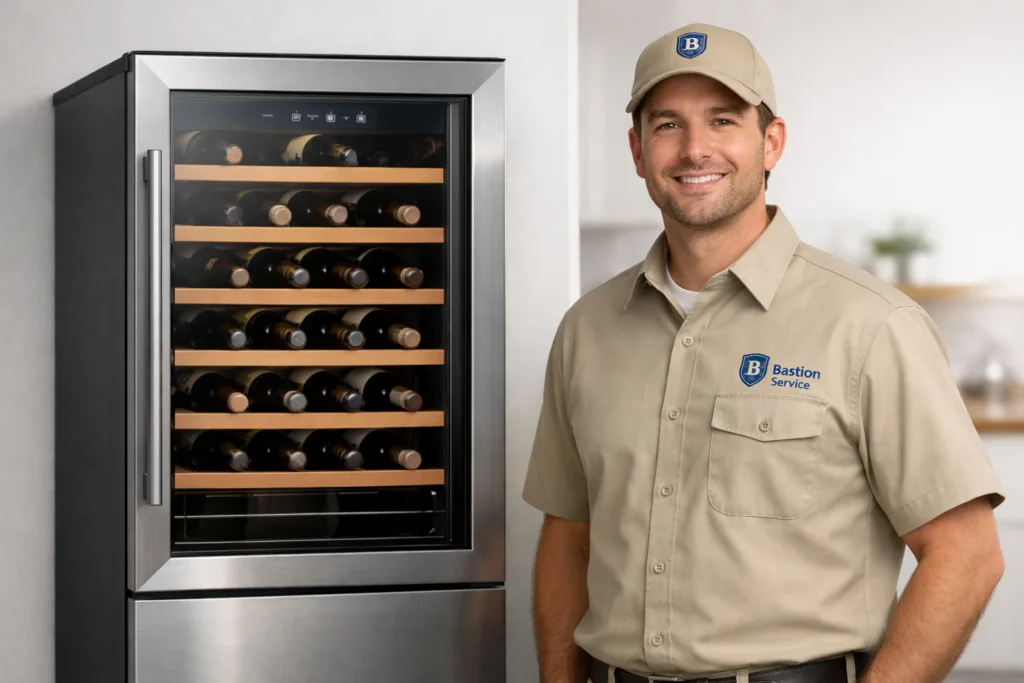
Wine coolers tend to fail gradually before they fail completely. A slight temperature drift, more fan noise than usual, beads of moisture on the glass, or bottles that no longer feel consistently chilled can all point to a developing problem inside the cabinet. With EdgeStar units, the most useful next step is identifying whether the issue comes from airflow, controls, door sealing, drainage, or a more serious cooling-system fault.
Common EdgeStar Wine Cooler Symptoms
Not cooling enough
If the cabinet is running but the temperature stays above the setting, several parts may be involved. A weak fan, dirty condenser area, failing sensor, thermostat problem, control issue, or compressor-related fault can all produce similar results. Some homeowners notice the cooler still turns on and sounds normal, but the bottles are warmer than expected or the temperature display no longer matches the actual interior condition.
This symptom should not be judged by touch alone. A unit may feel cool near one shelf and still be too warm elsewhere, especially if internal airflow is uneven. In dual-zone models, one zone may appear normal while the other drifts, which often points to a component problem rather than simple user settings.
Temperature swings or inconsistent cooling
When the temperature rises and falls unpredictably, the problem may involve the sensor, control board, fan operation, or intermittent compressor starting. These swings are important because wine storage depends on stability, not just whether the cooler gets cold at some point during the day. A cabinet that briefly cools and then warms again often needs service before the pattern turns into a complete no-cool condition.
Running constantly or cycling too often
An EdgeStar wine cooler that seems to run all the time may be struggling to remove heat, losing cold air through a weak door seal, or failing to move air properly through the cabinet. Short cycling, where the unit starts and stops repeatedly, can point to sensor trouble, electronic control issues, or compressor start problems.
- Constant running can increase wear and raise cabinet temperatures around the compressor section.
- Frequent cycling can prevent the cooler from holding a steady interior temperature.
- Either pattern may show up before complete cooling loss.
Fan noise, buzzing, clicking, or vibration
Not every sound means a major breakdown, but a change in sound usually matters. Rattling can come from cabinet vibration or mounting issues. Buzzing may be related to compressor operation. Clicking can point to startup trouble. Louder fan noise often suggests a worn fan motor, blade obstruction, or ice interfering with movement.
If the noise appears at the same time as warmer temperatures, frost, or condensation, it is more likely to indicate a mechanical or electrical problem rather than a harmless vibration.
Condensation, leaking, or frost buildup
Moisture inside or outside the cabinet can come from a poor door seal, a drainage issue, excess frost, or a cooling pattern that is no longer balanced. Frost on the back wall or around internal panels may indicate airflow trouble or a defrost-related issue. Water pooling near the base can suggest the unit is producing condensation that is not draining as intended.
These symptoms matter because they often get worse with continued operation. Extra moisture can lead to heavier frost, reduced cooling efficiency, and added strain on fans and other components.
What These Problems Usually Mean
Several EdgeStar wine cooler issues look alike from the outside, but the repair path can be very different. A warm cabinet does not automatically mean compressor failure, and moisture around the door does not always mean the gasket alone is at fault. The underlying cause may involve:
- Interior or condenser fan problems
- Temperature sensor or thermostat faults
- Electronic control failures
- Door gasket wear or alignment issues
- Drainage blockage
- Compressor or sealed-system trouble
That is why replacing parts based on guesswork often wastes time and money. A symptom-based diagnosis helps determine whether the repair is likely to be straightforward or whether the unit has a larger cooling-system problem.
When to Stop Waiting and Book Service
Homeowners in Playa Vista should consider service when the cooler no longer reaches the selected temperature, the cabinet temperature changes noticeably from day to day, one zone starts drifting, or the unit begins making new sounds. Repeated moisture, visible frost, or a door that no longer seems to seal tightly are also good reasons to have the cooler checked.
It is especially smart to act sooner when:
- The compressor struggles to start
- The fan noise is getting louder
- The cooler runs nonstop without reaching temperature
- Frost continues to return after being cleared
- The display or controls behave erratically
Waiting through these symptoms can turn a smaller repair into a more expensive one and may also affect the condition of the wine being stored.
Repair or Replace?
Many EdgeStar wine cooler repairs are worthwhile when the issue is limited to controls, sensors, fans, door sealing, or drainage. Those problems are often more targeted and easier to correct than major cooling-system failures. Replacement becomes more reasonable when the unit has an expensive sealed-system issue, repeated electronic failures, poor overall condition, or repair costs that are too close to the value of replacing the appliance.
The decision usually comes down to four things:
- The age of the wine cooler
- The exact failed component or system
- The overall condition of the cabinet and cooling performance history
- Whether parts availability supports a lasting repair
What Matters for Homes in Playa Vista
In Playa Vista homes, a wine cooler is often protecting a collection that depends on stable storage conditions rather than just making drinks cold. That makes inconsistent operation more important than many homeowners first assume. A service visit should answer the practical questions clearly: what failed, whether the unit should keep running, what the repair involves, and whether the cooler is a good candidate for continued use after the fix.
For most households, the goal is not just getting the unit back on temporarily. It is restoring stable, reliable cooling so the cabinet can maintain the temperature range it was intended to hold.