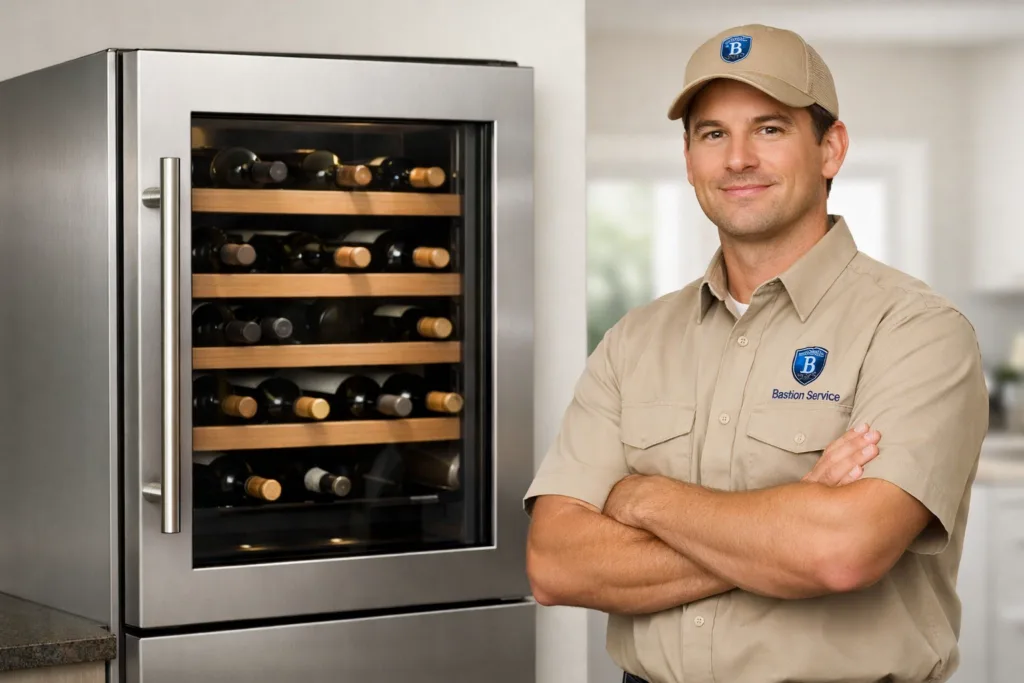
A True wine cooler that stops holding temperature, develops interior moisture, or begins running almost nonstop can affect both storage conditions and long-term appliance health. For homeowners in Playa Vista, the most useful next step is to look at the exact symptom pattern, because the same complaint can come from airflow trouble, a bad sensor, a failing fan, a door seal problem, or a deeper cooling-system issue.
What different symptoms usually point to
Not cooling well
If the cabinet is running but bottles are warmer than expected, the problem may be as simple as dirty condenser coils or as involved as a failing compressor. In many cases, weak airflow inside the cabinet, an evaporator fan problem, or a control that is not reading temperature correctly can keep the unit from reaching its target range.
Homeowners sometimes notice that the cooler feels slightly cold but never quite gets where it should. That often suggests the machine is still operating, but something is preventing efficient heat removal or proper circulation.
Temperature swings or uneven cooling
When one area feels colder than another or the temperature drifts up and down, the issue is often tied to sensors, controls, airflow, or door sealing. A unit may cool normally for part of the day and then lose stability if a fan cuts in and out or if warm room air keeps entering through a weak gasket.
Inconsistent temperatures matter with wine storage because repeated fluctuations can be as problematic as a cabinet that is simply too warm.
Condensation, sweating, or water buildup
Moisture on shelves, fogging on the glass, sweating around the door, or water near the base of the unit can all point to warm air intrusion or drainage trouble. Common causes include a worn gasket, a door that is no longer aligned correctly, or a blocked drain path.
Even when the cooler still seems to work, excess moisture can make it run longer than normal and place extra strain on fans and other components.
Buzzing, rattling, clicking, or loud fan noise
New sounds are often an early warning sign. Rattling can come from loose panels or vibration, while buzzing and clicking may be connected to the compressor or start components. If the fan becomes noticeably louder, the motor may be wearing out or something may be interfering with blade movement.
A change in sound along with weaker cooling usually means the problem should be checked soon rather than ignored.
Running constantly or cycling oddly
A True wine cooler that rarely shuts off may be struggling to maintain temperature because of dirty coils, poor door sealing, a fan issue, or a refrigerant-related problem. On the other hand, short cycling can suggest a control issue or a component that is failing to start and stay running properly.
Either pattern can increase wear over time, especially if the appliance is already having trouble keeping wine at a stable temperature.
Common causes behind True wine cooler problems
Several faults show up repeatedly in residential wine coolers, and each one affects performance in a different way:
- Condenser coil buildup: Reduces heat release and can make the unit run hot or continuously.
- Evaporator or condenser fan failure: Limits airflow and creates uneven or weak cooling.
- Thermostat or sensor problems: Causes inaccurate temperature control or erratic cycling.
- Door gasket wear: Lets warm air and humidity enter the cabinet.
- Drain issues: Leads to water accumulation or persistent interior moisture.
- Start device or compressor trouble: Can cause clicking, poor cooling, or complete loss of cooling.
- Control board faults: May interfere with fan operation, temperature response, or overall system behavior.
Because these issues can overlap, symptom-based testing matters more than guessing from one visible problem alone.
Signs the issue should not wait
Some problems can safely be checked in the near term, but others should be addressed quickly. Service is more urgent when the cabinet feels warm inside, bottles are no longer staying at a consistent temperature, the compressor is repeatedly clicking without starting, or the unit is producing much more condensation than usual.
It is also wise to act promptly if the door does not close firmly, if the cooler is making a harsh new noise, or if cooling has dropped off after a long period of constant running. Continuing to use the unit in that condition can turn a smaller repair into a more expensive one.
What a diagnosis should include
A useful service visit should go beyond replacing the first part that seems likely. The goal is to verify the complaint and narrow it to the system actually causing the failure. For a residential wine cooler, that often means checking temperature behavior, fan operation, airflow, gasket condition, control response, frost pattern, and overall cooling performance.
This process helps answer two important questions: what failed, and is the repair likely to restore reliable operation without unnecessary parts being installed first.
When repair makes sense
Repair is often worthwhile when the cabinet is otherwise in good shape and the problem is limited to a serviceable part such as a fan motor, sensor, thermostat, gasket, drain component, or electronic control. These problems can often be addressed without replacing the appliance, especially when caught before they lead to additional strain.
Homeowners in Playa Vista also tend to benefit from repair when the unit still cools somewhat, the issue appeared recently, and there are no signs of multiple major systems failing at once.
When replacement may be the better option
Replacement becomes more likely when the wine cooler has a major sealed-system failure, the compressor is compromised, or the repair cost approaches the value of the appliance. It may also be the better path if the unit has several separate issues at the same time, such as cooling loss combined with control problems and heavy wear on door components.
In those cases, the deciding factor is not just whether the cooler can be repaired, but whether the result is likely to be cost-effective and dependable for your household.
Simple checks homeowners can make first
Before scheduling service, a few basic observations can help clarify the symptom:
- Confirm the door is closing fully and the gasket is sealing evenly.
- Look for visible condensation, standing water, or frost buildup.
- Listen for fan noise, repeated clicking, or changes in compressor sound.
- Check whether the unit runs constantly or stops and starts unusually often.
- Note whether the entire cabinet is warm or only certain sections.
These checks do not replace testing, but they can make it easier to describe the problem and identify whether the issue points more toward airflow, controls, sealing, or the cooling system itself.
Practical help for Playa Vista homeowners
Wine cooler problems are easiest to solve when the symptom is matched to the right repair path. A unit that is too warm, too wet inside, unusually loud, or no longer stable in temperature should be evaluated based on how it is actually behaving, not on assumptions about the brand or the last part replaced.
For households in Playa Vista, that kind of focused evaluation makes it easier to decide whether the problem is a manageable repair or a sign that replacement should be considered instead.