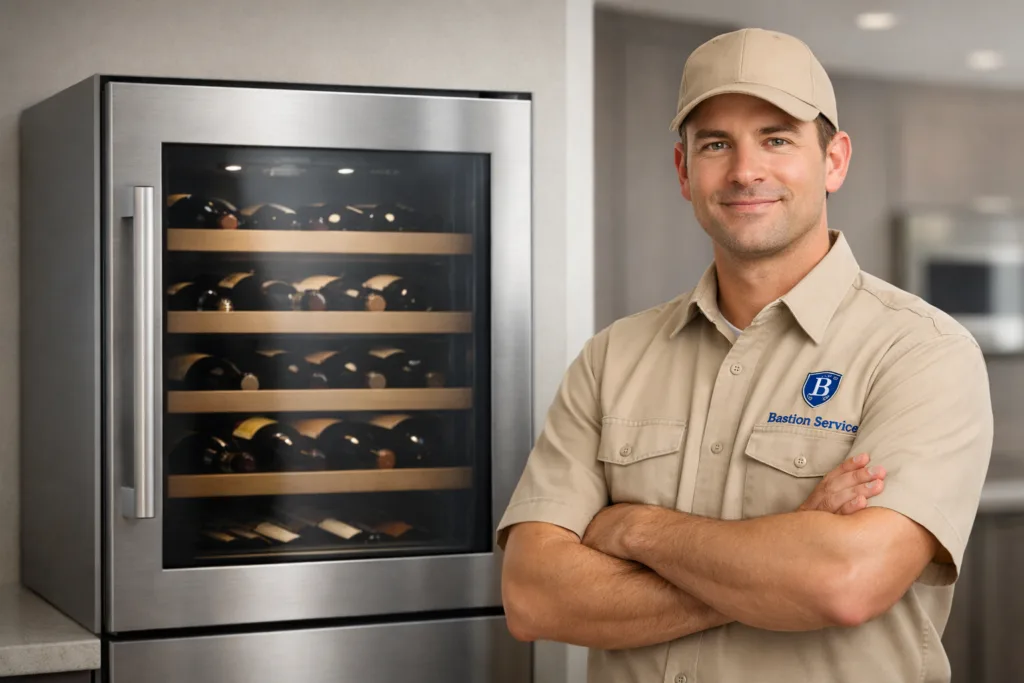
Wine coolers often show trouble gradually. You may first notice bottles not feeling as cool as they should, a change in sound during normal cycling, or moisture gathering around the door or glass. Those symptoms can point to very different causes, so it helps to look at the pattern rather than assume every cooling complaint means the same repair.
What usually causes Miele wine cooler problems
In a residential Miele wine cooler, the most common issues tend to fall into a few categories: airflow and circulation problems, temperature sensing faults, door sealing problems, drainage or condensation issues, and electrical or control-related failures. In some cases, the refrigeration system itself is involved, but many complaints start with components that affect how the unit regulates and distributes cooling.
Because wine storage depends on steady conditions, even a small change in fan operation, sensor accuracy, or door sealing can turn into noticeable temperature drift. That is why a symptom-based diagnosis is usually more useful than replacing parts based on guesswork.
Symptoms homeowners in Playa Vista often notice first
The cooler is running, but bottles are not cold enough
If the unit has power and seems to be operating but the interior is too warm, the problem may be related to restricted airflow, weak circulation, a temperature sensor issue, or controls that are not responding correctly. It can also indicate a compressor or sealed-system problem, especially if the cooler runs for long periods without reaching the set temperature.
This symptom is worth checking promptly because partial cooling can mask a larger issue. The cabinet may appear to work while storage conditions remain outside the range you expect.
Temperature keeps changing without a clear reason
Temperature swings usually suggest regulation trouble rather than a complete loss of cooling. A faulty thermistor, inconsistent fan performance, or intermittent control behavior can all create a pattern where the cabinet cools, warms, and cools again more than it should.
Uneven cooling from top to bottom or from one side to another can also be a clue. When circulation is disrupted, one zone may feel acceptable while another is too warm, which can make the problem seem less serious than it really is.
There is condensation on the glass, shelves, or door area
Moisture inside a wine cooler usually means warm air is getting where it should not, or water is not draining as intended. A worn or misaligned door gasket can allow humid air into the cabinet. A drainage issue can leave water collecting inside or near the base. In some cases, the unit may be overworking because the door is not sealing tightly after each use.
If condensation keeps returning, it is best not to ignore it. Excess moisture can affect labels, create odor issues, and add unnecessary strain to cooling components.
The fan is noisy, or the unit sounds different than before
Many wine coolers make low operational sounds during normal use, but a noticeable change matters. Buzzing, clicking, rattling, or a rubbing sound may point to a circulation fan problem, vibration from a loose component, or stress in the cooling system. Repeated clicking can also suggest difficulty during start-up or control-related interruptions.
Sound changes are often one of the earliest clues that a component is wearing out. If the noise is new and consistent, it usually deserves inspection before it turns into a no-cooling call.
The display, lighting, or controls are acting erratically
When settings do not hold, alarms appear unexpectedly, or the display behaves inconsistently, the issue may be electrical rather than purely mechanical. Some control faults directly affect cooling performance, while others create misleading symptoms that make the cooler seem less stable than it is.
Interior lighting issues by themselves may not seem urgent, but when they appear alongside temperature drift or alarm activity, they can help narrow down whether the fault is in the user interface, wiring, or main control system.
Why door seal and airflow issues matter more than they seem
A door that looks closed is not always sealing properly. Even a slight gasket problem can let warmer household air into the cabinet, leading to condensation, longer run times, and unstable storage conditions. In a wine cooler, that extra cycling can affect both performance and component wear over time.
Airflow is just as important. If internal circulation is compromised, cold air may not move evenly through the cabinet. That can create hot spots, false impressions of proper cooling, and ongoing temperature inconsistency that becomes more obvious as the issue worsens.
When to stop using the cooler until it is checked
You do not always need to shut the unit down immediately, but there are cases where continued use can create more risk. It is usually wise to stop relying on the cooler if:
- the temperature is clearly too warm and does not recover
- the compressor seems to run almost constantly
- water buildup keeps returning
- the fan noise becomes loud or irregular
- the controls are unresponsive or the display is unstable
- the door is not sealing securely
Running a struggling appliance for too long can add wear to fans, controls, and cooling components. It can also put the stored contents at risk if the cabinet is no longer maintaining stable conditions.
What to check before scheduling repair
Before arranging service, a few basic observations can help make the problem easier to identify:
- whether the issue is constant or comes and goes
- how long the symptom has been happening
- whether the problem started with noise, condensation, or temperature change first
- whether the door closes flush and stays sealed
- whether the display shows alarms or stops responding
- whether the cabinet feels unevenly cooled inside
These details are often more helpful than a general description like “not working right,” especially when the cooler still runs but no longer performs normally.
Repair or replacement for a Miele wine cooler
Repair is often reasonable when the problem is tied to an isolated component such as a fan, sensor, gasket, control issue, or drainage-related part and the cabinet is otherwise in good condition. Replacement becomes a stronger consideration when the diagnosis points to major refrigeration-system failure, multiple faults at once, or a repair path that no longer makes sense for the appliance’s age and condition.
For many households in Playa Vista, the decision comes down to whether the fault is contained and serviceable or whether the cooler has reached a point where repair is no longer cost-effective. The best answer usually comes after the exact source of the symptom is identified.
What a symptom-based service visit should clarify
A useful service call should sort out whether the complaint is being caused by cooling loss, poor air circulation, a sealing problem, excess moisture, or an electrical fault affecting normal operation. It should also clarify whether the issue appears isolated or part of a broader pattern involving more than one system in the appliance.
That approach gives homeowners in Playa Vista a more realistic understanding of what needs to be fixed, how urgent the repair is, and whether the wine cooler is a good candidate for continued service. For Miele Wine Cooler Repair in Playa Vista, that kind of focused evaluation is usually the fastest way to move from symptoms to an informed repair decision.