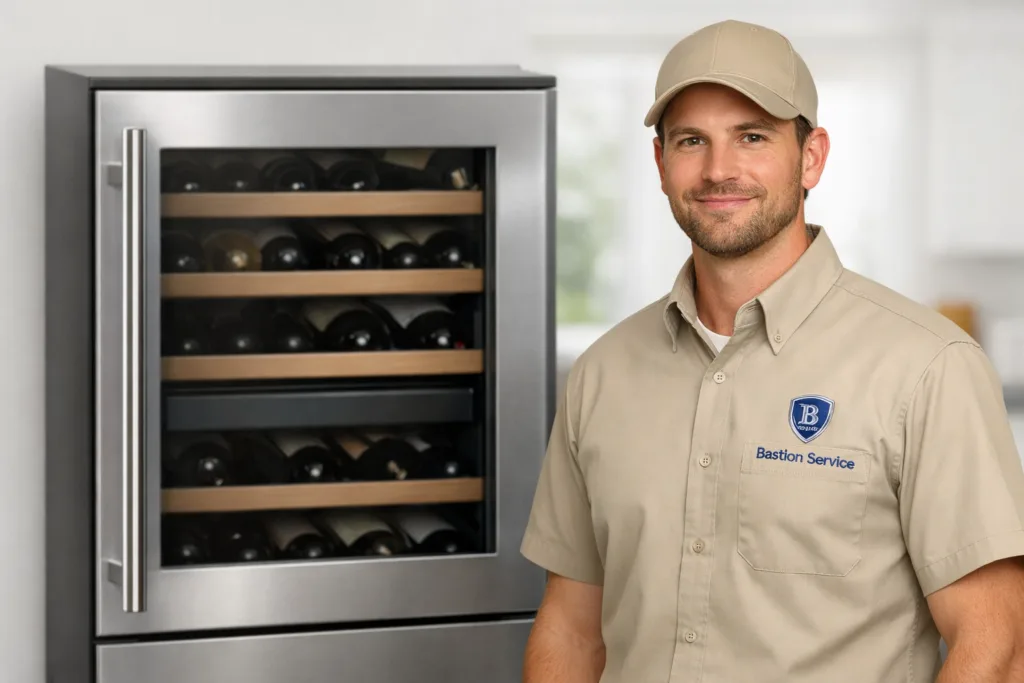
Small changes in wine cooler performance usually show up before a complete breakdown. If the cabinet starts feeling warmer than expected, bottles are not holding a steady temperature, or the unit is suddenly louder than usual, the problem is often easier to address early than after cooling performance drops further.
Common Marvel wine cooler symptoms and what they may mean
Marvel wine coolers are designed to maintain a stable storage environment, so symptoms that seem minor can still signal a real fault. The most useful way to approach service is by matching the behavior of the unit to the components most likely involved.
Not cooling or cooling unevenly
If the cabinet is too warm, takes a long time to recover after the door opens, or drifts above the set temperature, possible causes include restricted condenser airflow, a weak evaporator fan, a failed sensor, a thermostat or control issue, or a sealed-system problem. Uneven cooling from top to bottom can also point to airflow trouble inside the cabinet rather than a simple setting issue.
In a household setting, this matters because wine can be exposed to repeated temperature swings even when the cooler still appears to be running. A unit that is “almost cold” is often already outside normal operation.
Running constantly
A Marvel wine cooler that seems to run all day may be struggling to remove heat or may be receiving incorrect temperature feedback. Dirty condenser areas, poor ventilation, a worn door gasket, or a control fault can all cause extended run times. Built-in units are especially sensitive to ventilation problems because heat has fewer ways to escape if surrounding space is too tight or airflow is blocked.
Long run cycles should not be ignored. Continuous operation can increase wear on the compressor and may raise cabinet temperatures if the cooling system is no longer working efficiently.
Fan noise, rattling, buzzing, or clicking
New sounds often help narrow the repair path. A rattling sound may come from vibration, mounting hardware, or a fan blade contacting nearby material. Buzzing can point to compressor strain or an electrical issue. Clicking may be related to startup trouble, controls, or components cycling on and off without fully engaging.
If the noise starts suddenly, gets louder, or appears together with poor cooling, it is usually a sign that the problem is progressing rather than cosmetic.
Condensation or water inside the cooler
Moisture inside the cabinet or on nearby flooring can come from a blocked drain, excess humidity entering through a weak door seal, or a cooling problem that changes the way the unit cycles. Water around a built-in wine cooler should be addressed promptly because it can affect adjacent woodwork, flooring, and cabinet finishes.
Condensation on glass or around the door can also indicate that warm air is leaking into the cabinet more often than it should.
Display, controls, or temperature setting problems
If the display is inconsistent, settings do not respond normally, or the temperature shown does not match actual cabinet conditions, the issue may involve the control board, interface, thermistor, or related wiring. Control-related faults can look similar to cooling-system problems at first, which is why symptom-based testing matters before replacing parts.
Door seal and airflow problems are more important than they look
One of the most overlooked causes of wine cooler trouble is poor sealing. If the door gasket is torn, hardened, loose, or not seating evenly, warm room air can enter the cabinet and create several symptoms at once: longer run times, temperature drift, condensation, and extra strain on fans and compressor components.
Airflow is just as important. A Marvel unit installed in a kitchen, bar area, or built-in cabinet in Playa Vista needs proper space for heat to dissipate. When ventilation is compromised, the cooler may still run but struggle to maintain stable temperatures.
- Door not closing flush
- Visible gasket gaps or cracking
- Cabinet feels warmer near vent areas
- Cooling improves temporarily when the door stays closed for long periods
- Compressor and fans seem to run more than before
When a repair is usually straightforward
Many wine cooler problems are still good repair candidates when the issue is limited to serviceable components. Fan motors, sensors, thermostatic controls, drain issues, gaskets, and some electrical parts can often be repaired without the kind of major work associated with sealed-system failure.
That is why a proper diagnosis matters. Symptoms like “not cooling” do not automatically mean the unit is at the end of its life. In many cases, the underlying fault is much narrower than homeowners expect.
When replacement may be worth considering
Replacement becomes a more serious discussion when the unit has major compressor trouble, sealed-system failure, repeated breakdowns, or repair cost that no longer fits the age and condition of the cooler. For built-in installations, the decision is not always simple. Size, trim fit, ventilation requirements, and cabinet compatibility can all affect whether repairing the existing unit makes more sense than changing it out.
For homeowners in Playa Vista, that evaluation is often most useful when based on three things:
- The exact failed component or system
- The overall condition of the wine cooler
- The scope of work required to restore reliable temperature control
Signs you should schedule service soon
Some issues can wait a short time, but others tend to worsen quickly. It makes sense to schedule service if the cooler is no longer holding temperature, starts making unfamiliar noise, develops condensation that keeps returning, or runs much longer than normal. These symptoms usually mean the unit is no longer operating efficiently.
You should also act sooner if the cooler stores valuable bottles or is installed in finished cabinetry where moisture or heat buildup could affect surrounding surfaces.
What homeowners can check before a repair visit
A few simple observations can help narrow the issue and make the appointment more productive. Before service, it helps to note whether the cabinet is warm all the time or only intermittently, whether the display appears accurate, and whether the noise happens during startup, shutdown, or continuous operation.
- Confirm the door is closing fully
- Look for visible moisture around the gasket or inside the cabinet
- Check whether shelves or bottle placement are blocking airflow
- Notice if the cooler is unusually hot near vented areas
- Pay attention to whether the sound is a rattle, buzz, click, or fan scrape
These details can help separate an airflow or sealing issue from a control or sealed-system concern.
A focused repair approach for Marvel wine coolers in Playa Vista
For residential service, the goal is not just to make the unit turn on again. It is to identify why cooling stability changed, whether the problem is mechanical, electrical, airflow-related, or tied to the sealed system, and whether the repair path makes sense for the appliance you already have. That gives homeowners a more useful next step than trial-and-error parts replacement.
If your Marvel wine cooler is warming up, collecting moisture, running too long, or becoming noisier in Playa Vista, addressing the symptom early can help protect both the appliance and the conditions your wine is stored in.