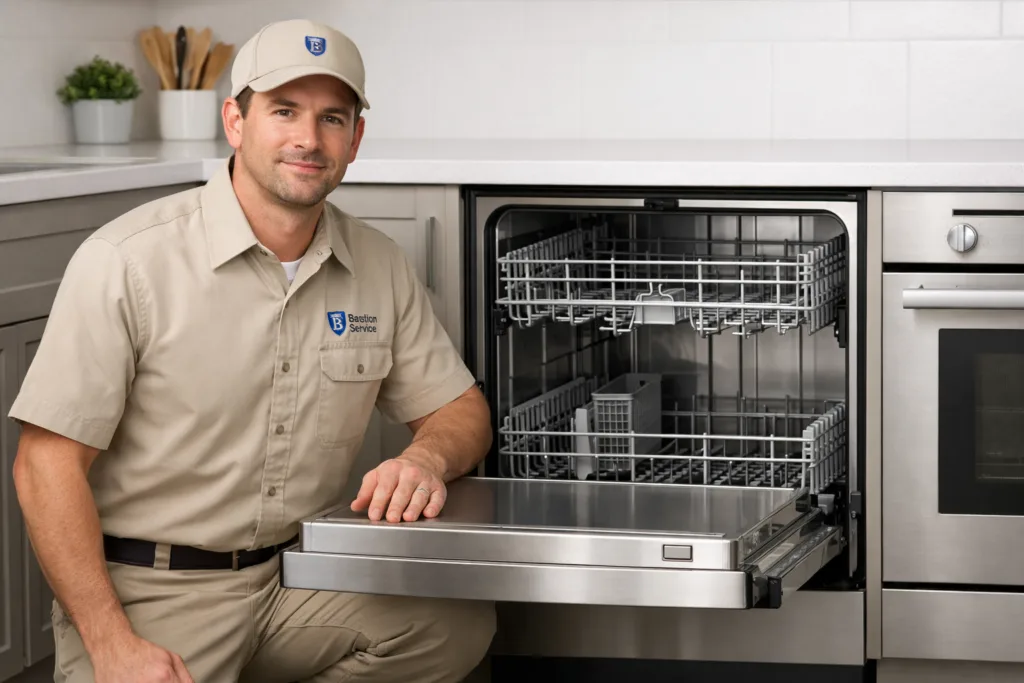
Dishwasher problems tend to show up in a few recognizable ways: water left in the bottom, dishes that come out cloudy, a door-area leak, or a cycle that simply stops before it should. With Summit models, those symptoms can overlap, so the best next step is to look at what the dishwasher is doing throughout the cycle instead of assuming one part is to blame.
For homeowners in Playa Vista, that usually means paying attention to whether the issue happens during fill, wash, heat, drain, or drying. A dishwasher that fills but does not wash points to a different repair path than one that washes normally and then leaves dirty water behind.
Common Summit dishwasher symptoms and what they may mean
Standing water after the cycle
If water is still sitting in the tub at the end of a cycle, the dishwasher may have a restricted drain path, a failing drain pump, debris around the filter area, or a control problem that prevents the drain step from finishing. Some units drain slowly for a while before they stop draining altogether, which can be a sign of a weakening pump or buildup that is getting worse over time.
It is best not to keep running the dishwasher with standing water inside. Recirculated dirty water can leave odor, create poor wash results, and place extra strain on the pump system.
Dirty dishes, film on glasses, or detergent residue
When a Summit dishwasher is not cleaning well, the problem is not always the detergent. Poor wash performance can be caused by reduced spray arm movement, weak circulation, low rinse temperature, a dispenser issue, or filter blockage that limits water movement through the machine.
A few symptom details can help narrow things down:
- If the top rack is noticeably worse than the bottom, spray coverage may be uneven.
- If both racks come out equally dirty, the issue may be more central to circulation or heating.
- If detergent is left in the cup, the dishwasher may not be dispensing properly or wash action may be too weak to dissolve it.
Leaking from the front, underneath, or after the cycle
A dishwasher leak is often blamed on the door seal, but that is only one possibility. Water on the floor can also come from an internal hose connection, a drain component, an inlet issue, or a spray pattern problem that sends water where it should not go. A puddle that appears only while the unit is actively washing may point in one direction, while water that shows up later may indicate a drain-related problem.
Even a small leak should be taken seriously. Moisture under cabinets or flooring can become a much larger household repair than the dishwasher issue itself.
Unit will not start or stops mid-cycle
If the dishwasher does not respond at all, possible causes include a latch problem, control fault, interrupted power, or a component failure that prevents the machine from advancing. If it starts and then stops at the same point repeatedly, that pattern often helps identify whether the trouble occurs during filling, washing, heating, or draining.
Helpful clues include whether the display lights up, whether you hear water entering, and whether the machine pauses with water still inside. Those details can separate a no-power complaint from a wash-system or drain-related failure.
Low heat or poor drying
Some Summit dishwasher complaints are really heat-related. If dishes come out wet, greasy, or not fully sanitized, the machine may not be reaching the proper rinse temperature. Low heat can also contribute to film on glassware and detergent that does not fully dissolve.
When poor drying appears together with weak cleaning, both symptoms should be evaluated together rather than treated as separate issues.
Grinding, humming, or new rattling sounds
A dishwasher will always make some normal operating noise, but a new grinding or humming sound usually means something has changed. Debris in the pump area, motor strain, spray arm interference, or drain trouble can all create unusual sound patterns. If the noise is paired with slow draining or poor cleaning, that combination can be especially useful during diagnosis.
How symptom patterns help pinpoint the repair
Two dishwashers can show the same visible symptom and still need very different repairs. For example, poor cleaning may come from a circulation issue, but it can also happen when the dishwasher is not heating properly or when dirty water is not draining out fully between stages. In the same way, a leak near the front edge may look like a seal problem even when the underlying cause is spray pressure or internal water movement.
That is why symptom timing matters. Knowing whether the issue appears at the start of the cycle, during the main wash, near the drain phase, or only after the cycle ends can make the repair path much more accurate.
Signs you should stop using the dishwasher for now
It is smart to stop using the unit and arrange service if you notice any of the following:
- Water leaking onto the floor
- Standing water that does not drain out
- A burning smell or electrical odor
- Repeated tripping of power
- Loud grinding or straining noises
- A door that will not latch securely
Continuing to run test cycles in these conditions can turn a limited appliance repair into cabinet, flooring, or electrical damage.
When repair is often worthwhile
Many Summit dishwasher problems are still reasonable to repair when the issue is isolated to a pump, drain component, latch, seal, dispenser, or wash-system fault. If the tub and overall structure are still in good condition and the machine has otherwise been reliable, repair often makes sense.
Replacement becomes more likely when there are several major issues at once, visible structural wear, repeated leaks, or ongoing performance complaints that suggest the dishwasher is declining in more than one system. The right decision depends on the actual condition of the appliance, not just the frustration of one failed cycle.
What to note before scheduling service
Before service, it helps to write down exactly what the dishwasher is doing. A few observations can save time and make the diagnosis more accurate:
- Does the problem happen on every cycle or only certain settings?
- Is water left in the bottom when the cycle ends?
- Are dishes dirty on one rack or throughout the whole machine?
- Do you hear filling, washing, and draining, or does one stage seem to be missing?
- If there is a leak, where does the water appear?
- Is the unit failing to dry, rinse, or complete the full cycle?
For households in Playa Vista, these details are often the difference between a quick, targeted repair and a longer process of ruling things out.
Keeping a Summit dishwasher working reliably
Regular filter cleaning, proper loading, and paying attention to new sounds or slower drain performance can help catch problems before they become larger repairs. A dishwasher rarely goes from perfect operation to total failure without some warning. More often, the early signs are subtle: slightly cloudy glassware, a longer drain, a hum that was not there before, or a door that needs more effort to latch.
When those changes start appearing, addressing them early is usually the best way to restore normal washing performance and avoid a more disruptive breakdown in the kitchen.