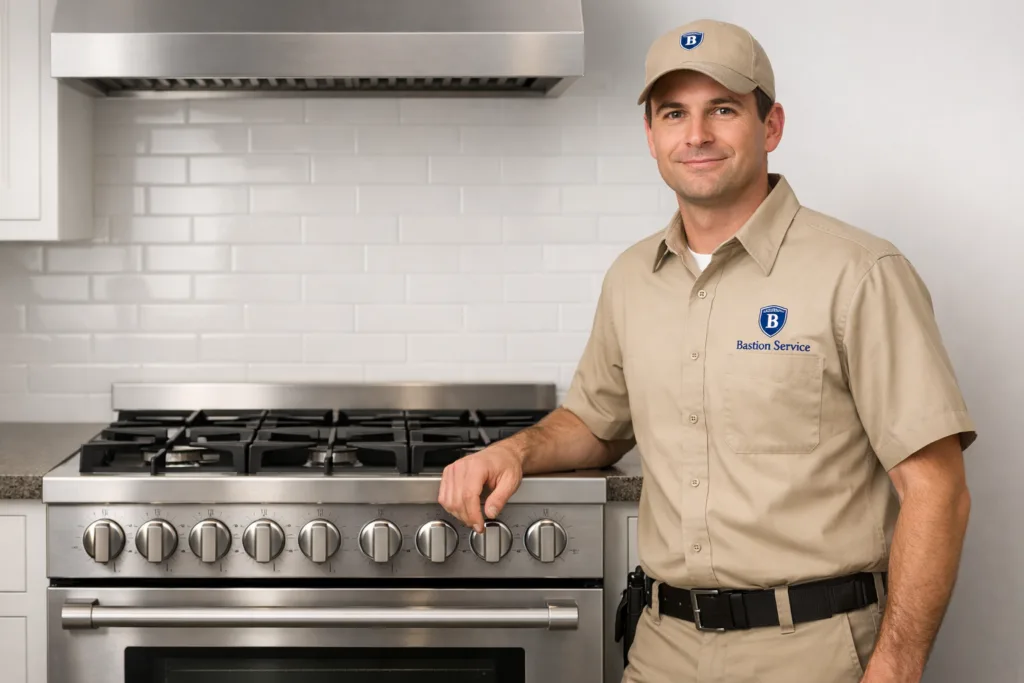
Cooking problems tend to become obvious quickly with a range: a burner that will not light, an oven that runs too hot, or controls that respond inconsistently can interrupt meals and make the appliance harder to trust. With Summit models, the most useful starting point is matching the exact symptom to the part of the appliance that is likely failing, rather than assuming every heating issue comes from the same cause.
Start with the symptom, not the part
A Summit range combines surface cooking, oven heating, ignition components, sensors, and electronic controls in one appliance. Because of that, similar complaints can come from very different failures. Slow preheating may point to an igniter on one model and a heating circuit problem on another. Constant clicking may be caused by moisture, a switch issue, or an ignition fault. A proper diagnosis helps separate a simple correction from a repair that needs replacement parts.
In Mid-Wilshire homes, this matters most when the problem seems intermittent. A burner that works one day and not the next, or an oven that misses the target temperature only during longer baking cycles, usually needs a closer look before any repair decision is made.
Common Summit range problems homeowners notice first
Burner will not ignite or lights slowly
On gas ranges, delayed ignition often shows up as repeated clicking, a weak flame, or a burner that eventually lights after several tries. This can happen when burner ports are clogged, the cap is misaligned, the spark system is not firing correctly, or fuel flow is uneven. If one burner behaves differently from the others, that detail can help narrow the issue faster.
Slow ignition should not be ignored. Even when the burner eventually lights, repeated delays can make the range less safe to use and may indicate a problem that will worsen over time.
Burner clicks constantly
Continuous clicking is one of the more common complaints with gas cooking appliances. In some cases, moisture from cleaning or a recent boil-over is affecting the ignition area. In others, the spark switch may be sticking or the ignition system may be misfiring. If the clicking continues after the area is fully dry, the range usually needs inspection before normal use continues.
Electric burner stays cold or heats unevenly
On electric Summit ranges, a surface element that does not heat properly may have a failing element, switch, receptacle, or wiring connection. Some homeowners also notice that the burner only works at one heat level or cycles unpredictably. That kind of pattern often points to a control issue rather than a cookware problem.
Oven takes too long to preheat
A long preheat time is often treated like a minor annoyance, but it can be an early sign of a failing oven component. Depending on the range design, the cause may involve the igniter, bake system, broil assistance during preheat, temperature sensing, or the control board. If preheat times keep increasing, the oven may still warm up enough to seem usable while producing poor baking results.
Oven temperature is off
If food comes out undercooked in the center, scorched on the bottom, or uneven from front to back, the oven may not be regulating heat correctly. A sensor reading out of range, a weak heating component, or a control fault can all create temperature drift. This is especially noticeable during baking, roasting, and any recipe that depends on stable heat for a longer period.
Display, keypad, or control problems
When the display is blank, settings change on their own, or buttons stop responding, the issue may be tied to the user interface, control board, wiring, or incoming power. These symptoms can overlap, which is why replacing the most visible part first does not always solve the problem. If the oven starts and stops unexpectedly or loses settings during use, the range should be checked before relying on it for regular cooking.
Signs the problem may be getting more serious
Some range issues begin as small inconveniences and then spread into larger failures. It is smart to stop using the appliance and schedule service if you notice any of the following:
- Burners that fail to ignite reliably
- Repeated clicking that does not stop
- Oven overheating or burning food unusually fast
- Power tripping during cooking or preheating
- Controls that behave unpredictably
- A burner or element that stays on incorrectly
If there is a strong or persistent gas smell, do not continue testing the range. Stop using it immediately and follow appropriate gas safety steps before arranging appliance service.
Why accurate diagnosis matters with Summit ranges
Replacing parts based only on a general symptom can add cost without fixing the appliance. A burner ignition complaint may not require the same repair on every Summit range. Likewise, an oven heating problem can involve the bake side, broil side, sensor, control, or power path. Symptom-based troubleshooting is what keeps the repair focused and helps determine whether the problem is isolated or part of a broader appliance condition issue.
This is also the point where homeowners can make a better repair decision. If the fault is limited and the range is otherwise in good shape, repair is often worthwhile. If multiple systems are failing at once or the appliance has ongoing control and heating issues, replacement may become the better long-term move.
Repair or replace: what usually makes the difference
Many Mid-Wilshire homeowners choose repair when the Summit range fits the kitchen well, matches existing cooking needs, and has one clearly defined failure. That is often true for ignition repairs, isolated burner problems, or a single oven heating fault.
Replacement becomes more reasonable when the range has repeated electrical problems, multiple nonworking functions, severe wear, or repair costs that begin to approach the value of the appliance. The key is not the inconvenience of one bad cooking day, but whether the appliance still has a sensible repair path based on its overall condition.
What to note before scheduling service
A few details can make troubleshooting more direct. Before service, it helps to write down what the range is doing and when it happens. Useful observations include:
- Whether the issue affects the cooktop, the oven, or both
- Whether the problem is constant or intermittent
- Which burner or function is affected
- Whether the problem starts during preheat, during cooking, or after the appliance has been on for a while
- Any unusual sounds, clicking, shutoffs, or display behavior
That symptom history often leads to faster answers and a more practical repair plan, especially when the range has more than one complaint or the failure appears only under certain cooking conditions.
Residential help for Summit range issues in Mid-Wilshire
For household cooking equipment, the goal is usually straightforward: restore safe, consistent burner and oven performance without unnecessary part changes. Whether the issue involves ignition trouble, uneven heating, clicking, or control failure, the best next step is an inspection that matches the repair approach to the actual symptom pattern and current condition of the range.