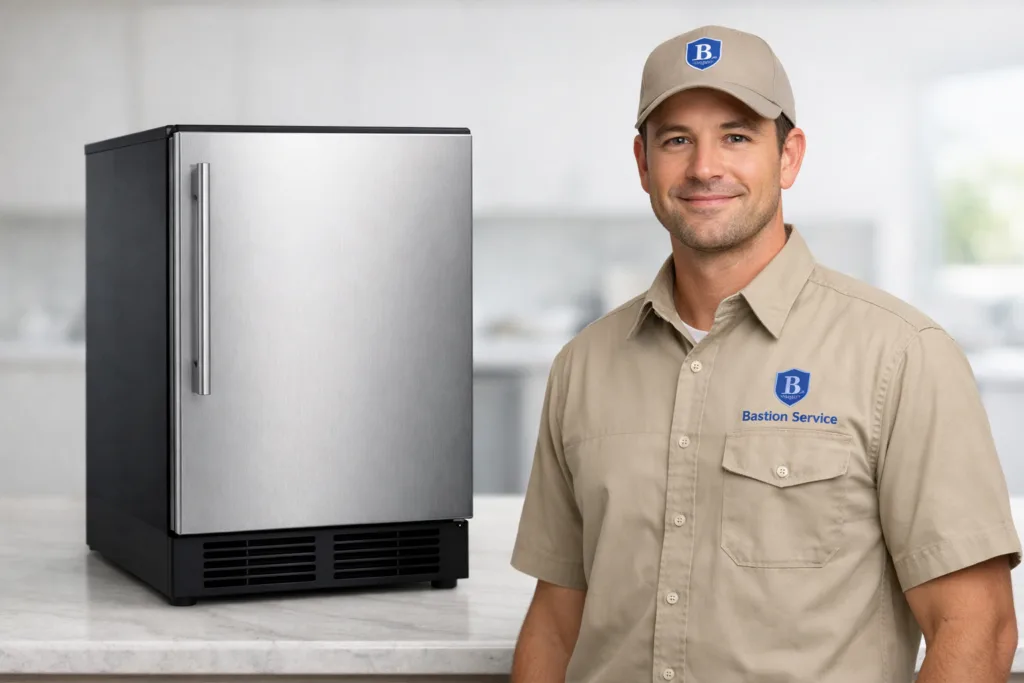
Ice makers tend to fail in patterns. One Summit unit may stop filling, another may freeze a solid block in the mold, and another may still run while producing only a few weak cubes each day. Looking at the exact symptom sequence usually tells you far more than the single complaint of “not making ice.” In Palos Verdes Estates homes, that matters because built-in and undercounter installations often hide early warning signs until output drops or water appears around the appliance.
A useful service call starts by checking the full cycle: water fill, freeze time, harvest action, bin behavior, and temperature conditions inside the compartment. That approach helps distinguish a simple water-supply issue from a failing sensor, control problem, or refrigeration-related fault.
Common Summit Ice Maker Problems Homeowners Notice
No ice at all
If the bin stays empty, the cause may be mechanical, electrical, or temperature-related. The shutoff mechanism may be out of position, the inlet valve may not be opening, the mold may not be filling, or the unit may not be reaching the temperature needed to complete an ice cycle. Some machines also appear to run normally from the outside while failing at one specific stage inside the system.
Slow ice production
When a Summit ice maker still works but cannot keep up with normal household use, the issue is often tied to reduced fill volume, marginal cooling performance, sensor errors, or a cycle that is taking too long to complete. Slow production is easy to ignore at first, but it often signals a developing problem rather than a temporary fluctuation.
Small, thin, or hollow cubes
Cube shape can be one of the most helpful clues. Small or hollow cubes usually point to inadequate water entering the mold. That can happen because of low supply pressure, a restricted line, mineral buildup, or a water inlet valve that is no longer opening properly. If the fill is inconsistent, batch quality will usually be inconsistent too.
Leaks or water under the appliance
Leaks deserve prompt attention. Water can come from a loose connection, cracked tubing, an overfill condition, or internal ice buildup that redirects meltwater where it should not go. In a finished kitchen or bar area, even a small recurring leak can affect flooring, trim, and nearby cabinetry.
Clumped ice or freezing inside the mechanism
When cubes fuse together or the assembly freezes up, the machine may be overfilling, failing to harvest properly, or operating with uneven temperature control. Homeowners sometimes clear the ice manually and restart the unit, but repeated freezing usually means the underlying cause is still present.
Buzzing, clicking, or grinding sounds
Unusual sounds often show up before full failure. A buzzing noise may suggest valve trouble, clicking may relate to control or switching issues, and grinding can indicate trouble during the harvest cycle. Noise matters most when it appears alongside reduced output, jams, or erratic cycling.
What Usually Causes These Symptoms
Summit ice makers depend on several systems working together in the right order. Problems often trace back to one of these areas:
- Water delivery issues: restricted supply lines, weak inlet valves, poor fill, or mineral-related blockage
- Temperature problems: the compartment not reaching or maintaining proper ice-making conditions
- Harvest and mold issues: ice not releasing correctly, ejector parts sticking, or the mold freezing unevenly
- Sensor and control faults: the machine not advancing through the cycle as intended
- Drainage or moisture problems: water backing up, refreezing, or pooling where it should not
Because the same symptom can come from more than one of these categories, guesswork often leads to the wrong repair.
Why Symptom-Based Diagnosis Matters
A Summit ice maker that makes no ice and a Summit ice maker that makes poor-quality ice may both involve the water system, but they may not need the same repair. Likewise, a leak could come from tubing, overfill, or internal icing. Checking temperatures, fill behavior, and cycle response helps narrow the fault before parts are replaced.
This is especially important when the appliance is integrated into cabinetry in Palos Verdes Estates homes, where access can be tighter and water-related issues can affect surrounding finishes. A good diagnosis should explain not just what failed, but whether the problem appears isolated or part of a broader condition inside the unit.
When to Stop Using the Ice Maker
It is usually best to stop running the appliance and arrange service if you notice:
- water leaking onto the floor or into adjacent cabinets
- repeated overfilling or sheets of ice forming in the mold area
- new grinding or loud buzzing noises
- electrical interruption, intermittent shutoff, or failure to restart normally
- persistent freezing that returns after manual clearing
Continuing to force operation can worsen motor strain, increase ice blockage, and allow water damage to continue unnoticed.
When Service Makes Sense
Repair is often worthwhile when the main refrigerator or dedicated ice maker cabinet is otherwise in good condition and the fault appears limited to the ice-making system. Valves, switches, sensors, fill components, and many cycle-related parts can often be addressed without treating the appliance as a total loss.
Service is also the right next step when the problem has moved beyond a one-time inconvenience. If output keeps declining, cubes have changed shape, or the same jam keeps returning, the pattern usually indicates a real component or system issue rather than normal variation.
When Replacement May Be the Better Option
Replacement becomes a more serious consideration when the unit has multiple problems at once, recurring leak damage, poor temperature performance beyond the ice maker itself, or repair needs that extend into broader deterioration. If the appliance has a history of repeated failures and the current issue is only the latest one, the total repair path may no longer make sense.
That decision should be based on condition, not frustration. A proper evaluation can show whether the issue is a targeted repair or part of a larger decline in appliance performance.
What Homeowners Should Pay Attention To Before Service
If possible, note what the machine has been doing over the last several days. Helpful details include whether it stopped suddenly or slowly declined, whether the cubes changed size before production stopped, whether leaks happen constantly or only during fill, and whether unusual sounds occur at startup, during fill, or during harvest. These patterns can make the problem much easier to trace.
It also helps to avoid repeated resets right before an appointment. Temporary restarting can erase useful symptom timing and make an intermittent issue harder to verify.
Summit Ice Maker Repair in Palos Verdes Estates
For homeowners in Palos Verdes Estates, the most useful next step is service that identifies the exact failure point instead of treating all ice problems as the same. Whether the issue is no ice, slow production, leaks, clumped cubes, or fill trouble, the repair path should be based on what the unit is actually doing at each stage of operation.
When that symptom pattern is understood, it becomes much easier to decide whether repair is straightforward, whether continued use risks more damage, and whether the appliance is worth fixing.