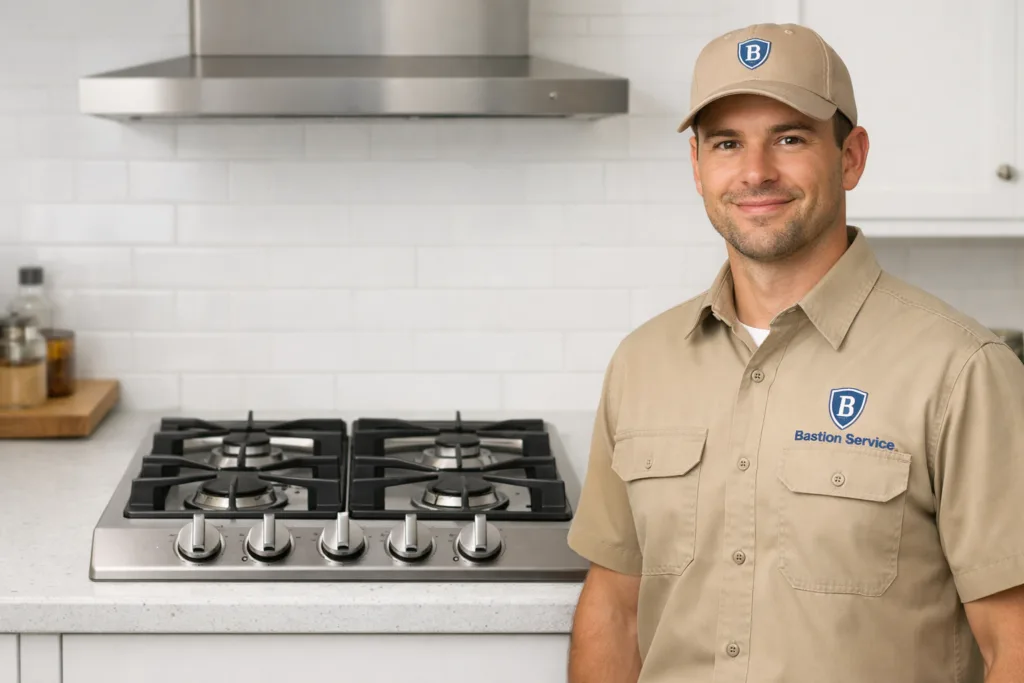
Cooktop problems are easiest to solve when the symptom is narrowed down before any parts are replaced. On a Summit unit, one burner failure can come from an igniter issue, a switch problem, a damaged element, wiring trouble, or a control fault. A symptom-based inspection helps separate a minor repair from a larger issue and gives homeowners a better sense of whether the appliance is worth fixing.
Common Summit cooktop problems homeowners notice first
Gas burner clicks but does not light
If the igniter is sparking but the burner will not light, the cause may be as simple as moisture, food debris, or a burner cap that is not seated correctly. If the issue keeps returning, the fault may involve the spark ignition system, switch harness, or gas flow at that burner. Repeated clicking without ignition should not be ignored, especially if cooking has become inconsistent.
Igniter keeps clicking after the flame is on
Continuous clicking often starts after a spill or cleaning, but it can also point to a stuck switch or ignition component that is no longer responding normally. When the clicking continues after the cooktop is dry and the burner parts are properly aligned, service is usually the next sensible step.
Electric burner does not heat
On electric Summit cooktops, a cold burner may indicate a failed radiant element, a bad infinite switch, wiring damage, or a connection issue beneath the surface. If one burner works and another does not, that usually helps narrow the failure to a specific circuit rather than a whole-unit power problem.
Burner heats unevenly or runs too hot
A burner that cycles unpredictably can make everyday cooking frustrating. Instead of steady heat, pans may scorch in one spot or take too long to warm. This can be caused by a weakening element, a failing switch, sensor trouble, or control-related issues that no longer regulate output correctly.
Controls respond poorly or do not match the setting selected
If the cooktop turns on but heat levels do not match the selected setting, the problem may involve a control board, switch, touch interface, or internal electrical fault. These issues matter because they affect both cooking performance and safe operation.
Cooktop trips the breaker or loses power during use
This is one of the more important warning signs. Breaker trips can point to a shorted component, damaged wiring, or a connection problem at the terminal area. If a Summit cooktop repeatedly loses power, it should be inspected before further use rather than reset over and over.
What different symptoms can mean
Some symptoms look similar on the surface but come from different causes. That is why accurate testing matters.
- Only one burner fails: often points to an individual burner component, igniter, element, or switch.
- Multiple burners act up: may suggest a shared control, power supply issue, or wiring problem.
- Problem started after a boil-over: moisture or debris may be interfering with ignition or control response.
- Heat output no longer matches the dial: commonly tied to regulation components rather than the cookware itself.
- Intermittent operation: can indicate a part that is failing under heat, not one that has completely stopped working.
Signs the cooktop should not keep being used
Some faults are more than a convenience issue. Continued use can increase damage, make the repair more expensive, or create an avoidable safety concern. It is wise to stop using the unit and arrange service when you notice any of the following:
- A strong gas odor or a burner that will not ignite reliably
- A burner stuck on high or failing to regulate temperature
- Clicking that does not stop
- Sparking, breaker trips, or intermittent power loss
- Visible damage to the glass surface, burner assembly, or controls
In Palos Verdes Estates homes, cooktops are often used daily, so even a small performance issue tends to become disruptive quickly. Early attention can help prevent secondary wear on switches, wiring, and surface components.
Cracked glass and surface damage
If a Summit glass cooktop has a visible crack, chips near a burner area, or impact damage, the condition should be evaluated before the appliance is used again. Surface damage is not just cosmetic. It can affect heat distribution, allow moisture into internal components, and create risk around normal operation and cleaning. Whether repair is practical depends on the exact damage, the model, and whether additional internal parts were affected.
When repair is usually reasonable
Many Summit cooktop service calls involve isolated part failures that can be repaired without replacing the appliance. That is often true when the issue is limited to one burner, one ignition component, one switch, or one damaged connection. Repair tends to make the most sense when the cooktop is otherwise in solid condition and the fault has not spread to multiple systems.
When replacement may make more sense
Replacement becomes a more realistic option when the cooktop has multiple failing parts, major surface damage, a history of repeat breakdowns, or a repair cost that is difficult to justify for the unit’s age and condition. The goal is not simply to get the appliance running once, but to restore dependable daily use without sinking money into a poor long-term outcome.
How homeowners in Palos Verdes Estates can help narrow the issue
Before service, it helps to pay attention to the exact pattern of failure. Small details often make diagnosis faster and more accurate.
- Does the issue affect one burner or all burners?
- Did the symptom begin suddenly or get worse over time?
- Did it start after cleaning, a spill, or a breaker trip?
- Is the burner completely dead, or does it work only sometimes?
- Do controls seem responsive, delayed, or inaccurate?
These observations can help determine whether the problem is likely mechanical, electrical, ignition-related, or tied to the control system.
What a repair visit should clarify
A useful service call should answer a few practical questions: what failed, whether the cooktop can be used safely, whether the problem is isolated or part of a larger condition, and whether the repair is likely to hold up. That gives homeowners a straightforward basis for deciding how to proceed instead of guessing based on symptoms alone.
For Summit cooktop issues in Palos Verdes Estates, the most effective next step is to match the symptom to the actual fault. Whether the problem is clicking, uneven heat, a dead burner, control trouble, or damaged glass, the right diagnosis helps you decide if repair is the best path for your kitchen.