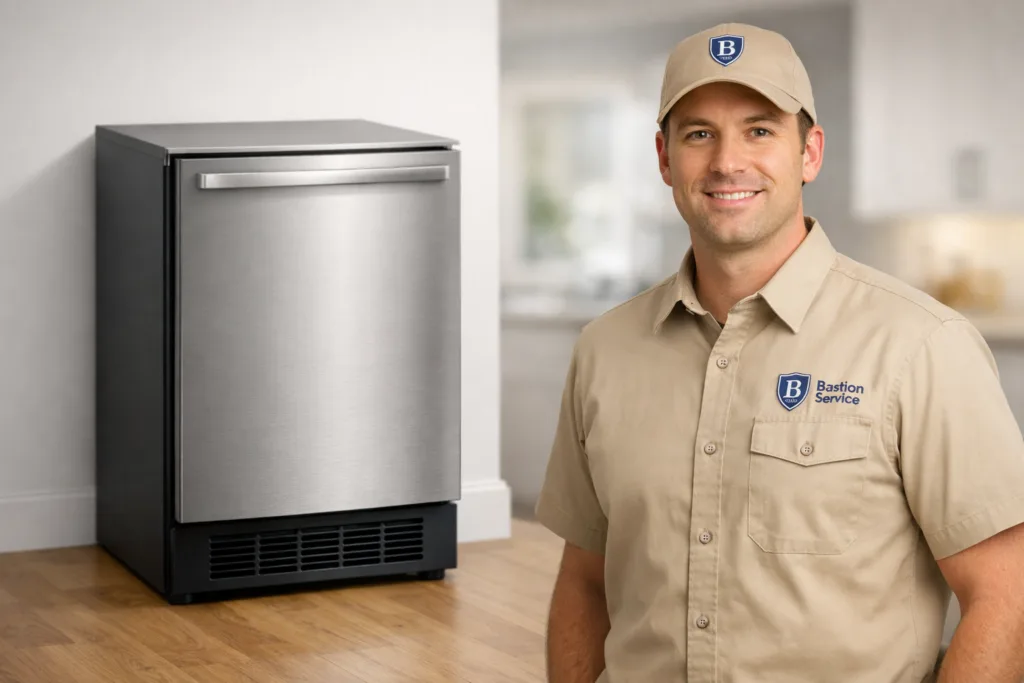
Ice maker problems rarely come from just one source. On a Summit unit, the symptom may start at the water line, inlet valve, fill tube, thermostat, sensor, fan, or control system. In some cases, the ice maker itself is not the only issue at all, and the real cause is a temperature problem elsewhere in the refrigeration system. That is why part swapping based on guesswork often leads to repeat breakdowns.
Common Summit ice maker problems in Mar Vista homes
No ice production at all
If the bin stays empty, the most common causes are blocked water flow, a frozen fill tube, a failed water inlet valve, a sensing problem, or temperatures that are too warm for a normal freeze-and-harvest cycle. A Summit ice maker may still appear powered on while quietly failing to complete the steps needed to produce ice.
When this happens, it helps to note whether the failure was sudden or gradual. A sudden stop can point to a valve, control, or electrical fault. A gradual decline often suggests restricted water flow, a temperature drift, or a component weakening over time.
Slow or inconsistent ice production
When the unit makes some ice but not enough, the issue is often tied to partial water restriction, mineral buildup, unstable freezer temperatures, poor airflow, or a valve that is no longer opening properly. Intermittent performance usually means a component is still working some of the time but no longer within normal range.
Homes that rely on steady ice production usually notice this problem early because the machine cannot keep up with normal household use. If the pattern changes from day to day, the fault is often more than a simple reset issue.
Small, hollow, or clumped ice
Odd cube shape is a useful clue. Small or hollow cubes usually indicate underfilling, which can happen when water pressure is low, the inlet path is restricted, or the valve is not delivering a full fill. Clumped ice may point to partial melting and refreezing, which can happen if temperature control is inconsistent or the bin area is getting too warm.
Cloudy ice can also suggest water quality or flow issues. While that does not always mean a major failure, a change in ice appearance often shows that the machine is no longer operating the way it should.
Leaks, drips, or interior ice buildup
Water under the appliance, frozen sheets of ice, or dripping around the fill area should be addressed quickly. Common causes include overfilling, a cracked or misaligned fill path, drain issues, or water that is not entering the mold correctly. Even if the unit still makes ice, continued operation can lead to thicker ice buildup, damaged interior surfaces, and moisture problems around the appliance.
Leak-related symptoms are especially important in kitchens where the problem may stay hidden until flooring or cabinetry is affected.
Buzzing, clicking, or grinding sounds
Some sound is normal during a harvest cycle, but new noises usually mean a part is struggling. A buzzing sound can come from a valve trying to open without proper water flow. Clicking may point to a control or switching issue. Grinding or repeated failed cycling can indicate trouble in the harvest mechanism or related motorized components.
If noise is paired with low ice production or leaking, the sound is often part of a broader fault rather than an isolated issue.
What these symptoms often indicate
Symptom patterns matter because different failures can look similar at first. For example, “not making ice” could mean:
- a blocked or frozen fill tube
- a failed or weakening inlet valve
- a sensor or thermostat problem
- a control board fault
- temperature conditions that never allow a proper harvest cycle
Likewise, leaking may come from overfill, defrost-related drainage trouble, misdirected water flow, or ice forming where it should not. Looking at the whole pattern is usually the fastest way to avoid unnecessary repairs.
When temperature is the real issue
Many homeowners assume the ice maker assembly has failed when the actual problem is cooling performance. Summit ice makers depend on stable temperatures to freeze and release cubes normally. If the compartment is slightly too warm, the machine may produce very little ice, make soft or wet cubes, or stop cycling altogether.
That is why it helps to pay attention to nearby signs such as softer frozen food, extra condensation, or longer run times. Those details can point to an airflow, fan, frost, or broader refrigeration issue instead of a single failed ice maker part.
When to schedule service
Service is worth scheduling when the unit has stopped making ice, output has dropped noticeably, cubes are changing shape, water is leaking, or new noises have started. These symptoms usually do not resolve on their own, and waiting can turn a minor repair into a more expensive one.
You should avoid continued use if water is pooling, ice is building up in the wrong place, or the machine repeatedly attempts to cycle without finishing. That can increase the risk of water damage and put extra strain on electrical and mechanical components.
Repair or replacement: what makes sense
Repair is often the better choice when the fault is isolated to a serviceable part such as a valve, sensor, fill component, switch, or control-related issue and the rest of the Summit unit is in solid condition. Replacement becomes more likely when there are repeated failures, corrosion, ongoing leak damage, major cooling concerns, or part availability problems that make the next repair hard to justify.
The decision is usually easier once the root cause is identified. A targeted repair can be worthwhile, while a unit with multiple overlapping problems may not be the best long-term investment.
What to note before the appointment
A few observations can help speed up diagnosis:
- whether the problem started suddenly or gradually
- whether the unit makes any ice at all
- whether cubes changed size or shape before production dropped
- whether there is leaking, dripping, or visible frost buildup
- whether the compartment seems warmer than usual
- whether unusual sounds happen during fill, freeze, or harvest
For Mar Vista homeowners, those details often help narrow the issue to water supply, temperature control, harvest components, or electronic controls much more quickly.
Focused help for Summit household ice maker issues
Bastion Service helps homeowners in Mar Vista evaluate Summit ice maker problems based on the actual symptom pattern, appliance condition, and likely repair path. Whether the issue is no ice, slow production, leaking, clumped cubes, or fill trouble, the goal is to identify the cause and determine whether repair is the practical next step.