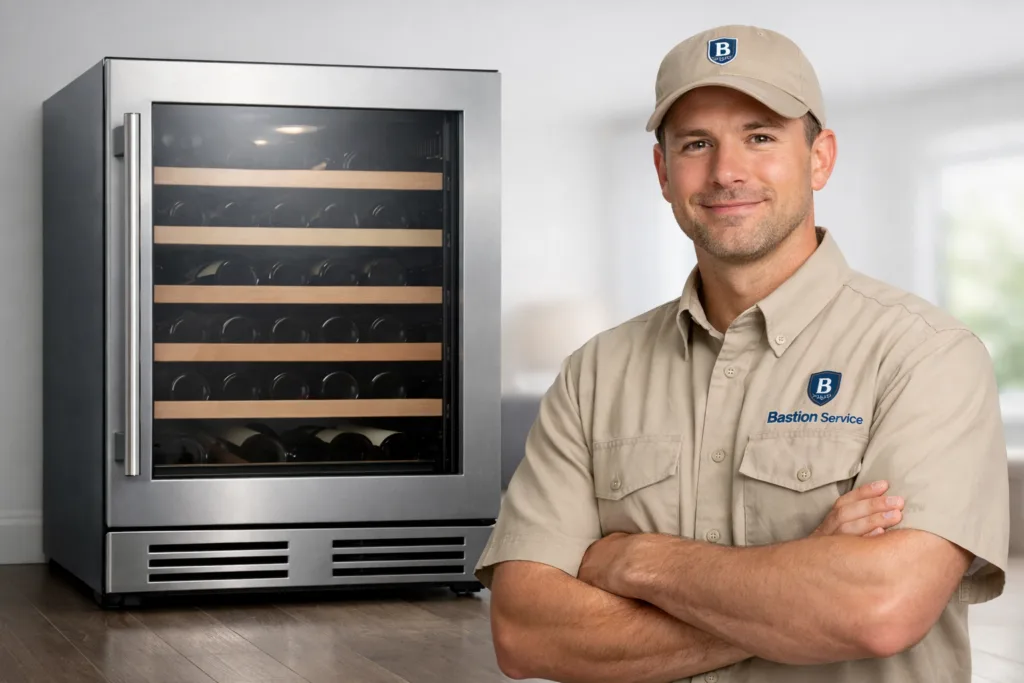
Temperature drift in a Summit wine cooler usually starts as a small nuisance and then becomes hard to ignore. A few degrees off the set point, a warmer upper shelf, light condensation on the glass, or a fan that sounds different can all point to a problem that is still repairable if it is addressed before the unit is overworked.
Common Summit wine cooler issues in Mar Vista homes
Most wine cooler service calls begin with a storage complaint rather than a complete shutdown. The unit may still power on, the display may still respond, and the interior light may still work, but the cabinet is no longer maintaining the temperature you expect. Because Summit models can be built in or freestanding, and because some are single-zone while others are dual-zone, the symptom pattern matters as much as the symptom itself.
Not cooling enough
If the interior is only mildly cool or keeps rising above the selected range, the cause may be airflow restriction, a weak fan, a bad temperature sensor, a control problem, dirty condenser surfaces, or a more serious sealed system fault. A cooler that runs but never reaches temperature often points in a different direction than one that stays completely quiet and warm.
Temperature swings during the day
Short fluctuations can happen when the door is opened often, but repeated swings without obvious use are worth checking. In a Summit wine cooler, inconsistent temperatures may come from misreading sensors, control board issues, frost interfering with airflow, or fan performance that has become intermittent. On dual-zone units, one compartment may stay close to target while the other drifts noticeably.
Fan noise, vibration, or constant humming
Wine coolers are not silent, but they should not sound harsh, uneven, or suddenly louder than usual. Clicking, buzzing, rattling shelves, or vibration through surrounding cabinetry can point to fan motor wear, mounting problems, heat transfer issues, or a compressor working harder than it should. If the sound is most noticeable at night, that often means the operating pattern has changed.
Condensation, water, or frost buildup
Moisture on the door, droplets inside the cabinet, water near the base, or frost collecting around interior panels can all be signs of trouble. Door gasket gaps, blocked drainage, room humidity, sensor problems, or cooling system issues can all produce similar results. In Mar Vista homes, recurring condensation is not something to dismiss if it keeps returning after wiping the unit down or adjusting settings.
Display or control issues
If the panel is unresponsive, flashes, shows incorrect readings, or accepts settings that do not match actual cooling, the issue may be with the interface, the control board, or the temperature sensing circuit. When the display looks normal but bottle temperature says otherwise, the control system still needs to be evaluated rather than assumed to be correct.
How symptom patterns help narrow the cause
Good wine cooler diagnosis is less about one dramatic failure and more about noticing combinations of symptoms. For example, a unit that runs constantly, feels warm on the outside, and never gets cold enough may have a heat-dissipation or refrigeration issue. A unit that cools well for a while and then warms up could point to a fan, defrost-related condition, or intermittent control fault. A unit that leaks and also develops frost may be dealing with both door sealing and airflow disruption.
Those details matter because replacing parts based only on the most visible symptom can miss the real problem. A thermostat change will not fix restricted airflow. A new fan will not solve a failing sensor input if the fan was responding to bad information. The better approach is to identify which system is actually causing the storage conditions to drift.
Built-in installation problems can affect performance
Many Summit wine coolers are installed into finished kitchen, bar, or dining-area cabinetry. That clean look is convenient, but it can also make ventilation and access more important. If the surrounding enclosure traps heat, if the front vent is blocked, or if dust buildup reduces heat transfer, the cooler may run longer and cool less effectively.
Installation-related issues can also amplify noise. A unit that is slightly out of level, pressed too tightly into an opening, or vibrating against trim can sound like it has a major mechanical failure when the fix is more basic. This is one reason service should look at both the appliance and the way it sits in the home.
When a Summit wine cooler needs service soon
It is smart to schedule service if you notice any of the following:
- The cooler no longer holds its selected temperature
- One zone is warm while the other still cools
- The fan becomes noticeably louder or irregular
- The cabinet runs almost nonstop
- Condensation or frost keeps returning
- Water appears under or inside the unit
- The display does not match the actual interior condition
- The unit shuts off and restarts unpredictably
Waiting too long can increase wear on core components. A compressor that is trying repeatedly to pull down temperature, or a fan struggling against frost or airflow restriction, can turn a smaller repair into a more expensive one.
What homeowners can check before a repair visit
There are a few simple observations that can help clarify the issue before service is scheduled:
- Confirm the set temperature and compare it with the actual cabinet feel
- Check whether the door closes fully and the gasket seals evenly
- Look for blocked front vents or visible dust around ventilation areas
- Note whether the noise is constant, intermittent, or tied to cycling
- Watch whether one section cools differently from another
- Check for recurring moisture after the door has remained closed
These checks do not replace a diagnosis, but they help separate a simple use or airflow issue from a failing component. They also make it easier to explain what the cooler has been doing in normal household use.
Repair versus replacement for a Summit wine cooler
Repair is often the better choice when the problem is tied to parts such as fans, sensors, controls, switches, gaskets, or drainage components and the cabinet itself is still in good condition. If the cooler has been storing wine properly until a recent change in performance, that is often a good sign that the fault may be isolated.
Replacement becomes more worth considering when the unit has major sealed system trouble, repeated expensive failures, significant age-related wear, or cabinet deterioration that affects fit, insulation, or reliability. The real question is not simply whether the cooler still turns on, but whether it can return to stable storage without becoming a recurring problem.
What a service visit should clarify
A useful appointment should identify whether the problem comes from airflow, controls, fan operation, sensing, drainage, door sealing, or the refrigeration system itself. It should also clarify whether the cooler is safe to keep running in the short term and whether the repair path is straightforward or more extensive.
For homeowners in Mar Vista, that matters because wine storage depends on consistency more than quick bursts of cooling. Once the cause is narrowed down, the next step is much easier to evaluate: repair now, monitor after service, or start planning for replacement if the unit has reached the point where reliable performance is unlikely to return.