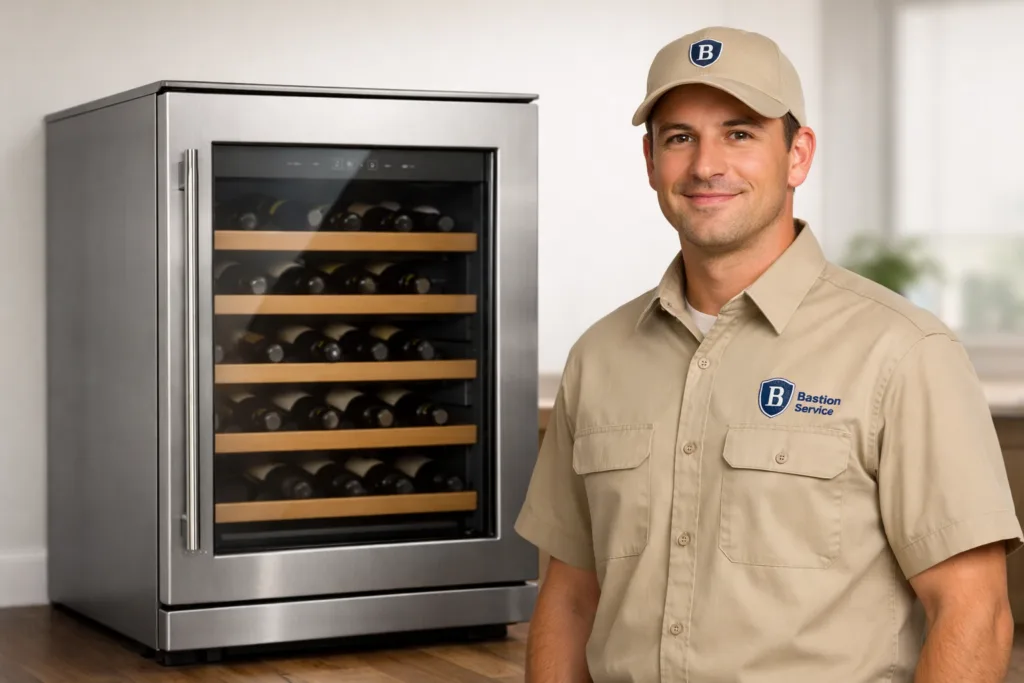
Temperature instability in a Perlick wine cooler usually points to more than one possible cause, so the symptom itself matters. A cabinet that feels slightly warm, swings between temperatures, or cools unevenly from top to bottom may be dealing with restricted airflow, a fan problem, dirty condenser coils, a sensor issue, or a deeper refrigeration fault. Because wine storage depends on consistency, even a small change in performance is worth paying attention to before it turns into a full no-cool condition.
What common wine cooler symptoms usually mean
Perlick wine coolers often show a pattern before they fail outright. Looking at that pattern can help narrow down whether the problem is likely related to controls, airflow, moisture, or cooling performance.
Not cooling enough
If the display is on but bottles are no longer staying at the expected temperature, the issue could be as simple as poor heat release at the condenser or as involved as a sealed-system problem. A weak evaporator fan, faulty thermistor, bad thermostat input, or compressor-related issue can all produce similar results. In a residential kitchen, bar area, or entertainment space, this usually shows up first as a cabinet that feels cool but not cold enough.
Overcooling or freezing
A wine cooler that gets too cold can be just as problematic as one that runs warm. This often points to a control problem, inaccurate temperature sensing, or a component that is causing the system to run longer than it should. Some units also develop cold spots when airflow is uneven inside the cabinet.
Running constantly
When a Perlick unit seems to run without much of a break, it is usually struggling to maintain the set temperature. Common causes include dirty coils, a door that is not sealing well, blocked ventilation around a built-in installation, fan trouble, or declining cooling efficiency. Continuous operation increases wear and should not be ignored.
Clicking, buzzing, or fan noise
Normal operation includes some background sound, but repeated clicking, louder-than-usual buzzing, rattling, or a fan that suddenly becomes noticeable can signal trouble. Sometimes the cause is minor, such as vibration against cabinetry or a panel. In other cases, noise points to a failing fan motor, compressor starting issue, or strain within the cooling system.
Condensation, leaks, or frost
Water inside the cabinet, water beneath the unit, or frost along interior surfaces often means warm air is entering where it should not, moisture is not draining properly, or airflow is compromised. A worn gasket, door alignment problem, blocked drain path, or leveling issue may be involved. These symptoms tend to worsen over time and can affect nearby flooring or cabinetry if left alone.
Why similar symptoms can come from different failures
Built-in refrigeration can be misleading because the same complaint does not always lead to the same repair. A cooler that seems to have a major cooling problem may actually have a fan issue that is preventing proper air circulation. A cabinet that runs warm may be reacting to coil buildup or a leaking door seal rather than a failed compressor. That overlap is why diagnosis matters before parts are replaced.
Guessing can become expensive quickly. Swapping parts based only on the visible symptom may not solve the original problem, and the cooler can continue cycling improperly while the real fault remains. For homeowners in Del Rey, a careful repair path helps determine whether the problem is electrical, mechanical, airflow-related, or part of the refrigeration system itself.
Signs the unit should be serviced soon
- The cabinet no longer holds a stable temperature.
- The cooler runs much longer than it used to.
- You hear new clicking, buzzing, rattling, or fan noise.
- There is moisture inside, water under the unit, or frost buildup.
- The unit cools intermittently and then slips again.
- The controls respond inconsistently or the display seems inaccurate.
Intermittent performance is especially important. A wine cooler that works for a while and then drifts out of range is often in the early stage of a larger failure. Waiting too long can make the repair more involved and may put the contents at risk.
What homeowners can check before service
There are a few simple observations that can help clarify the symptom pattern. Check whether the door closes firmly and evenly, whether the gasket looks loose or damaged, and whether the noise seems to come from inside the cabinet or from the rear of the unit. If the cooler is built in, make sure ventilation around the installation is not obstructed. You can also note whether the problem is constant or only appears at certain times of day.
These checks are useful for context, but they do not replace testing. Refrigeration components, sensors, control issues, and airflow faults often need direct evaluation to confirm what is actually failing.
When continued use can make the problem worse
A Perlick wine cooler that is struggling to cool properly often puts extra stress on the compressor, fan motors, and controls. A leaking gasket can turn a mild moisture issue into heavier condensation and frost. A drain problem can spread water beyond the cabinet. Repeated clicking during startup can progress into a complete no-start condition. Addressing the problem earlier usually protects both the appliance and the surrounding space.
Repair or replacement for a Perlick wine cooler
Many Perlick wine cooler issues are repairable when the cabinet is otherwise in good condition and the failure involves serviceable parts such as fans, sensors, controls, gaskets, or drainage components. Repair becomes less appealing when the unit has severe age-related wear, a major sealed-system failure, or a long history of repeated breakdowns.
The right decision depends on the exact fault, the overall condition of the cooler, and whether the repair is likely to restore stable operation. In Del Rey homes, the goal is not simply to get the unit running for the moment, but to restore the consistent performance that proper wine storage requires.
Perlick wine cooler repair in Del Rey with a symptom-based approach
Whether the problem starts with warming bottles, nonstop running, interior moisture, or unusual noise, the most useful next step is to match the repair to the real cause. Perlick Wine Cooler Repair in Del Rey is most effective when the unit is evaluated by symptom pattern first, then by component condition, so the repair decision is based on what the cooler is actually doing rather than on guesswork.