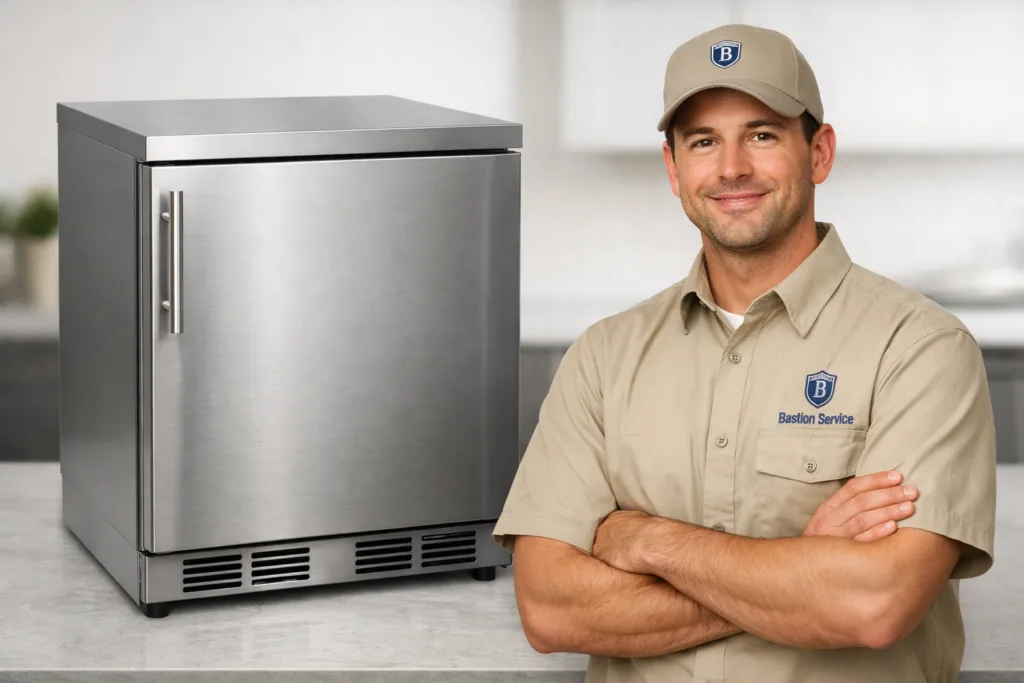
Temperature problems in a household freezer can start subtly. You may notice softer food near the door, ice cream that no longer stays firm, or a unit that seems to run longer than usual. With a Perlick freezer, those early signs matter because airflow, controls, defrost components, and cooling performance all work together. Looking at the full symptom pattern usually tells you much more than any single complaint.
How symptom patterns help narrow down the problem
Two freezers can appear to have the same issue while needing very different repairs. One may be warming up because frost has blocked airflow behind the interior panel. Another may have a fan that is no longer circulating cold air. A third may still run but struggle because of a starting issue or a deeper sealed-system fault. That is why the most useful starting point is to compare what the freezer is doing, how often it happens, and whether the behavior is getting worse.
In Del Rey homes, a proper evaluation usually includes cabinet temperature behavior, frost location, fan sound, compressor operation, door sealing, and any signs of water or ice where it should not be. Those clues often separate a manageable repair from a more serious cooling-system problem.
Common Perlick freezer problems in the home
Not freezing well or losing temperature
If food is partly thawing or the freezer seems cold one day and too warm the next, several faults are possible. Weak airflow from an evaporator fan, a sensor or control issue, dirty condenser conditions, or trouble with starting components can all reduce cooling. Sometimes the problem is simpler, such as a door not closing fully because of a worn gasket, shifted shelf, or item blocking the seal.
Temperature swings are especially important because they can point to an intermittent component rather than a total failure. If the freezer occasionally recovers and then falls behind again, that pattern can help identify whether the issue is control-related, airflow-related, or tied to the cooling system itself.
Frost buildup on walls, shelves, or covers
Frost is more than a cosmetic issue. When frost collects heavily on interior surfaces or behind the evaporator cover, airflow can drop enough to affect temperature throughout the cabinet. In many cases, the cause is a defrost problem. In others, warm room air is getting in through a poor door seal, a door that is not sitting squarely, or frequent moisture entry.
If frost keeps returning soon after being cleared, the unit usually needs service rather than repeated manual defrosting. Ongoing buildup tends to hide the underlying fault and can make cooling performance steadily worse.
Freezer runs too long or almost constantly
A Perlick freezer that rarely seems to cycle off may be compensating for heat gain, poor airflow, frost restriction, dirty condenser conditions, or an inaccurate temperature reading. It may also be working harder because the door seal is leaking or because the cooling system is no longer performing efficiently.
Long run times should not be ignored. Even when the freezer still cools somewhat, constant operation can put extra wear on fans, relays, and the compressor.
Buzzing, clicking, rattling, or fan noise
Some freezer sounds are normal, but changes in sound are often meaningful. Repeated clicking can suggest hard-start trouble. A loud buzz may come from a struggling compressor or vibration issue. A scraping or humming sound inside the cabinet may point to a fan blade hitting frost or to a worn fan motor.
Noise becomes more important when it appears alongside weak cooling, frost, or long run times. Those combinations often provide a stronger diagnostic clue than noise alone.
Water under the freezer or ice near the base
Moisture problems often trace back to a blocked or frozen drain path. When defrost water cannot move where it should, it may collect inside the cabinet, freeze into sheets of ice, or leak onto the floor. In a residential setting, that can become a flooring concern in addition to an appliance problem.
A drainage issue can sometimes remain minor if caught early. Left alone, it may contribute to more ice buildup, poor airflow, or repeat leaking.
Signs the issue may be more urgent
Schedule service sooner rather than later if the freezer is no longer keeping food safely frozen, if frost is quickly spreading, or if the unit is clicking repeatedly without cooling properly. These symptoms often mean the appliance is straining to maintain temperature.
- Food softening or thawing in multiple areas of the cabinet
- Interior frost that keeps returning after cleanup
- Fan noise that becomes louder or more irregular
- Water leaking onto the floor
- Repeated start attempts or sharp clicking from the compressor area
- A hot exterior cabinet edge combined with weak cooling
If there is a burning smell, visible wire damage, or repeated electrical clicking without normal operation, it is best to stop using the freezer until it can be checked.
Repair or replace?
Many household freezer problems are worth repairing when the fault is limited to a fan motor, gasket, sensor, control component, defrost part, drain blockage, or start device. These issues can often be corrected without replacing the appliance.
Replacement becomes more likely when the freezer has major sealed-system trouble, compressor failure with high repair cost, a history of repeated breakdowns, or cabinet wear that affects long-term reliability. Age alone does not decide the answer. A premium unit with a repairable component failure may still make sense to keep, while a unit with deep cooling-system trouble may not.
The best choice usually comes after diagnosis because surface symptoms can be misleading. A freezer that looks finished may only have an airflow or defrost problem, while one that still appears to run normally may have a more expensive cooling issue behind the scenes.
What homeowners can check before service
Before assuming the worst, there are a few basic things worth noticing:
- Make sure the door closes fully and nothing inside is pushing against it.
- Check whether the gasket is torn, loose, or not sealing evenly.
- Look for heavy frost on the back panel or around vents.
- Listen for whether interior fans are running smoothly.
- Notice whether the freezer is warm everywhere or only in certain sections.
- Check for water, ice sheets, or dampness near the bottom of the cabinet.
These observations can help describe the problem more accurately and speed up the repair process. They are not a substitute for service when cooling has already dropped, but they can make the next step clearer.
Household service considerations in Del Rey
In Del Rey homes, freezers may be installed in kitchens, bar areas, utility spaces, or other built-in locations where ventilation and fit affect performance. That matters with Perlick units because restricted airflow around the appliance or repeated moisture entry at the door can influence temperature stability and frost formation. Service is more effective when the actual installation conditions are considered along with the mechanical fault.
For homeowners, the goal is simple: find out why the freezer is underperforming, whether continued use could lead to more damage, and what repair path makes sense for the appliance in its current condition. A symptom-based inspection keeps that decision grounded in what the freezer is actually doing rather than guesswork.
When a diagnosis makes the biggest difference
The biggest mistakes usually happen when a warming freezer is treated as a single-part problem without confirming the cause. Replacing a control will not fix a blocked evaporator. Cleaning up frost will not solve a failed defrost circuit. Swapping a fan motor will not correct a sealed-system issue. The better approach is to match the repair to the symptom pattern and appliance condition.
If your Perlick freezer has started thawing food, building frost, leaking, or making new noises, a clear diagnosis and repair plan can help you decide whether restoration is straightforward or whether the unit is reaching the point where replacement deserves consideration.