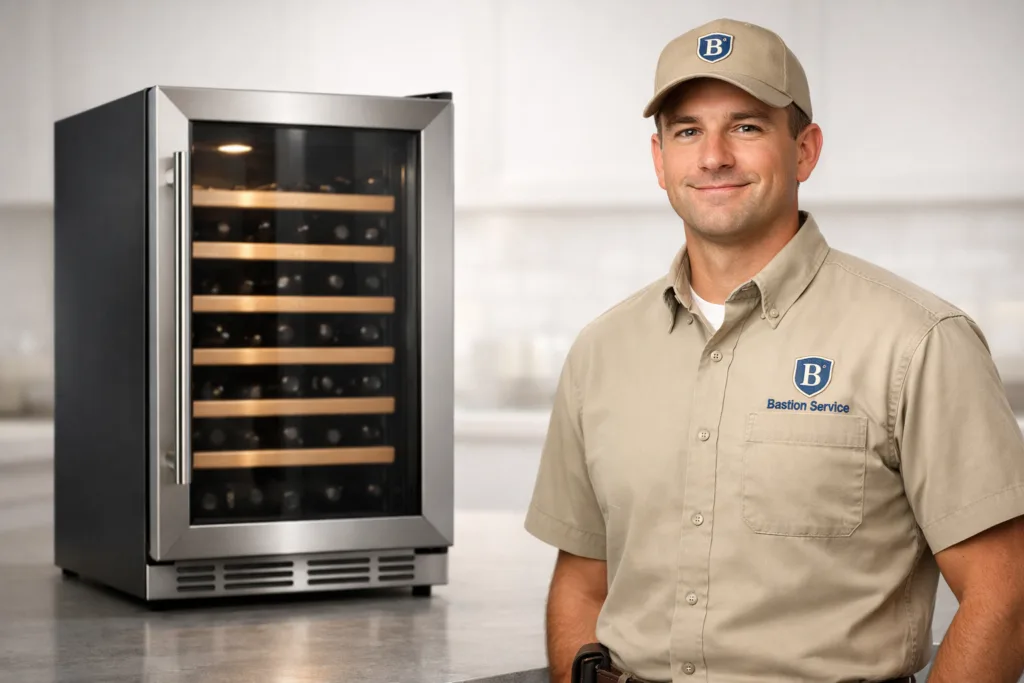
Temperature instability in a wine cooler is more than an inconvenience. Bottles are best stored in steady conditions, so even a small cooling problem can become noticeable over time through warmer shelves, excess moisture, or a unit that seems to run far longer than it used to. With an EdgeStar model, the most useful approach is to match the symptom to the component or airflow problem behind it instead of guessing.
Common EdgeStar wine cooler issues in Del Rey homes
Many wine cooler failures look similar at first. A cabinet that feels too warm may be dealing with restricted airflow, a dirty condenser area, a weak fan motor, a sensor problem, a control issue, or a more serious cooling-system fault. A unit that seems to run constantly may still be cooling, but not efficiently enough to reach or hold the selected temperature.
Because wine coolers are designed for narrower temperature control than a standard kitchen refrigerator, smaller changes matter. A drifting temperature reading, inconsistent cycling, recurring condensation, or a zone that no longer feels even can all point to a developing problem that should be checked before it leads to bigger repair costs.
What specific symptoms can indicate
Not cooling enough
If bottles feel warmer than expected or the display reading does not match actual cabinet temperature, the cause may involve a faulty thermistor, control board issue, blocked airflow, fan failure, or condenser-related problem. In some cases, the compressor is running but not producing the cooling performance it should. When an EdgeStar wine cooler starts losing cooling gradually, the issue is often easier to manage if it is addressed before the unit stops cooling altogether.
Too cold or partially freezing
Overcooling can be just as important as undercooling. If one section becomes unusually cold, or if the cooler keeps dropping below the set point, the unit may be misreading temperature or regulating airflow poorly. That can happen with sensor faults, control problems, or uneven internal circulation. Continued operation in this condition can affect storage quality and may put extra strain on the system.
Water inside the cabinet or around the base
Moisture problems often come from a blocked drain path, door gasket leakage, excess condensation, or unstable cabinet temperature. What starts as a few drops on a shelf can become repeated puddling, damp trim, or cabinet and flooring concerns nearby. If moisture returns after wiping it up, the problem usually needs more than simple cleanup.
Buzzing, rattling, clicking, or fan noise
Some operating sound is normal, but changes in noise pattern matter. A rattle may come from vibration or loose mounting. A louder fan sound may point to fan wear or airflow obstruction. Repeated clicking can suggest a starting or control problem, especially if cooling performance has dropped at the same time. Noise by itself is not always a major repair, but noise combined with warming is a stronger warning sign.
Display or control problems
If the panel stops responding, settings reset on their own, lights flicker, or the cooler shuts off and restarts unpredictably, the issue may be tied to controls, wiring, sensors, or power delivery inside the unit. These symptoms can mimic larger refrigeration failures, so it helps to test the control side of the appliance before assuming the entire cooler is at the end of its life.
Signs the problem is getting worse
Some EdgeStar wine cooler issues stay mild for a while before becoming obvious. A unit may begin with slightly longer run times, minor condensation, or temperature swings that seem easy to ignore. Over time, those same symptoms can become constant operation, poor cooling, louder noise, or recurring water buildup.
It is usually smart to schedule service when you notice:
- temperature that no longer stays consistent
- bottles feeling warmer than the setting suggests
- persistent moisture inside or outside the cabinet
- new fan, buzzing, or clicking sounds
- an unresponsive or erratic control panel
- the unit running much longer than normal
When continued use can cause more damage
Letting a struggling wine cooler keep running can increase wear on the compressor, fan motors, and electrical controls. Repeatedly lowering the temperature setting to force better cooling usually does not solve the root issue. It often just makes the appliance work harder while the underlying fault remains.
Continued use is especially risky when the cooler is clicking repeatedly, failing to recover temperature after the door is closed, collecting water near the base, or showing a clear gap between the set temperature and actual cabinet conditions. Those signs usually mean the unit is operating inefficiently and may be heading toward a larger failure.
Repair or replace?
Not every wine cooler problem means replacement is the better choice. Many issues involve parts that can be repaired or replaced without replacing the entire appliance, especially when the cabinet, door seals, shelves, and core cooling system are otherwise in solid condition. Fan motors, sensors, controls, drainage issues, and airflow problems are often repairable.
Replacement becomes more likely when testing points to a major sealed-system problem, repeated electronic failures, or repair cost that approaches the value of the cooler. The right decision depends on the symptom pattern, the age of the unit, its overall condition, and the expected repair path after inspection.
What homeowners should check before booking service
Before assuming a major breakdown, it helps to look at a few basic conditions. Make sure the door is closing fully, the gasket is not visibly damaged, and the unit has enough ventilation around it. If shelves are packed tightly or bottles are blocking internal airflow, cooling can become uneven. Dust buildup around condenser areas can also affect performance.
These checks can help narrow the issue, but they do not replace testing when the symptom keeps returning. If the cooler still cannot hold temperature, continues making unusual noise, or repeatedly develops condensation, a service visit is usually the faster way to determine whether repair is practical.
What to expect from an EdgeStar wine cooler diagnosis
A useful service visit should determine whether the issue is related to airflow, controls, temperature sensing, drainage, fan operation, or the cooling system itself. That matters because different causes can produce nearly identical symptoms. A unit that feels warm might need a relatively straightforward repair, while another with the same complaint could have a much larger problem.
For homeowners in Del Rey, that kind of symptom-based diagnosis helps avoid unnecessary parts replacement and makes it easier to decide whether to repair the current cooler or start planning for replacement. If your EdgeStar wine cooler is warming, leaking, overcooling, or behaving unpredictably, addressing the symptom early usually offers the best chance of a sensible repair outcome.