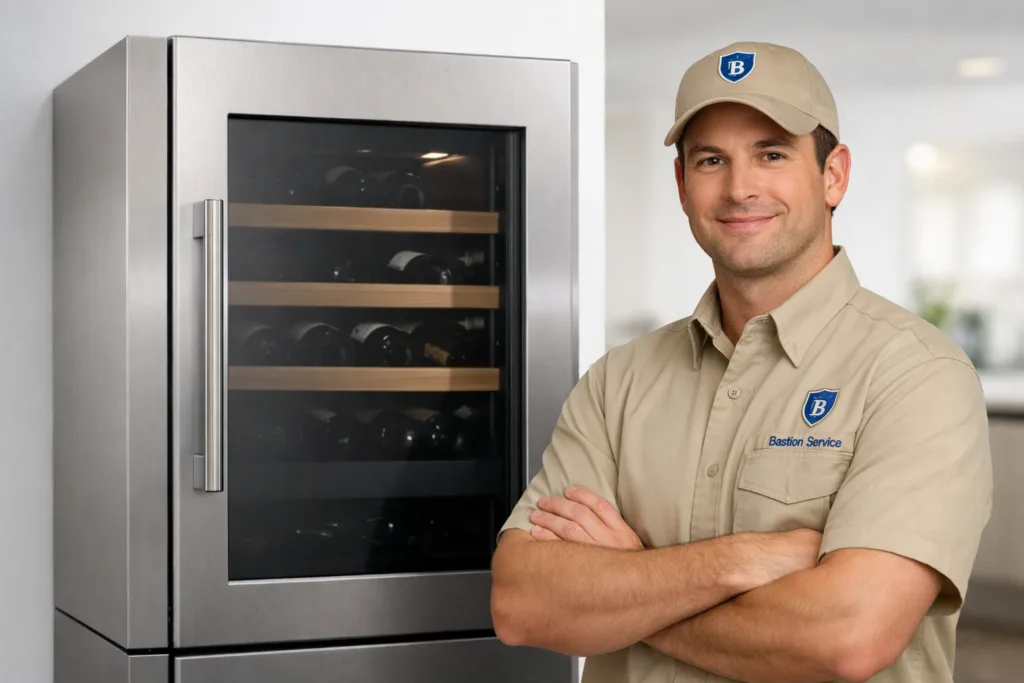
Wine coolers tend to show trouble in small ways before they fail outright. A few degrees of drift, light condensation on the glass, or a fan that suddenly sounds louder than usual can all point to different repair paths. With a Miele unit, those differences matter because storage performance depends on steady temperature, balanced airflow, and responsive controls.
For homeowners in Del Rey, the most useful approach is to look at the exact symptom pattern rather than assume every cooling complaint means the same failed part. A unit that runs but does not hold temperature may have a very different issue from one that cycles irregularly, collects moisture, or stops responding at the display.
Common Miele wine cooler symptoms and what they may mean
Most service visits start with one of a few familiar complaints. The cabinet may feel cool but not cold enough, one section may perform differently from the other, or bottles may no longer stay at a reliable serving or storage temperature. In other cases, the first sign is noise, moisture, or a control panel problem.
Possible causes can include:
- Weak airflow from a fan problem or blockage
- Door gasket leakage letting warm air into the cabinet
- Temperature sensor or control faults
- Drainage issues causing moisture buildup
- Condenser or evaporator-related cooling problems
- Compressor stress or a sealed system issue
Not cooling enough
If the cooler is running but bottles are warmer than the setting, the issue may involve reduced cooling output, poor air movement, dirty heat-exchange surfaces, or an electronic control problem. Built-in wine coolers can also struggle when ventilation is compromised, which can make the compressor run longer without restoring stable cabinet temperature.
When the problem affects only one zone, that often points away from a simple settings mistake and more toward a fan, sensor, or control-related fault. If both zones drift warm, broader cooling system problems become more likely.
Temperature swings
Wine storage depends on consistency, not just whether the cabinet feels somewhat cool. If your Miele wine cooler overshoots the setting, warms up during the day, or has trouble recovering after the door opens, the underlying problem may be intermittent rather than constant. Sensor errors, airflow imbalance, and early control faults often show up this way.
Repeated swings can also be a sign that the machine is short cycling. That means it turns on and off too frequently instead of completing a stable cooling run, which can add wear to key components over time.
Condensation, fogging, or water inside
Moisture issues usually mean warm air is getting where it should not, or water is not draining as intended. You may see fogging on the glass, damp shelves, or droplets forming more often than before. A worn gasket, alignment issue, drain problem, or inconsistent internal temperature can all contribute.
Even when the cabinet still cools, excess moisture should not be ignored. It can affect labels, packaging, and overall storage conditions, and it often signals a problem that can get worse if left alone.
Buzzing, rattling, or fan noise
Some operating sound is normal, but a change in sound usually matters. Rattling may come from vibration or mounting issues. Loud fan noise can point to blade interference, ice buildup, or a failing motor. Buzzing or clicking may relate to starting components, compressor strain, or electrical issues.
If a new noise appears together with weak cooling or longer run times, that combination is more concerning than sound alone.
Display or control problems
An unresponsive control panel, blinking indicators, incorrect readings, or repeated resets can make a wine cooler seem functional while actual storage performance slips. Electronic issues may involve wiring, sensors, user interface components, or the main control system. Because the displayed temperature is not always the same as the real cabinet condition, these faults need more than a quick reset to evaluate properly.
Signs the problem should not wait
It is usually time to schedule Miele wine cooler repair in Del Rey when you notice one or more of the following:
- The cooler runs constantly or much longer than normal
- The interior feels warmer than the set temperature
- One zone is stable while the other is not
- Condensation keeps returning after you wipe it away
- The unit starts making new or louder noises
- The display shows faults or stops responding
- The door no longer closes or seals firmly
These symptoms do not always mean major failure, but they do suggest the cooler is no longer operating the way it should. Waiting can turn a smaller airflow, gasket, or control issue into heavier strain on the compressor and surrounding components.
Why wine cooler repairs are different from standard refrigerator repairs
A wine cooler is built for controlled storage, not the broad daily use pattern of a kitchen refrigerator. The goal is stable conditions with limited fluctuation, quiet operation, and balanced humidity. That means small faults can matter more than they would in a general food refrigerator.
Diagnosis should focus on real cabinet behavior, including zone consistency, airflow response, seal condition, fan operation, and how accurately the controls match internal temperature. That symptom-based approach helps separate a minor repair from a deeper refrigeration issue.
Repair or replace?
Many Miele wine cooler problems are repairable, especially when the issue involves a fan motor, sensor, gasket, drain, accessible control component, or another part that can be replaced without compromising the cabinet structure. Repair is often especially worthwhile when the unit is built into cabinetry and replacement would involve fit, finish, or installation complications.
Replacement becomes a more serious discussion when there is extensive age-related wear, repeated expensive breakdowns, major sealed system trouble, or limited parts availability. The deciding factors usually include:
- The age of the wine cooler
- The exact failed component
- Total repair cost compared with replacement value
- Overall cabinet condition and long-term reliability outlook
For homeowners in Del Rey, the right choice is usually the one that restores dependable storage conditions without overspending on a unit already nearing the end of its useful life.
What to do before service
A few simple observations can make the repair visit more efficient:
- Note whether the issue affects one zone or both
- Check if the door closes evenly and tightly
- Listen for changes in fan or compressor sound
- Watch for recurring moisture, fogging, or leaks
- Pay attention to whether the display matches actual cooling performance
It also helps not to overload the cooler with warm bottles while the problem is active. If the unit is clearly running warm, struggling to cycle, or showing persistent control faults, limiting use can reduce extra stress until it is properly evaluated.
Focused help for Del Rey homeowners
Household wine storage depends on more than getting the appliance to power on. The real goal is reliable temperature control, normal cycling, manageable humidity, and quiet operation that does not signal a developing breakdown. When a Miele wine cooler starts showing unstable behavior, early attention often gives you the best chance of avoiding a larger repair later.
Bastion Service helps Del Rey homeowners assess whether the issue points to a manageable component repair or a more significant refrigeration problem, so the next step is based on how the cooler is actually performing in the home.