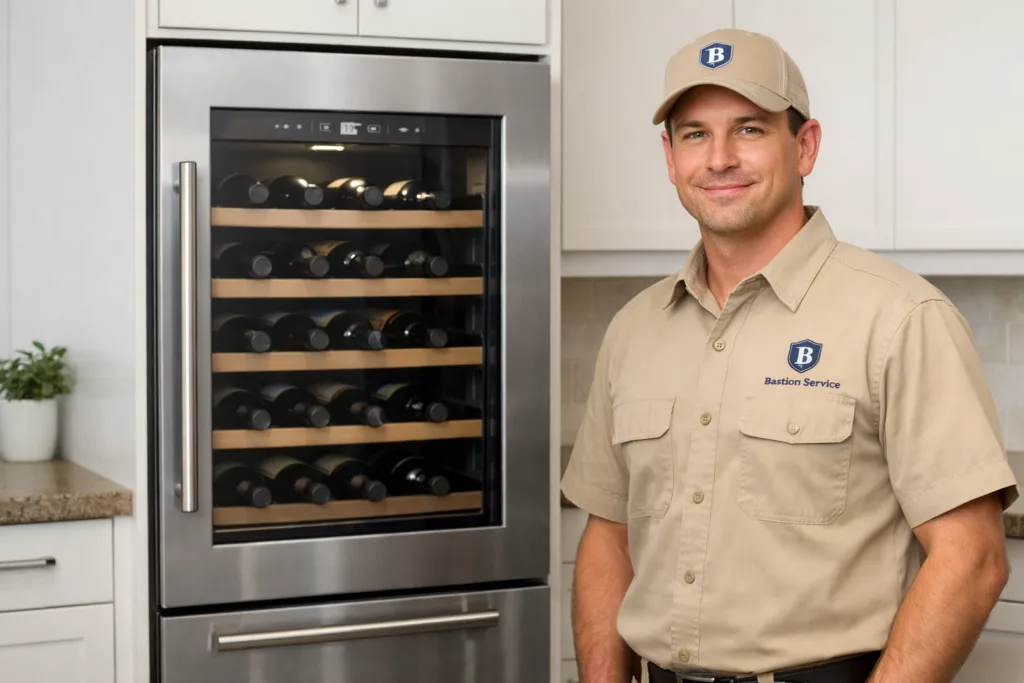
Temperature drift is one of the most common reasons homeowners seek service for a wine cooler. If bottles are warming up, the display does not match the actual cabinet temperature, or the unit seems cold one day and mild the next, the issue may involve the thermostat, sensor, control board, evaporator fan, door seal, or restricted condenser airflow. A wine cooler is designed to hold a narrower and more stable range than many standard kitchen appliances, so even small component problems can show up quickly in day-to-day use.
Common wine cooler symptoms and what they can indicate
A cabinet that is not cooling properly does not always mean the compressor has failed. In many cases, poor performance starts with dust buildup on the coils, blocked interior vents, loose door alignment, or a fan that is no longer moving air efficiently. When only the top or bottom section feels off, uneven airflow is often part of the diagnosis. If the cooler runs for long periods without reaching the set temperature, that can also point to heat transfer problems, control faults, or a refrigerant-related issue that needs closer testing.
Moisture problems are another frequent complaint. Condensation on the glass, damp shelving, or water collecting under the unit may come from a worn gasket, frequent warm-air intrusion, drainage trouble, or a cooling cycle that is no longer operating as intended. Frost inside a compartment or along the back panel can signal that airflow is restricted or that the unit is not defrosting and cycling properly. If similar frost and temperature-recovery symptoms are appearing in a dedicated freezer, Freezer Repair in Del Rey may be the more relevant service path for that appliance.
Unusual noise, nonstop running, and short cycling
Some operating sound is normal, especially when a compressor starts or fans are moving air through a compact cabinet. What deserves attention is a change in the sound pattern. Buzzing, clicking, rattling, or vibration that suddenly becomes louder can point to a failing fan motor, loose mounting hardware, compressor-start trouble, or panels and shelving that are no longer sitting correctly. A unit that runs almost constantly may be struggling to remove heat, while one that turns on and off too quickly may have a sensor or control problem affecting normal cycling.
If the display flickers, the cooler resets unexpectedly, or the controls stop responding, electrical diagnosis becomes important. Power issues, damaged wiring, failing boards, and moisture-related corrosion can all interfere with temperature regulation. These faults are especially frustrating because they can mimic cooling problems even when the sealed system is still functional.
Why wine coolers need appliance-specific diagnosis
Wine coolers share basic refrigeration principles with full-size kitchen units, but they are not simply smaller refrigerators. They often use tighter temperature control, compact airflow channels, glass doors, and cabinet layouts built around bottle storage rather than general food loading. That means a symptom such as mild cooling, shelf-to-shelf inconsistency, or excess condensation needs to be evaluated in the context of the appliance’s design, not guessed at from a general refrigeration checklist.
Homeowners in Del Rey sometimes compare wine cooler symptoms to what they have seen in a kitchen refrigerator, especially when fresh-food temperatures begin fluctuating or the compressor seems to run too often. In those cases, Refrigerator Repair in Del Rey is useful for the separate refrigerator itself, but wine cooler diagnosis should remain focused on its own controls, airflow pattern, and cabinet conditions.
When the problem may be more urgent
It is wise to schedule service sooner when the unit will not hold the selected temperature, the cabinet feels warm despite constant operation, water is leaking onto the floor, or the cooler trips power or shuts down without warning. These symptoms can lead to spoiled contents, added wear on the compressor, and more expensive repairs if the appliance is left to struggle for too long.
A service call is also appropriate when basic homeowner checks do not change anything. Confirming that the unit has power, the door closes fully, the vents are not blocked, and accessible dust has been removed from exterior coil areas are reasonable first steps. If the problem remains after that, replacing parts by guesswork usually costs more time and money than testing the actual cause.
What a service visit should evaluate
A useful visit typically includes verifying temperature behavior, checking control response, inspecting the door seal, reviewing fan operation, looking for airflow restrictions, and checking for signs of electrical or sealed-system trouble. That process helps separate minor issues such as gasket wear or vibration from deeper faults involving sensors, boards, compressors, or refrigerant circulation.
In some homes, appliance symptoms overlap. For example, if the concern is really poor ice production, water fill problems, or a leak around an ice system rather than the wine cooler itself, Ice Maker Repair in Del Rey would better match that appliance and symptom set. Distinguishing between these issues matters because the repair path, parts, and testing process are different.
Repair versus replacement considerations
Not every wine cooler problem leads to the same recommendation. A fan motor, thermostat, sensor, switch, gasket, or drain issue is often straightforward compared with a compressor or sealed-system failure. The age of the unit, its repair history, how well it has been cooling lately, and the condition of the cabinet all factor into whether repair is the sensible option.
For many Del Rey households, the best outcome is restoring stable operation without repeat problems a few days later. That usually comes from identifying the true cause of temperature swings, moisture buildup, or noise rather than treating the symptom alone. When the diagnosis is accurate, it becomes much easier to make a practical decision and protect the appliance from avoidable wear.