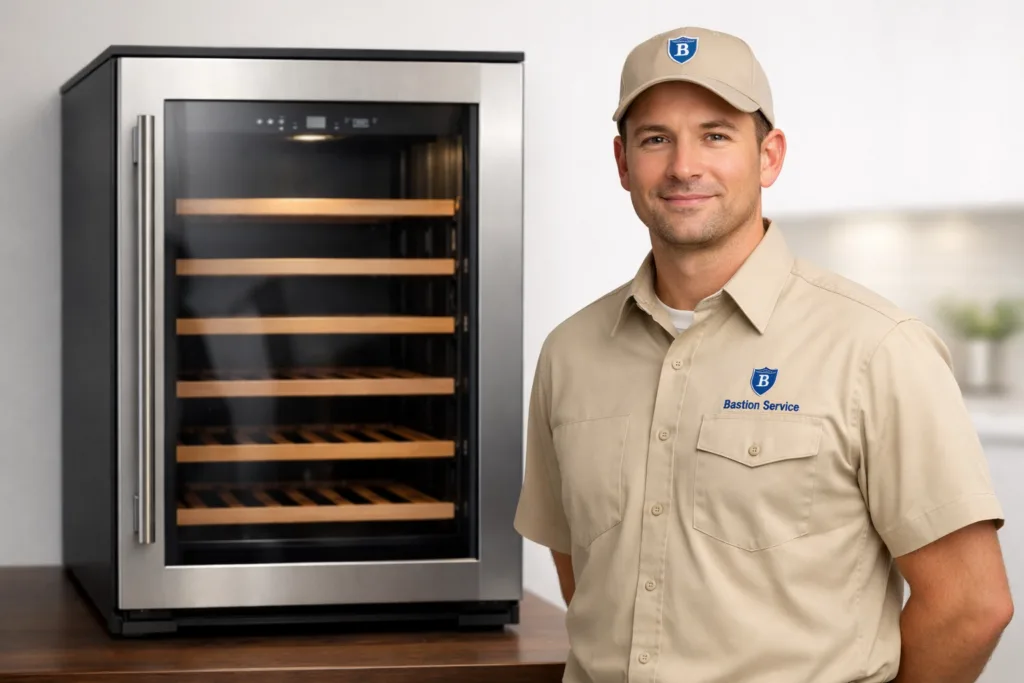
Temperature stability matters more in a wine cooler than raw cold output. A Marvel unit can still power on, light up, and seem mostly functional while quietly drifting out of range, developing airflow issues, or trapping moisture. In Del Rey homes, catching those changes early can help protect the appliance, surrounding cabinetry, and the bottles stored inside.
Common Marvel wine cooler symptoms and what they can mean
Many wine cooler problems start with a small pattern change rather than a complete shutdown. The unit may cool inconsistently, run longer than usual, or develop condensation that was not there before. Because several faults can produce similar symptoms, the most useful next step is to match the behavior of the appliance to the most likely system involved.
Not cooling enough
If the cabinet feels warm or takes too long to recover after the door is opened, the cause may be restricted airflow, dirty condenser areas, a weak evaporator fan, a faulty sensor, a control issue, or a sealed-system problem. Sometimes the cooler never becomes fully warm, but it also never reaches a steady holding temperature. That gradual undercooling can be easy to miss until wine is exposed to repeated temperature drift.
Temperature swings or uneven cooling
When some shelves feel colder than others, bottles near one area are unusually chilled, or the displayed temperature does not seem to match actual conditions, airflow and sensing problems are common suspects. A fan that is slowing down, a thermostat that is reading inaccurately, or a control board that is cycling the system incorrectly can all create a cabinet that alternates between too warm and too cold.
Running constantly
A Marvel wine cooler that seems to run nonstop is often compensating for heat intrusion or inefficient cooling. Door gasket wear, blocked ventilation, dust buildup on condenser components, or trouble within the cooling system can all make the appliance work harder than normal. Constant operation is not just a noise issue; over time, it can add stress to major components.
Water inside or under the unit
Pooling water may come from a blocked drain path, excess condensation, door seal leakage, or frost melting where it should not. In a built-in installation, even minor leaking can become a bigger household concern because moisture may affect nearby flooring, trim, or cabinet surfaces before it is noticed.
Condensation on the door or cabinet
Moisture on glass or along the door edge usually points to humid air entering the cabinet or poor sealing around the gasket. It can also happen when the unit is not regulating temperature correctly and internal humidity is no longer being managed as intended. If condensation keeps returning after basic cleaning and door checks, service is usually warranted.
Fan noise, buzzing, or rattling
Wine coolers are not silent, but a new sound is worth paying attention to. Rattling can come from vibration or leveling issues. Buzzing may reflect compressor strain. A scraping or fast repetitive noise often suggests a fan blade obstruction, frost contact, or a fan motor starting to fail. Noise changes are often one of the earliest warnings that a component is under stress.
Controls or lighting not working properly
A blank display, buttons that do not respond, or lights that behave erratically may seem cosmetic at first, but these symptoms can overlap with cooling faults. The problem may involve the user interface, door switch, wiring, or the main control system. On a wine cooler, control issues can affect far more than convenience if they interfere with stable operation.
Why the same symptom can have different causes
Wine cooler diagnosis is rarely as simple as replacing one obvious part. For example, a cabinet that feels warm could be dealing with poor ventilation, fan failure, sensor error, control failure, or loss of cooling performance within the sealed system. Likewise, water inside the unit might come from a drain issue, a door sealing problem, or frost buildup caused by an airflow fault.
That overlap is why symptom-based testing matters. It helps determine whether the issue is relatively contained or whether it points to a more significant refrigeration repair. It also helps avoid unnecessary part replacement when the real fault is elsewhere.
Built-in installation issues that affect performance
Many Marvel wine coolers in Del Rey are installed under counters, in wet bars, or within custom cabinetry. In these setups, the surrounding installation can influence how well the appliance performs. Limited ventilation space, improper leveling, door misalignment, and heat buildup around the unit can all contribute to cooling complaints.
During service, it helps to look beyond the internal components alone. A cooler that is technically operating may still struggle if airflow around the cabinet is restricted or if the door is not closing squarely. Built-in appliances need both sound mechanical function and proper placement to maintain stable temperatures.
Signs you should schedule service sooner rather than later
Some wine cooler problems can wait a day or two for scheduling, but others should be addressed promptly. Early service is a smart move if you notice:
- Cabinet temperatures that no longer match the setting
- Long run times or frequent cycling
- New fan noise, buzzing, or rattling
- Repeated condensation or fogging on the door
- Water collecting inside or beneath the unit
- Frost buildup that returns after cleaning
- Controls that stop responding or reset unexpectedly
These patterns often start small, but they tend to worsen with continued use. A cooling problem that begins as inconsistency can eventually turn into complete loss of temperature control.
When continued use may cause more damage
If the wine cooler is running hot, clicking repeatedly without cooling properly, frosting heavily, or leaking water into the surrounding area, ongoing operation may create additional wear. Fans can be overworked, compressors can be strained, and moisture can spread beyond the appliance itself.
It is also wise to stop using the unit and have it evaluated if you notice a burning smell, repeated breaker trips, or obvious electrical irregularities. Those are not routine wine cooler symptoms and should be treated as more urgent appliance problems.
Repair or replacement: what usually makes sense
Many Marvel wine cooler issues are repairable, especially when the fault involves fans, thermostats, sensors, control components, switches, gaskets, or drainage problems. These failures can often be resolved without replacing the entire appliance, particularly if the cabinet and cooling system are otherwise in good condition.
Replacement becomes more likely when the cooler has major sealed-system trouble, repeated breakdowns across multiple components, or an overall condition that no longer justifies the repair cost. Age matters, but the decision usually comes down to failure type, parts involved, and whether the unit can return to stable operation after service.
What homeowners can check before service
Without taking the appliance apart, there are a few simple observations that can help narrow down the problem:
- Confirm whether the display temperature matches the actual feel of the cabinet
- Check whether the door closes firmly and evenly
- Look for visible condensation, frost, or standing water
- Listen for fan noise, clicking, or unusual vibration
- Note whether the unit runs constantly or cycles too often
- Make sure stored items are not blocking interior airflow
These checks are not a substitute for repair, but they do help describe the symptom pattern more accurately and make the service visit more productive.
What a service visit should help clarify
A worthwhile appointment should identify whether the fault is related to airflow, controls, drainage, electrical components, installation conditions, or the cooling system itself. It should also explain whether the unit is safe to keep running until repair is completed or whether it should remain off to avoid worsening the problem.
For homeowners in Del Rey, that kind of practical repair guidance helps answer the real question: not just whether the cooler can be made to run again, but whether it can return to steady, reliable wine storage without ongoing temperature risk. When a Marvel wine cooler starts showing changes in cooling, moisture, or sound, getting the issue evaluated early is usually the best way to prevent a small fault from becoming a larger one.