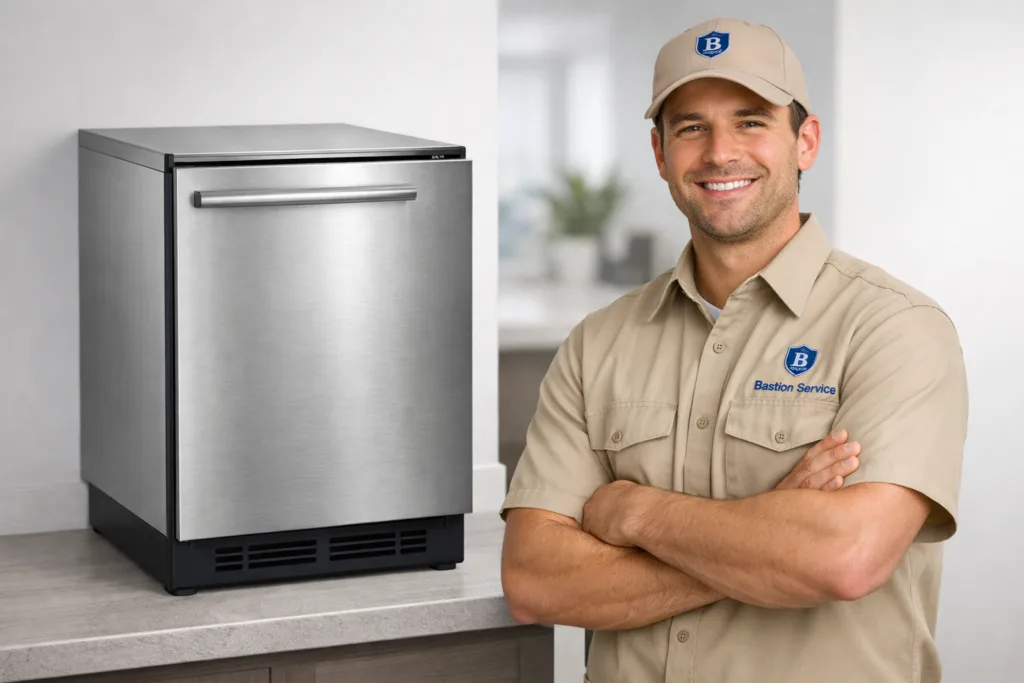
Perlick ice makers can develop problems gradually or fail in a way that seems sudden. In many Culver City homes, the earliest signs are reduced ice output, wetter-than-normal cubes, water near the cabinet, or a machine that sounds different during the freeze or harvest cycle. Because these symptoms can come from more than one cause, the most useful repair path starts with identifying where the cycle is breaking down.
Common Perlick ice maker symptoms and what they often mean
Ice makers depend on several systems working together: water supply, temperature control, freezing performance, harvest, and drainage. When one part of that sequence slips, the symptom you notice at the door or in the bin may not point to only one failed part.
No ice production
If the unit powers on but stops making ice, possible causes include a restricted water supply, a clogged inlet screen, a faulty fill valve, a sensor issue, or a cooling problem inside the machine. Sometimes the ice maker starts a cycle but never gets cold enough to finish it. In other cases, it freezes but does not move through harvest correctly.
This is one of the most important symptoms to evaluate carefully because a simple water-flow problem can look similar to a much more involved refrigeration-related fault.
Slow ice production
When the machine still makes ice but much more slowly than before, homeowners often assume it just needs cleaning. Sometimes that is true, but slow production can also point to weak cooling performance, partial scale buildup, poor ventilation, or a component that is beginning to fail under load.
If the bin is no longer filling the way it used to, the issue may be progressing even if the machine has not stopped completely.
Small, hollow, or uneven cubes
Cube shape tells you a lot about what the machine is experiencing. Thin or misshapen cubes often suggest restricted water delivery, fill problems, mineral buildup, or inconsistent freezing conditions. If cubes look cloudy, partial, or fused together, the unit may be struggling to complete a normal cycle from fill to harvest.
Water leaking from the unit
Leaks can come from more than one place. A drain restriction, overflow condition, loose connection, damaged water line, or ice buildup in the wrong area can all push water outside the cabinet. Under-counter installations are especially easy to overlook until the flooring, trim, or nearby cabinetry starts showing moisture.
Even a small leak is worth addressing quickly because repeated exposure can create damage outside the appliance itself.
Clumped or melting ice in the bin
When ice sticks together in large masses, it usually means the cubes are melting and refreezing. That can happen if the cabinet temperature is not being maintained consistently, if the door or bin area is not sealing properly, or if the machine is producing wet ice because of a freeze-cycle problem.
Clumping is often treated as a nuisance at first, but it can be an early sign that the machine is no longer operating within normal temperature range.
Bad taste or odor in the ice
Not every taste or odor complaint means a major repair is needed. Sometimes stale-tasting ice is tied to standing water, internal buildup, or a cleaning issue. But if the problem comes back quickly after cleaning, it may point to drainage trouble, poor water turnover, or another operating fault that is allowing moisture to sit where it should not.
Buzzing, clicking, or grinding noises
Ice makers do make some normal sounds, especially during fill and harvest. What matters is a change from the usual pattern. Repeated buzzing may suggest a valve problem. Grinding or rough mechanical noise can point to a moving part under strain. A machine that seems to run much longer than normal may be struggling to freeze, circulate, or drain properly.
Why the same symptom can have different causes
One reason Perlick ice maker problems can be frustrating is that the visible symptom is often only the final result of a fault elsewhere in the system. A machine with no ice could have a fill problem, a sensor issue, or weak cooling. A leaking unit might have a drain blockage, but it could also be overfilling because water is entering at the wrong time or in the wrong amount.
That is why diagnosis matters before parts are replaced. It helps determine whether the problem is isolated and repairable or whether multiple systems are showing wear at the same time.
When to stop using the ice maker and schedule service
If the machine is still partially working, it can be tempting to keep using it until it fails completely. That is not always the safest or least expensive choice. Continued operation can worsen leaks, create more ice buildup, or put extra strain on components that are already failing.
It is smart to pause normal use and schedule service if you notice any of the following:
- Water collecting under or around the cabinet
- No ice production for more than a normal cycle period
- Ice output dropping sharply over a short time
- Heavy frost or ice buildup where it does not normally appear
- Repeated clumping, melting, or slushy ice in the bin
- New buzzing, grinding, or loud mechanical sounds
- Persistent odor or taste issues that cleaning does not fix
What a symptom-based repair approach looks at
A useful service visit focuses on how the unit is behaving through the full cycle, not just the single symptom you see first. That usually means checking water fill, temperature performance, freeze time, harvest behavior, drainage, and whether the machine is repeating the cycle correctly from batch to batch.
For homeowners in Culver City, this kind of symptom-based evaluation is especially helpful when the issue is intermittent. A unit that works some of the time can be harder to judge by observation alone, but the pattern still reveals whether the problem is tied to water supply, controls, drainage, or cooling performance.
Repair versus replacement considerations
Not every ice maker problem points to replacement. Many issues are reasonable to repair when the fault is limited to a valve, pump, drain-related part, sensor, or control component and the rest of the machine is in solid condition. In those situations, targeted repair can restore normal operation without the disruption of replacing the entire unit.
Replacement becomes more likely when the ice maker has recurring cooling problems, multiple failing components, severe wear, or signs that the overall condition of the appliance has declined beyond a single straightforward fix. The age of the unit, service history, and severity of the current problem all matter.
What homeowners often notice before a full breakdown
Many failures do not begin with complete shutdown. The first clue may be that the bin is no longer full when you expect it to be, cubes seem smaller than usual, or the machine runs longer and sounds busier. In a kitchen, bar area, or other built-in installation, these small changes are easy to put off until the problem turns into a leak or a no-ice call.
Paying attention to those early changes often helps limit secondary damage and makes the next repair decision more straightforward.
Practical next steps for a Perlick ice maker problem
If your Perlick ice maker is producing less ice, leaking, creating clumped cubes, or showing inconsistent fill behavior, the best next step is to have the exact symptom pattern evaluated before the problem spreads. Once the cause is confirmed, it becomes much easier to decide whether the right solution is a focused repair, a deeper system fix, or replacement based on the condition of the unit.
For households in Culver City, acting on the first clear warning signs is often the difference between a manageable appliance repair and a larger cleanup involving cabinetry, flooring, or repeated service calls.