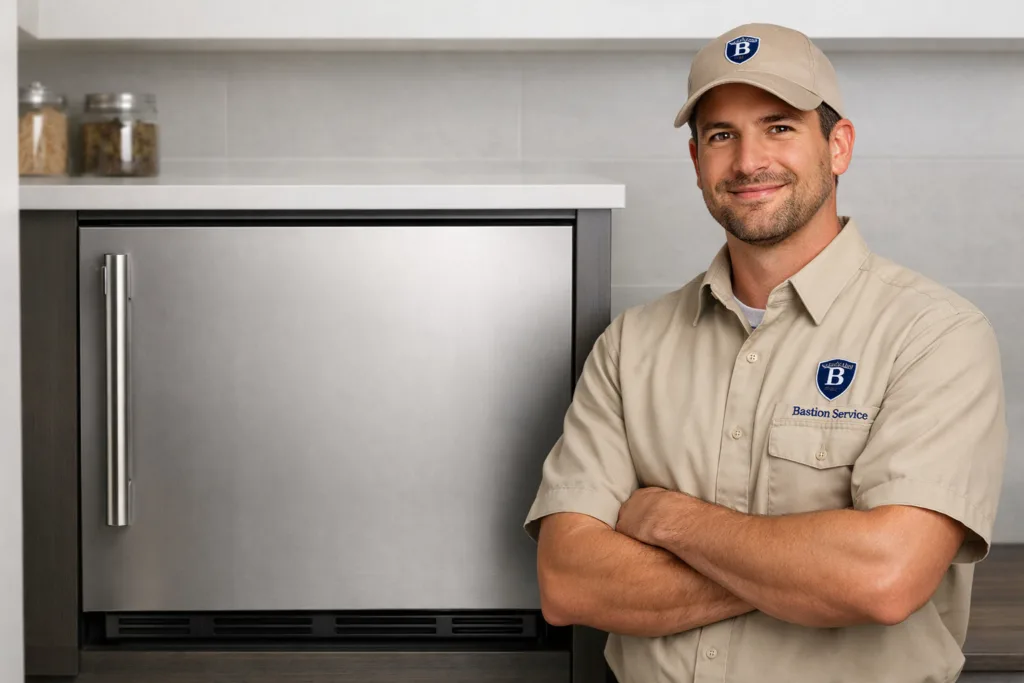
A Perlick freezer that starts warming, frosting over, leaking, or running constantly can disrupt meals, stored groceries, and day-to-day routines. The most useful next step is to match the symptom to the actual cooling behavior, because similar signs can come from very different failures. In one home, the cause may be a door seal letting warm air in. In another, it may be a fan problem, a defrost fault, a sensor issue, or a sealed-system concern.
Common Perlick Freezer Problems in Culver City Homes
Most freezer issues begin with a noticeable change rather than a complete shutdown. Food may soften slightly before it fully thaws. Ice may collect on one wall before the whole interior frosts up. A new hum, click, or rattle may appear before cooling drops. Watching how the problem develops often helps narrow down the repair path.
Freezer not freezing hard enough
If frozen food feels softer than usual or temperatures seem inconsistent, the unit may have an airflow restriction, an evaporator fan problem, dirty condenser surfaces, a control issue, a weak start component, or a more serious cooling system fault. Some Perlick freezers also show uneven cooling, where one area stays colder while another struggles. That pattern often points to circulation or frost-related blockage rather than a simple thermostat setting issue.
Frost buildup on shelves, walls, or around the door
Heavy frost usually means moisture is entering the cabinet or the freezer is not completing defrost as it should. A worn gasket, a door that is slightly misaligned, or a door left open too long can allow humid air inside. If frost forms behind interior panels, airflow can become restricted and temperatures may rise even while the freezer continues running. What looks like “too much ice” is often really a cooling problem in progress.
Water leaking inside or onto the floor
Water around a freezer can come from a blocked defrost drain, excess condensation, partial thawing, or repeated temperature swings. Even a minor leak deserves attention because it may signal an internal issue that is affecting cooling performance. In a household kitchen or storage area, leaking water can also damage nearby flooring or create a slipping hazard.
Fan noise, buzzing, clicking, or nonstop operation
Unusual sounds do not always mean major failure, but a change in sound matters when it appears alongside weak cooling or frost buildup. Buzzing can point to compressor start trouble. Clicking may suggest a start device or control issue. Rattling can come from loose panels or vibration. A worn fan motor often creates a rubbing or uneven hum. If the freezer seems to run almost without stopping, it may be struggling to remove heat efficiently or fighting frost-related airflow problems.
How Symptoms Point to Different Causes
One reason freezer repair can be tricky is that several failures produce similar symptoms. A warm cabinet does not automatically mean the compressor has failed. Frost does not always mean the freezer is “cooling too much.” Water on the floor does not always come from a plumbing issue. The useful clues are usually in the pattern.
- Warm with little noise: possible control, start, or compressor-related trouble
- Warm with heavy interior frost: often a defrost or airflow problem
- Cold in one section but not another: possible fan or circulation issue
- Recurring frost near the door: often gasket, alignment, or sealing trouble
- Leak plus temperature swings: possible drain blockage or intermittent thawing
That is why diagnosis should focus on temperature pattern, airflow, frost location, cycling behavior, and component response instead of replacing parts by guesswork.
When to Schedule Service
Service is worth scheduling when the freezer cannot keep food reliably frozen, develops repeated frost after being cleared, leaks more than once, or starts making new sounds that do not go away. Intermittent problems should not be ignored either. A unit that cools normally for a day and then struggles again may be in the early stage of a larger failure.
It is also wise not to let a struggling freezer run for too long while obviously underperforming. If the compressor runs constantly while food is softening, or if frost is spreading quickly, continued operation can add wear and reduce the chance of a simple repair.
Repair or Replace?
For many homeowners in Culver City, the decision comes down to the type of failure, the overall condition of the appliance, and whether this is an isolated event or part of a longer history of cooling issues. Repairs often make sense when the problem is tied to a fan motor, sensor, door gasket, drain blockage, control part, or defrost component. Replacement becomes a more serious consideration when the freezer has repeated cooling failures, significant age-related wear, or a high-cost sealed-system problem.
The goal of service should be more than naming a failed part. It should help you understand whether the repair addresses the root cause and whether the freezer is likely to return to stable household use.
What to Check Before the Appointment
A few simple observations can make the visit more productive. Homeowners can note:
- whether the freezer is warm all the time or only at certain times of day
- where frost is forming
- whether the door closes firmly without popping back open
- any new clicking, buzzing, or fan noise
- whether water is collecting inside the cabinet or underneath it
- whether food near one shelf or bin is thawing faster than the rest
These details often help separate a defrost issue from a circulation problem, or a control issue from a more serious cooling failure.
Household Impact of Delayed Freezer Repair
Freezer problems are easy to put off when the appliance is still running, but partial cooling can be more disruptive than a total stop because it creates uncertainty. Food may look frozen while temperatures are no longer safe or stable. Ice buildup may hide the real issue until airflow becomes severely restricted. Small leaks may return again and again until they begin affecting the surrounding area.
For that reason, prompt Perlick Freezer Repair in Culver City is often less about convenience and more about limiting food loss, reducing unnecessary strain on the appliance, and avoiding a larger breakdown. When the symptom pattern is identified early, the repair path is usually easier to evaluate and easier to explain.