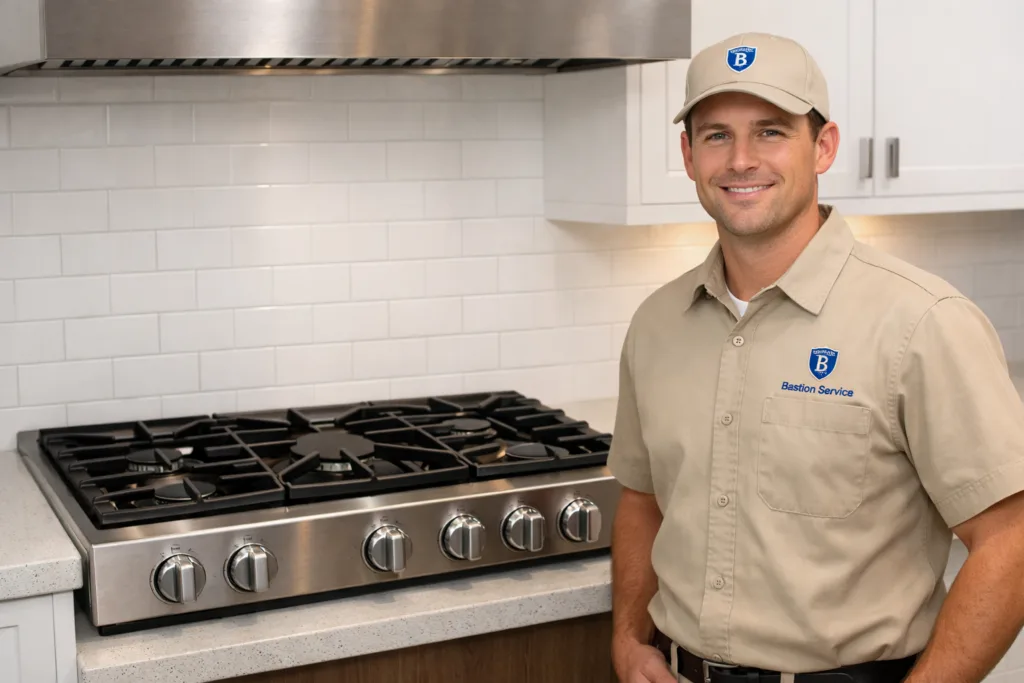
Cooktop issues are easiest to solve when the pattern is identified early. A burner that stopped working all at once points to a different repair path than a burner that has been getting weaker over time, and constant clicking suggests a different fault than a surface that heats but never reaches the selected level. For homeowners in Marina del Rey, symptom-based troubleshooting helps narrow the problem before parts are replaced.
Common Monogram cooktop symptoms and what they often mean
Monogram cooktops can develop faults in ignition components, burner assemblies, switches, sensors, wiring, or control systems. Some problems stay limited to one cooking zone, while others affect the whole unit. The most useful first step is to look at exactly how the cooktop is failing.
Burner will not ignite or heat
On gas models, a burner that will not light may have a wet or dirty igniter, blocked burner ports, a misaligned cap, or a failed ignition-related component. On electric models, a dead burner can point to a bad element, switch, limiter, or wiring issue. If one zone is out but the others work normally, the fault is often local to that burner circuit. If several burners stop working together, the issue may involve incoming power, controls, or another shared component.
Repeated clicking or delayed ignition
Constant clicking is one of the most common complaints with gas cooktops. Sometimes the cause is simple, such as moisture after cleaning or food residue around the igniter. In other cases, the clicking continues because of a worn spark switch, ignition harness problem, or component failure that prevents normal lighting. If the burner lights but keeps clicking, that still deserves attention because the underlying fault may continue to worsen.
Uneven heat or weak flame
If a pan no longer heats evenly, cooking becomes harder to control. Gas burners may show weak, uneven, or partial flame because of clogged ports, burner cap problems, or a fuel-delivery issue within the cooktop. Electric surfaces may cycle poorly, run cooler than expected, or struggle to maintain temperature if an element or control is failing. In both cases, performance changes that develop gradually are often a sign that service is needed before the issue spreads.
Cooktop trips the breaker or shuts off unexpectedly
A cooktop that trips power should not be ignored. This can indicate a shorted element, damaged wiring, failing switch, or another electrical fault that may get worse with continued use. Intermittent shutoffs can also point to overheating protection, a weak connection, or a control problem. When the appliance loses power during normal cooking, the safest next step is inspection rather than repeated resets.
Cracked glass or damaged controls
Glass cooktops need repair evaluation if the surface is cracked, chipped, or stressed from impact or heat. Even a small crack can affect safe use and may allow spills to reach internal components. Broken knobs, slipping shafts, or controls that no longer match the selected setting can also make daily cooking unpredictable. In many cases, these are not just cosmetic problems; they can affect operation and safety.
Signs the problem is getting worse
Some cooktop faults stay mild for a while, then become much more obvious. It is usually time to stop putting off service when you notice:
- A burner that works only occasionally
- Ignition that takes several tries to light
- Heat levels that no longer match the setting
- Burners that click after lighting
- Controls that feel loose, stick, or respond inconsistently
- Visible sparking, scorching, or signs of overheating
These symptoms often mean the failure is no longer isolated to convenience alone. Continued use can lead to added part damage and a more involved repair.
When to stop using the cooktop
There are situations where continued operation is not worth the risk. If the cooktop trips the breaker, overheats, sparks, or behaves unpredictably, it is best to stop using it until the cause is identified. The same applies when a burner will not shut off correctly or the controls respond in an erratic way.
If you notice a strong or persistent gas odor, stop using the appliance immediately and follow appropriate gas-safety steps before arranging repair. For households in Marina del Rey, that kind of symptom should always be treated as urgent.
Repair or replace?
Many Monogram cooktop problems are worth repairing when the failure is limited to a specific part such as an igniter, switch, burner component, control, or wiring connection. If the unit is otherwise in good condition and the cooking surface is sound, repair is often the practical choice.
Replacement becomes more likely when the cooktop has extensive glass damage, multiple major failures, or a repair cost that does not make sense for the unit’s overall condition. Age alone does not decide the issue. What matters more is whether the repair addresses the real fault and restores stable daily use.
What a service visit should determine
A proper visit should do more than confirm that the cooktop is malfunctioning. It should identify which system has failed, whether the issue is isolated or shared across multiple burners, and whether there is any reason to avoid continued use until repairs are completed. That matters with Monogram appliances because symptoms can overlap even when the failed parts are completely different.
The goal is straightforward: find the actual cause, explain the repair path, and determine whether fixing the unit is practical. That approach helps homeowners in Marina del Rey avoid trial-and-error part replacement and make a better decision about the next step for reliable cooking at home.
Simple checks before scheduling repair
There are a few basic things a homeowner can safely look at before service is arranged. Make sure burner caps are seated properly, check for visible food debris around ignition points, and note whether the issue affects one burner or several. On electric units, pay attention to whether the problem occurs at every heat level or only on certain settings.
It also helps to observe whether the symptom is constant or intermittent. A burner that never heats suggests a different failure than one that cuts in and out. Sharing those details during scheduling often makes the repair process faster and more accurate.
Why symptom details matter with premium cooktops
Premium cooktops often have tighter control systems and more specialized components than basic models. That means similar complaints can come from very different causes. Weak heating may trace back to a burner issue, a switch problem, a sensor fault, or a control failure depending on the exact model and symptom pattern.
That is why the most helpful repair path starts with specifics: which burner is affected, what the cooktop does when turned on, whether the problem happens every time, and whether the issue changed after cleaning, a spill, or recent heavy use. Those details help move the diagnosis in the right direction and reduce unnecessary guesswork.