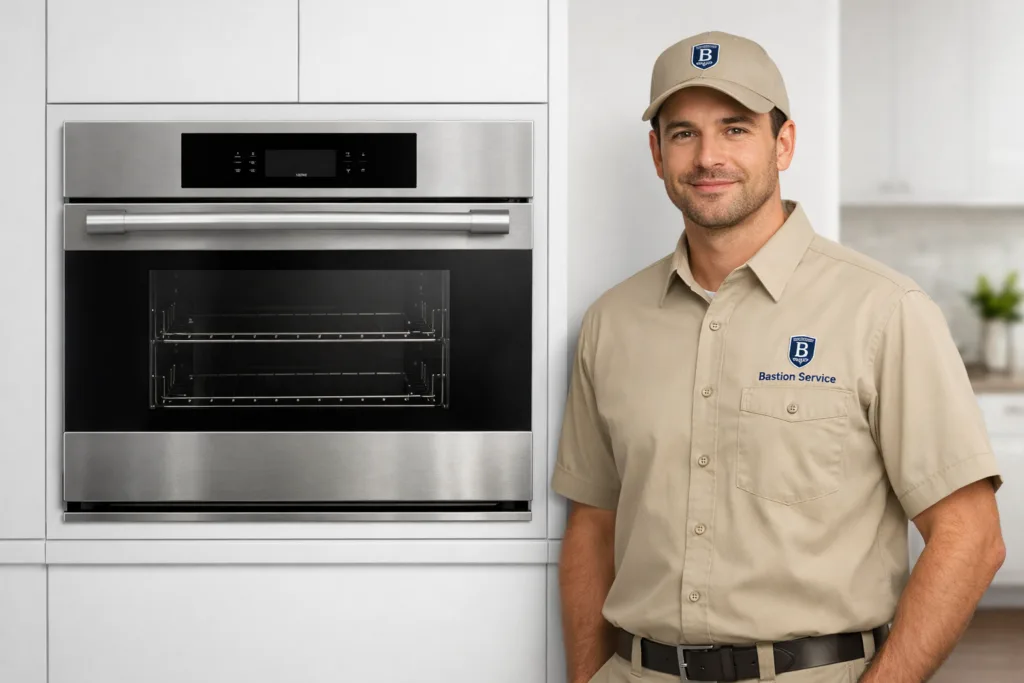
Cooking problems usually show up before a Monogram wall oven stops working completely. You may notice longer preheat times, food that browns unevenly, temperature swings from one cycle to the next, or controls that respond inconsistently. Those patterns matter because each one points to a different repair path, and identifying the actual failure helps avoid unnecessary parts replacement.
Common Monogram wall oven symptoms and what they can mean
Oven not heating or not reaching the set temperature
If the oven stays cool, heats only slightly, or never gets hot enough to cook properly, likely causes include a failed bake element, a weak broil element, a temperature sensor issue, a relay failure on the control, or a power supply problem. In some cases, the oven still appears to heat, but it cycles incorrectly and never stabilizes at the selected temperature.
Homeowners often first notice this as undercooked casseroles, pale baked goods, or meals that suddenly need much more time than before. When that happens consistently, the issue is usually beyond simple calibration.
Uneven baking or hot and cold spots
When food cooks faster on one side, one rack browns more than another, or results vary even with familiar recipes, the problem may involve weak element performance, sensor drift, convection fan trouble, or poor heat cycling. A wall oven can seem “close enough” for basic use while still producing unreliable results that make everyday cooking frustrating.
This symptom is especially important to check if it developed gradually. Slow changes in performance often indicate a component that is still operating, but no longer within normal range.
Slow preheating
Slow preheat is one of the most common complaints with built-in ovens. It can be caused by an element that is failing under load, a sensor that is sending inaccurate readings, or a control that is not energizing components correctly. If preheat times have noticeably increased and cooking results are also slipping, both symptoms may be tied to the same underlying fault.
Temperature swings during cooking
If the oven overshoots, drops too low, or seems inconsistent during longer bake cycles, the issue may be related to the sensor circuit, control board behavior, or heat regulation problems. This can show up as cookies burning on the outside while staying raw in the center, or dishes that come out differently every time despite the same settings.
Error codes, shutdowns, or unresponsive controls
Flashing displays, repeated error codes, controls that stop responding, or an oven that shuts off during use often point to electronic control faults, sensor communication issues, cooling problems, or electrical shorts. If the unit trips power or behaves unpredictably, it is better to stop using it until the cause is identified.
Door, latch, or self-clean problems
A door that will not close properly, will not unlock, or becomes difficult to use after self-clean may involve hinges, latch components, switches, or control-related failures. Self-clean cycles place heavy heat stress on oven parts, so problems that start right afterward often need hands-on testing rather than repeated resets.
Why symptom pattern matters
Two Monogram wall ovens can show the same complaint for completely different reasons. “Not heating” might mean a failed element in one unit and a control issue in another. “Uneven baking” could be caused by airflow trouble, weak heat output, or inaccurate temperature sensing. That is why the symptom pattern matters so much: when the issue occurs, whether it happens every cycle, and what functions still work normally all help narrow down the repair.
For homeowners in Marina del Rey, this is often the difference between a contained repair and a long cycle of guesswork. A useful service visit should answer what failed, what else should be checked, and whether the oven is worth repairing based on its overall condition.
When to stop using the oven and schedule service
It is a good idea to schedule service when the oven:
- takes much longer than normal to preheat
- does not maintain temperature reliably
- produces uneven baking results
- shows recurring error codes
- shuts off during bake or broil cycles
- has controls that respond intermittently
- will not run bake, broil, or convection functions properly
You should stop using it sooner if it trips the breaker, gives off a burning electrical smell, shows signs of overheating, or has a door that will not close securely. Those symptoms can point to faults that may worsen with continued use.
Repair or replace: what usually makes sense
Many Monogram wall oven problems are still practical to repair when the failure is limited to a serviceable part such as an element, sensor, latch assembly, fan-related component, or selected electrical part. In those cases, repair can restore normal performance without replacing the entire appliance.
Replacement becomes a more serious consideration when there are multiple failures at once, repeated control-related breakdowns, significant heat damage, or repair costs that approach the value of the oven. Age alone does not decide the answer. What matters more is whether the current issue is isolated or part of a broader pattern.
What a helpful wall oven service visit should clarify
Most homeowners are trying to answer a few practical questions: Is the oven safe to use? What is causing the symptom? Is the problem likely to come back? And does the repair make financial sense? Good service should make those answers clearer rather than more complicated.
That is especially true with intermittent problems in Marina del Rey homes, where an oven may fail only during preheat, only after it has been running for a while, or only during high-heat cycles. Those cases usually require testing based on the exact complaint rather than a generic inspection.
Signs the issue may be getting worse
Wall oven problems rarely stay exactly the same for long. A small delay in preheating can turn into complete heating failure. Mild temperature inconsistency can become obvious undercooking or scorching. Controls that occasionally lag may progress to shutdowns or error messages. If you have noticed the oven becoming less predictable over time, that often means the failed component is deteriorating further or affecting related parts.
Addressing the issue earlier can also help prevent secondary damage, especially when overheating, electrical strain, or repeated failed cycles are involved.