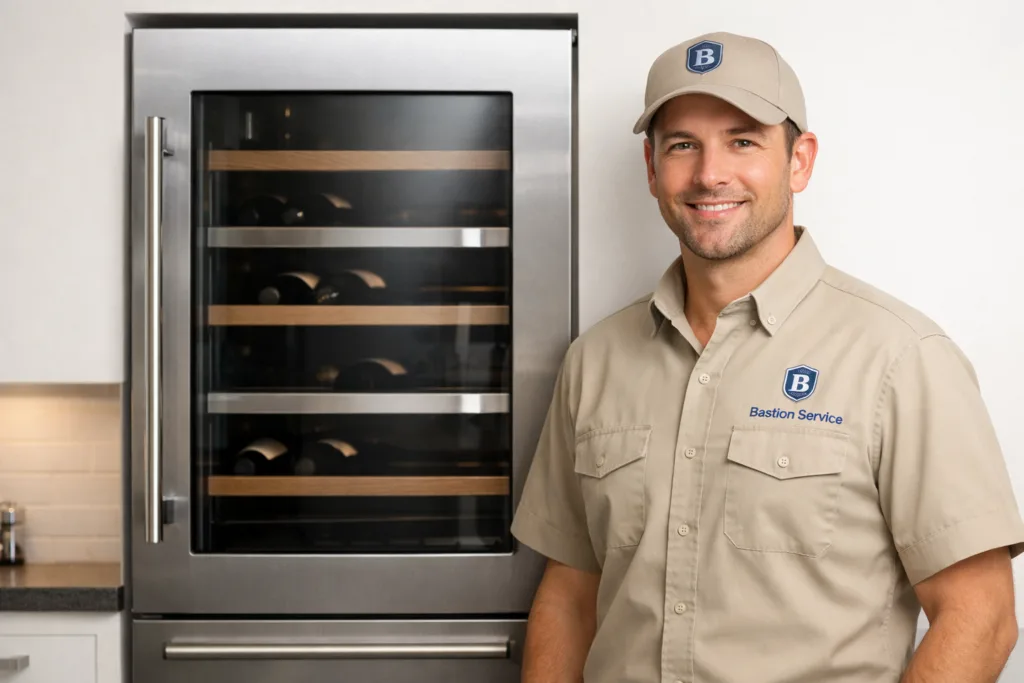
Small changes in a wine cooler can have an outsized effect on storage conditions. If your Monogram unit is drifting away from its set temperature, cycling oddly, or developing new noise or moisture issues, the most important step is to identify whether the problem is related to airflow, controls, door sealing, or the cooling system itself.
Common Monogram wine cooler problems homeowners notice
Many wine cooler issues show up gradually rather than as a total shutdown. In Hermosa Beach homes, owners often spot trouble through day-to-day use: bottles no longer feel consistently chilled, the cabinet sounds different, or the glass starts collecting condensation.
Not cooling enough
If the interior stays warmer than expected, several causes are possible. Restricted condenser airflow, a weak evaporator or condenser fan, a bad temperature sensor, control failure, or sealed-system trouble can all lead to poor cooling. A unit that is just a few degrees off at first may continue to decline if it keeps running under strain.
When this happens, it helps to pay attention to whether the display matches the actual cabinet condition. If the screen says the cooler is at the correct setting but the bottles feel warm, the issue may be sensor or control related rather than a simple temperature adjustment problem.
Temperature swings or uneven shelf conditions
Wine storage depends on stability. If one shelf seems colder than another, or if the cabinet alternates between too warm and too cold, internal airflow or temperature regulation may be off. Common causes include a faulty thermistor, fan problems, a control board issue, or a door gasket that is allowing warm air to enter in short bursts.
These symptoms are easy to dismiss at first, but uneven cooling often means the unit is compensating for a component that is no longer performing correctly. That extra cycling can create more wear over time.
Constant running or new noises
A Monogram wine cooler that runs almost nonstop is usually trying to make up for lost efficiency. It may be pulling in warm air through a poor door seal, struggling with dirty heat-exchange components, or failing to move air properly inside the cabinet. In other cases, the compressor may be under stress because the cooling system is no longer operating normally.
Noise changes can also be revealing. Rattling may point to vibration or mounting issues, while buzzing or louder humming can be associated with a fan motor, compressor strain, or parts that are no longer secured as they should be. A sound that is new, louder, or more frequent than before is worth investigating.
Condensation, moisture, or musty odor
Moisture on the glass or around the door usually means humid air is getting inside or the unit is not controlling temperature as it should. A worn gasket, door alignment issue, frequent short cycling, or drainage-related problem can all contribute. Excess moisture does more than affect appearance; it can also force the cooler to work harder and reduce storage consistency.
If you notice a musty smell, it may be a sign that moisture has been present longer than expected. That does not always mean a major repair, but it should be checked before it affects the appliance further.
Display, lighting, or control issues
When the panel is blank, buttons stop responding, settings change on their own, or the interior light behaves oddly, the problem may involve the user interface, wiring, or main control. Sometimes the cooler still appears to run, but regulation becomes unreliable because the control system is no longer reading or responding correctly.
Electrical faults can overlap with cooling complaints, which is why symptom-based testing matters. A cooler that seems warm may not always have a compressor problem; it may simply be receiving bad information from a failed sensor or control.
What different symptom patterns can mean
Two wine coolers can look equally “warm” and need completely different repairs. One may have a failing fan that prevents cold air from circulating. Another may have a door that is not sealing cleanly. A third may have a more involved sealed-system issue. Looking only at the end result without tracing the cause can lead to unnecessary parts replacement.
- Warm cabinet with accurate display: possible airflow or sealed-system concern.
- Warm cabinet with incorrect display reading: possible sensor or control problem.
- Runs constantly with condensation: possible gasket leak or repeated warm-air intrusion.
- Noisy operation plus poor cooling: possible fan failure or compressor stress.
- Intermittent operation after a power event: possible control or electrical issue.
This is why diagnosis comes before any repair decision. The same outward complaint can come from very different components, and the right fix depends on confirming what the appliance is actually doing during operation.
When service should not be delayed
It is smart to schedule service if the unit cannot maintain the set temperature, runs without resting, starts making unfamiliar sounds, collects unusual condensation, or stops responding properly at the controls. Wine coolers are designed for steady storage conditions, so noticeable fluctuations usually mean the problem has already moved beyond a minor inconvenience.
Delaying service can allow a smaller problem to grow. A weak fan can increase compressor strain. A leaking gasket can lead to nonstop running. A bad sensor can cause overcooling, undercooling, or erratic cycling that affects both the appliance and the bottles inside.
Repair or replace: how homeowners usually decide
For many households in Hermosa Beach, the answer depends on the age of the unit, the type of failure, and the overall condition of the cabinet and cooling system. Repair is often worthwhile when the issue involves serviceable parts such as sensors, fans, control components, switches, or door hardware and the appliance is otherwise in good shape.
Replacement becomes a more serious consideration when there are repeated major failures, extensive sealed-system problems, or repair costs that are unusually high relative to the condition of the cooler. A proper inspection helps sort out whether you are dealing with a targeted fix or a broader end-of-life problem.
What to note before a repair visit
A few details can make troubleshooting more efficient. Before service, it helps to write down the set temperature, what the display is showing, whether the interior feels evenly cooled, and when you first noticed the change. If the cooler is making noise, note whether it happens constantly or only during certain cycles.
You should also check for recent power interruptions, frequent door opening, or signs that the door is not closing fully. These details do not replace testing, but they can help narrow the problem faster and give a better picture of how the unit is behaving in real household use.
Focused Monogram wine cooler repair for Hermosa Beach homes
A wine cooler problem is easier to solve when the symptom is matched to the most likely cause instead of treated as a generic cooling complaint. For Monogram units in Hermosa Beach, that means looking closely at temperature behavior, airflow, control response, door sealing, and overall system performance before deciding on the repair path.
When the diagnosis is based on how the appliance is actually operating, homeowners can make a more confident decision about whether repair is sensible and what the next step should be.