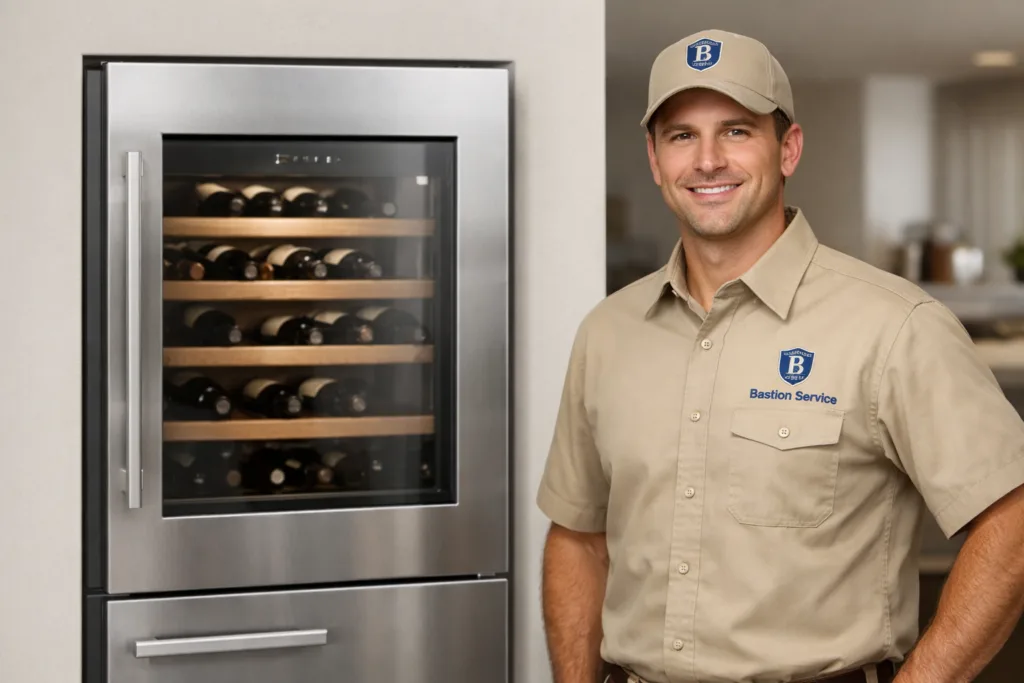
Even a small change in wine cooler performance can affect storage conditions long before the problem feels urgent. If your Miele unit is running warm, collecting moisture, or sounding different than usual, the most helpful next step is to identify whether the issue is coming from airflow, controls, sealing, fan operation, or the cooling system itself.
Common Miele Wine Cooler Problems in Hermosa Beach Homes
Wine coolers are designed for steady, predictable temperature control. When that stability starts to drift, the symptoms often show up in ways that seem minor at first but should not be ignored.
Wine cooler not holding temperature
If bottles no longer feel as cool as expected or the cabinet temperature does not match the setting, several faults may be possible. A weak fan, restricted airflow, sensor error, control issue, or cooling-system problem can all lead to warming inside the compartment. In some cases, the display still looks normal even though actual storage conditions are off.
This is why symptom-based testing matters. A cooler that appears to have a major refrigeration failure may instead have a faulty sensor or circulation issue that is preventing even cooling.
Temperature swings from shelf to shelf
Uneven cooling often points to poor internal air movement, a sensor reading problem, or warm air entering through a door that is not sealing correctly. Homeowners sometimes notice that one area of the unit feels acceptable while another is clearly too warm. That pattern can be important because it often narrows the issue to airflow, fan function, or sealing rather than a complete cooling loss.
Condensation inside the cabinet or around the door
Moisture buildup usually means humid air is getting in or temperature balance inside the cooler is unstable. A worn gasket, a door that does not close evenly, drainage trouble, or blocked ventilation can all contribute. In built-in installations, poor surrounding airflow can also make condensation more persistent.
If moisture keeps returning after surfaces are wiped down, the underlying cause should be checked rather than treated as a cosmetic issue.
Fan noise, buzzing, or new operating sounds
A Miele wine cooler will make some normal operating noise, but a noticeable change is worth attention. Buzzing, clicking, rattling, or louder fan sound can point to a fan motor problem, vibration from installation shift, compressor strain, or a component cycling abnormally while trying to maintain temperature.
Noise alone does not always mean a major repair, but when it appears alongside warming or condensation, it often helps confirm that performance is changing in a meaningful way.
Controls, display, or interior lighting acting erratically
If the interface stops responding, the display goes blank, settings change unexpectedly, or the interior light behaves inconsistently, the problem may involve the control board, user interface, wiring, or a door switch. These issues can overlap with cooling complaints, which is why replacing parts based on one symptom alone can miss the real cause.
What Often Causes These Symptoms
Many wine cooler complaints sound similar at first, but the repair path can be very different depending on what is actually failing. Common causes include:
- Restricted airflow inside or around the unit
- Evaporator or circulation fan problems
- Temperature sensor or thermostat faults
- Door gasket wear or alignment issues
- Drainage problems contributing to excess moisture
- Control board or interface malfunction
- Cooling-system weakness or compressor-related stress
Because Miele wine coolers rely on coordinated control and cooling functions, one failed part can create symptoms that resemble several different problems.
When to Schedule Service
It is smart to arrange service when the cooler cannot maintain its set temperature, runs longer than usual, develops recurring condensation, or starts making new sounds. Service is also worth scheduling if the door does not close cleanly, the controls are inconsistent, or the interior feels unstable even though the unit still powers on.
Delaying service can make diagnosis and repair more difficult in situations like these:
- Warm temperatures that continue putting stress on the system
- Gasket leaks that allow repeated humid air intrusion
- Fan issues that reduce air circulation across the cabinet
- Persistent moisture that affects interior components
- Intermittent electrical or control problems that become harder to trace
If the wine cooler is not cooling at all, trips power, produces a burning smell, or shows signs of electrical failure, it should not continue in use until it has been evaluated.
Why Diagnosis Matters Before Replacing Parts
With premium refrigeration, the visible symptom is not always the failed component. A warm cabinet may be caused by a fan or sensor rather than the sealed system. Condensation may come from a gasket issue, cabinet leveling problem, or ventilation restriction rather than a drain fault alone. Touch-control complaints can also be tied to door-switch or communication issues.
For homeowners in Hermosa Beach, that matters because a correct diagnosis helps answer the questions that usually come first: Is the issue minor, is the cooler safe to keep using temporarily, and does repair make financial sense? Those answers depend on testing results, not assumptions.
Repair or Replace a Miele Wine Cooler?
The decision usually comes down to the age of the unit, the type of failure, overall cabinet condition, and the cost of parts and labor compared with replacement. Problems involving fans, sensors, gaskets, drainage, and some control-related components are often more straightforward to address than major cooling-system failures.
Replacement may become the better option when an older unit has multiple issues at once or when diagnosis shows an expensive sealed-system problem. On the other hand, a cooler that seems unreliable may still be a good repair candidate if the fault is isolated and the rest of the appliance is in solid condition.
The goal is to avoid guessing. A targeted repair can restore stable operation when the cause is identified early, while waiting too long can add stress to other components.
What to Expect From Residential Wine Cooler Service
Useful service should go beyond confirming that the cabinet feels warm. It should include checking actual temperature behavior, airflow, fan operation, controls, door seal condition, and other components tied to storage stability. That gives homeowners a clearer picture of whether the repair is simple, urgent, or no longer the best value.
If your Miele wine cooler in Hermosa Beach is drifting in temperature, collecting condensation, or showing control or noise problems, addressing the issue early is usually the best way to protect both the appliance and the collection stored inside.