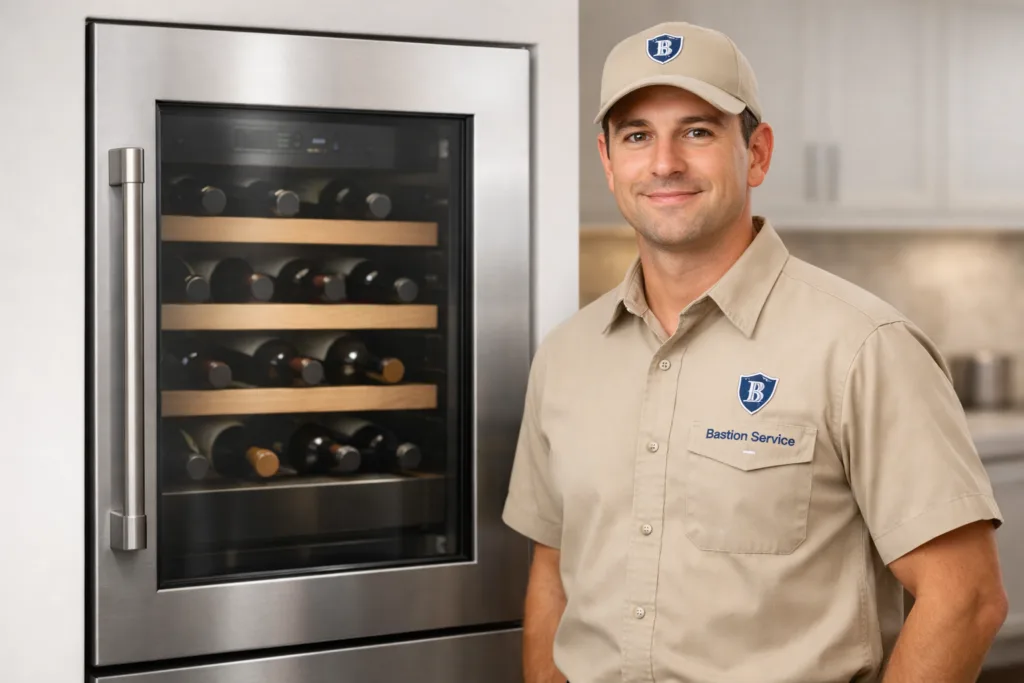
Small changes in performance are often the first sign that a wine cooler needs attention. You may notice bottles no longer feel consistently chilled, the cabinet seems warm in one area and cold in another, or the unit begins making sounds that were not there before. In Hermosa Beach homes, catching those changes early can help prevent a minor airflow or control issue from turning into a full no-cooling failure.
Common KitchenAid wine cooler symptoms at home
Most problems show up in ways that are easy to notice during normal use. The cooler may still power on and show a set temperature, yet the interior does not match what the display suggests. In other cases, moisture starts collecting inside, the door area feels damp, or the unit runs much longer than usual.
These are some of the most common symptoms homeowners report:
- Cabinet not cooling enough
- Temperature swings from day to day
- One zone cooling differently than the other
- Fan noise, buzzing, clicking, or rattling
- Condensation on shelves, bottles, or the door area
- Water near the base of the unit
- Display or control panel not responding normally
- Unit running constantly or failing to restart
Not cooling or drifting above the set temperature
If a KitchenAid wine cooler is no longer holding a steady temperature, the cause may be as simple as poor airflow or as serious as a sealed-system problem. Common repair issues include a failing evaporator fan, condenser-related airflow restriction, a faulty thermistor, control board trouble, or compressor start component failure. When the cabinet is only slightly off at first, it can be tempting to keep adjusting the controls, but repeated temperature correction usually points to a part that is no longer regulating cooling properly.
Running all the time
A wine cooler that rarely cycles off is usually struggling to reach or maintain the selected temperature. That can happen when warm air is leaking in through a worn door gasket, when internal airflow is weak, or when the cooling system is losing efficiency. Longer run times can also make normal operating sounds more noticeable, which is why homeowners sometimes describe the issue as both louder and constantly running.
Fan noise, clicking, or unusual vibration
New sounds matter because they often narrow the problem quickly. A rattle may come from vibration or a loose component. A clicking sound can point to a start device issue. A rough or uneven fan noise may suggest a worn motor blade or obstruction. If the cooler was previously quiet and has developed a new sound pattern, that change is worth checking before cooling performance drops further.
Condensation, water, or damp labels
Moisture inside a wine cooler is usually tied to air leakage, drainage trouble, or frost buildup that later melts. If labels are becoming damp or the glass is fogging more than usual, the unit may be taking in excess household air through a gasket problem or struggling to regulate internal conditions correctly. Water near the base can also point to drain issues that should be addressed before nearby flooring or cabinetry is affected.
What these symptoms often mean
Several different failures can create similar results, so the symptom alone does not always tell the whole story. A unit that is too warm may have a sensor problem, a fan problem, or a compressor-related issue. Condensation may come from a poor seal, but it can also follow an airflow or defrost-related problem. Intermittent cooling can be especially misleading because the unit may appear normal during part of the day and fail later.
That is why KitchenAid wine cooler repair in Hermosa Beach should be based on the actual operating pattern of the appliance rather than guesswork. Temperature checks, airflow inspection, door seal evaluation, and component testing help separate a straightforward repair from a more expensive cooling-system failure.
Dual-zone and control-related issues
When a dual-zone model cools one compartment properly but not the other, the problem is often more specific than a total no-cool complaint. That can involve a sensor, internal fan, damper, wiring fault, or electronic control issue affecting one section more than the other. If the display changes settings on its own, stops responding, or shows temperatures that do not match actual cabinet conditions, the control system may need closer evaluation.
Control issues are also common when the cooler seems to recover after being unplugged and restarted, only to fail again later. That type of temporary reset can make the problem look resolved when the underlying fault is still present.
When to stop waiting and schedule service
It is a good idea to schedule service when any of the following starts happening consistently:
- Bottles are no longer staying at a stable storage temperature
- The unit runs nearly nonstop
- Noise levels suddenly increase
- Moisture keeps returning after cleanup
- The cooler stops cooling after a reset or power cycle
- The display behaves erratically or does not respond correctly
Even if the problem seems minor, repeated symptoms usually mean the unit is compensating for a failing part. Waiting too long can increase stress on the compressor, worsen airflow problems, or turn a repairable issue into a broader failure.
How continued use can make the problem worse
A wine cooler does not have to fail completely to be under strain. If a fan motor is weakening, the compressor may run longer to make up for poor circulation. If the door gasket is leaking, the appliance may pull in humid air all day and create extra condensation inside. If a start component is failing, repeated attempts to run can eventually leave the unit unable to cool at all.
For that reason, it is usually better not to rely on repeated setting changes as a long-term fix. Temporary improvement after an adjustment does not mean the original problem is gone.
Repair or replace?
Many KitchenAid wine cooler problems are worth repairing, especially when the issue is tied to a fan motor, sensor, control component, gasket, switch, or drain-related fault. Those repairs are often more sensible than replacing the unit, provided the cabinet and core cooling system are otherwise in good condition.
Replacement becomes more likely when the cooler has major sealed-system trouble, repeated compressor problems, extensive age-related wear, or multiple failing components at once. The real question is not only whether the unit can be fixed, but whether the repair restores reliable storage conditions for everyday use in your home.
What a service visit should help determine
A useful service call should clarify more than whether the cooler still powers on. It should help identify:
- Whether the temperature problem is confirmed inside the cabinet
- Whether airflow is restricted or a fan is not operating correctly
- Whether the door gasket is allowing warm air in
- Whether moisture is coming from drainage, sealing, or cooling issues
- Whether the controls and sensors are reading and responding properly
- Whether the repair path is reasonable for the unit’s overall condition
For homeowners in Hermosa Beach, that kind of practical repair guidance helps avoid replacing parts that do not solve the actual problem. If your KitchenAid wine cooler has become unreliable, the next step should be symptom-based testing that explains both the cause and the repair path clearly.