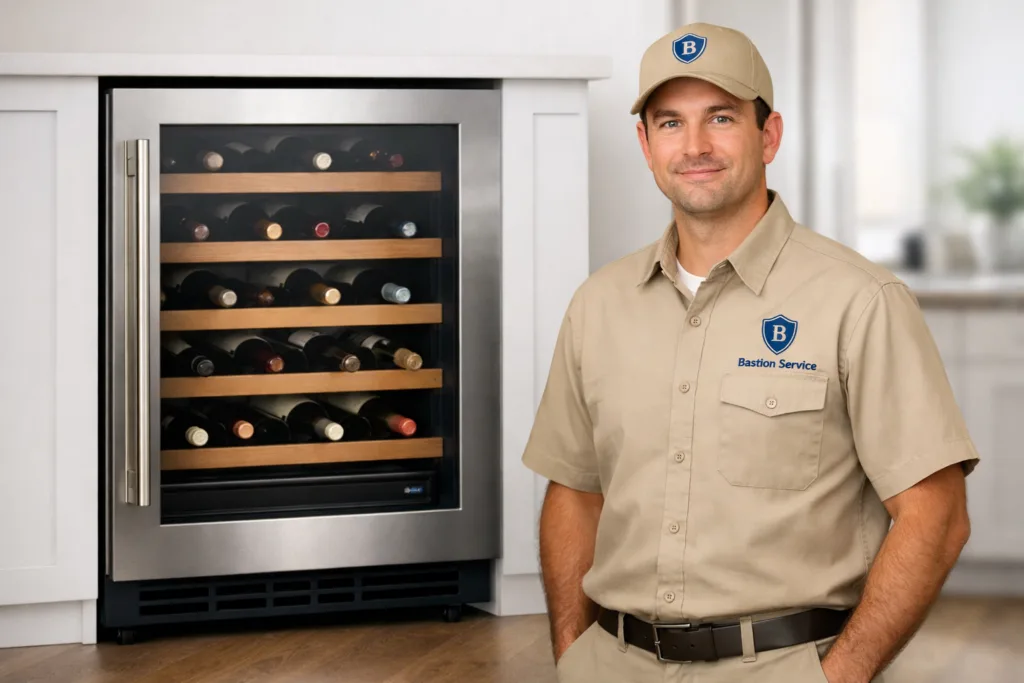
A Marvel wine cooler that stops holding temperature, develops moisture, or begins running far longer than normal can put both storage conditions and the appliance itself at risk. With wine storage, small changes matter. A cabinet that seems only slightly warm, slightly noisy, or slightly damp may already be struggling with airflow, sensing, door sealing, or refrigeration performance.
Common Marvel wine cooler symptoms and what they often mean
Many wine cooler problems look similar at first, but the cause can be very different from one unit to the next. A warmer cabinet does not always mean a failed compressor, and condensation does not always mean a leak. Looking at the exact symptom pattern usually tells far more than the display reading alone.
Not cooling enough
If bottles feel warmer than expected or the cabinet cannot reach the selected setting, several issues may be in play. Restricted condenser airflow, a weak evaporator fan, a failing thermistor, a control board fault, or a door gasket that no longer seals tightly can all interfere with stable cooling.
Some homeowners notice this problem slowly. The unit may still cool, just not as consistently as before. That gradual decline is worth attention because the cooler may start running longer to compensate, which increases wear on major components.
Temperature swings or uneven cooling
When one shelf feels colder than another, or the temperature rises and falls more than usual, the problem is often related to airflow or sensing. Frost around the evaporator area, fan trouble, blocked circulation, or inaccurate temperature feedback can all create uneven cabinet conditions. For wine storage, that instability is often the first sign that the unit is no longer operating normally.
Running constantly
A Marvel wine cooler that seems to run all day may be trying to overcome warm air entering through a poor seal, dirty condenser coils, inadequate ventilation, or a control issue that is misreading cabinet temperature. Constant operation should not be dismissed as normal, especially if the cabinet still is not cooling properly.
Freezing bottles or overcooling
If the cooler drops below the intended range, the issue may involve the thermistor, electronic controls, or a cycling problem that keeps the compressor on too long. This is one of the more important symptoms to address quickly because wine can be affected by temperatures that are too low just as easily as temperatures that are too high.
Condensation or water inside the cabinet
Moisture on shelving, along the door opening, or beneath the unit may come from a blocked drain path, repeated door seal leakage, excess humidity entering the cabinet, or cooling problems that lead to abnormal condensation. Water should not be ignored, particularly if labels, wood flooring, or surrounding cabinetry are nearby.
Fan noise, buzzing, or rattling
A change in sound often points to a component that is starting to struggle. Evaporator or condenser fan issues can create scraping or humming sounds, while vibration from panels or installation surfaces can produce a rattle. Buzzing may also reflect compressor strain. Not every sound indicates a major failure, but new or louder noise is a good reason to have the unit evaluated.
Why symptom-based diagnosis matters
Replacing parts based only on a general complaint such as “not cooling” can waste time and money. The same complaint might come from poor airflow, a failed sensor, a control issue, gasket wear, or a sealed-system problem. The more useful approach is to match the symptom to how the cooler behaves over time.
For example, a unit that cools well in the morning but warms later may suggest ventilation or condenser performance issues. A cabinet that is always too cold may point more toward sensing or control failure. A wine cooler that runs constantly while also collecting moisture may be dealing with both heat infiltration and airflow loss.
When repair is usually worth considering
Many Marvel wine coolers are good repair candidates when the issue involves fans, sensors, controls, gaskets, drain components, or airflow-related faults. These problems are often more straightforward than homeowners expect, especially when caught before the unit has spent weeks running under stress.
Repair is often the sensible next step when:
- The cabinet is close to the correct temperature but no longer consistent
- The display or controls behave erratically
- The door does not seal as tightly as it used to
- Condensation or minor water accumulation has begun recently
- Fan noise or vibration is new and localized
- The appliance is otherwise in solid condition
When replacement may become part of the discussion
Replacement becomes more realistic when the wine cooler has multiple age-related issues at the same time, shows major sealed-system trouble, or needs repairs that approach the practical value of the appliance. That is especially true if cooling performance has fallen off significantly and the unit has already had recurring problems.
Homeowners in Hermosa Beach often make the best decision after looking at three things together: the exact failure, the overall condition of the cabinet and components, and whether continued use is likely to create more damage. A single isolated fault is very different from a cooler showing broad wear across several systems.
Signs you should not wait too long
Some symptoms can safely be watched for a short period, but others tend to get worse quickly. It is smart to schedule service soon if the unit is warming despite normal settings, short cycling, running without stopping, leaking, or freezing contents unexpectedly.
Prompt attention is also important if you notice:
- A sudden jump in operating noise
- Repeated moisture around the door or inside the cabinet
- A display that does not match actual cabinet conditions
- Poor restart behavior after the unit cycles off
- Interior temperatures changing enough to affect storage confidence
What a service visit should help clarify
A useful evaluation should separate cosmetic symptoms from functional failures. That means determining whether the problem is tied to airflow, controls, sensing, drainage, fan operation, door sealing, or the refrigeration system itself. That distinction matters because the repair path for a noisy fan motor is entirely different from the repair path for a sealed-system issue.
For households in Hermosa Beach, the goal is to understand what the cooler is doing now, what is causing it, and whether the fix is reasonable for the appliance’s age and condition. That makes it easier to decide whether to move forward with repair or start planning for replacement before a full storage failure occurs.
How homeowners can protect the unit between now and service
While waiting for diagnosis, avoid making repeated setting changes in an attempt to force colder temperatures. That can make symptom patterns harder to track and may increase strain on the system. It also helps to check that the door closes fully, the shelves are not blocking airflow, and the surrounding area allows proper ventilation.
If you see active leaking, significant warming, or signs that bottles are getting too cold, reducing use and minimizing door openings can help limit additional stress until the problem is addressed. Even when the issue seems minor, paying attention early often gives homeowners more repair options and a better outcome.