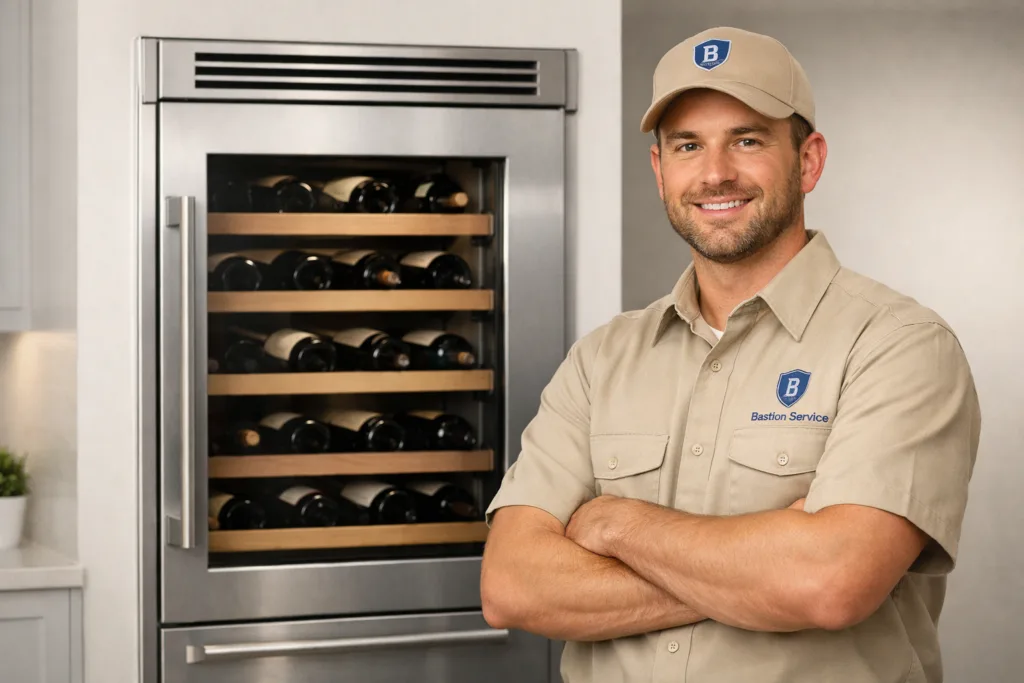
Wine cooler problems rarely stay limited to convenience. Once temperatures begin drifting, bottles may be stored warmer than intended, the compressor may run longer than normal, and moisture can start affecting nearby cabinetry or flooring. The best next step is to identify whether the issue comes from airflow, controls, door sealing, drainage, or the refrigeration system itself.
Signs your Sub-Zero wine cooler needs attention
Many homeowners first notice a problem in small ways: the cabinet feels slightly warmer than usual, the unit seems to run more often, or the sound level changes. Those early signs matter because wine coolers are built to maintain a stable environment, and even modest changes can point to a component that is no longer working correctly.
Common warning signs include:
- Temperatures that rise above the set point or fluctuate from shelf to shelf
- Bottles that feel too warm or unexpectedly too cold
- Condensation on the glass, door frame, or interior walls
- Water collecting under or inside the cabinet
- Fan noise, buzzing, clicking, or a new rattling sound
- A display that is blank, inaccurate, or difficult to adjust
- A unit that runs constantly or cycles much more than before
Common symptoms and what they often mean
Running warm or failing to hold temperature
If the cabinet is not staying consistently cool, the cause may be as simple as restricted airflow or as serious as a sealed-system problem. Dirty condenser components, a weak evaporator fan, a worn door gasket, a faulty temperature sensor, or a control issue can all reduce cooling performance. In some cases, the cooler still produces some cold air, which can make the problem seem minor at first even while storage conditions continue to worsen.
When temperature problems affect multiple shelves, return repeatedly, or become more noticeable during normal household use, repair should not be put off for long.
Overcooling or freezing
A Sub-Zero wine cooler that gets too cold can be just as problematic as one that runs warm. If bottles are colder than expected or the cabinet temperature drops below the selected setting, the issue may involve the thermostat, sensor, control board, or user interface. Because the unit is still cooling, this symptom is easy to underestimate, but it usually points to a control fault rather than normal operation.
Condensation, sweating, or moisture buildup
Moisture is often a sign that warm air is entering where it should not. A damaged gasket, misaligned door, drainage issue, or cooling imbalance can all lead to condensation. In Hermosa Beach homes, recurring moisture around the door or beneath the unit is worth addressing early, especially if it begins affecting surrounding finishes. A cooler that is pulling in warm air may also run longer and wear itself down faster.
Fan noise, buzzing, or rattling
Not every unusual sound means major failure, but a noticeable change in sound usually means something has changed mechanically. Worn fan motors, loose panels, compressor strain, or vibration from aging components can all create new noise. If the sound is paired with warming, long run times, or inconsistent cooling, the symptom becomes more important because it suggests the unit is no longer operating efficiently.
Display, lighting, or control problems
An unresponsive display or erratic controls can affect more than appearance. Modern wine coolers rely on sensors, boards, and interface components to manage temperature accurately. If the display is blank, the settings do not respond, or the readings seem wrong, the appliance may not be regulating the cabinet correctly even if some cooling is still happening.
Why symptom patterns matter
Two wine coolers can appear to have the same problem while needing very different repairs. For example, a unit that runs warm and one that runs constantly may both seem to have a cooling failure, but one may only need a door-seal correction while the other may have a fan, sensor, or sealed-system issue. Looking at the full pattern helps separate a targeted repair from a more complex refrigeration problem.
Details that often help narrow the diagnosis include:
- Whether the problem is constant or intermittent
- Whether all shelves are affected or only part of the cabinet
- Whether the unit is noisy, silent, or running nonstop
- Whether condensation appears at the door, inside the cabinet, or underneath
- Whether the display and controls still behave normally
When service should be scheduled sooner
It is a good idea to schedule service when the cooler no longer maintains a stable temperature, when noise becomes persistent, or when water and condensation keep returning. Continued use under those conditions can add stress to fans and the compressor, especially if airflow is restricted or the control system is no longer cycling correctly.
You should move more quickly if:
- The cabinet is clearly warmer than the setting
- The unit runs almost constantly
- Moisture is affecting woodwork, flooring, or adjacent finishes
- The display is not responding or shows incorrect information
- The sound of the cooler changes suddenly and noticeably
Repair versus replacement
Many Sub-Zero wine cooler repairs are worthwhile when the issue is isolated to a fan motor, control component, sensor, switch, gasket, or other serviceable part. Replacement becomes a more serious consideration when the unit has multiple major failures, significant age-related wear, or a costly sealed-system problem combined with other issues.
For most households, the decision comes down to three questions:
- Is the failure limited to one repairable component or system?
- Will the repair restore stable temperature control?
- Is the overall condition of the cooler still strong enough to justify the work?
That kind of practical repair guidance is usually what helps homeowners decide with confidence rather than guessing based only on whether the unit still powers on.
What a service visit should clarify
A productive service visit should determine the actual source of the symptom, not just confirm that the cabinet is off-temperature. That means checking airflow, evaporator and condenser function, controls, sensors, door sealing, drainage, and overall cooling behavior. The goal is to understand whether the problem is straightforward, whether continued operation is reasonable for the short term, and whether the repair path makes sense for the condition of the appliance.
For homeowners in Hermosa Beach, that approach makes it easier to tell the difference between a manageable component repair and a larger refrigeration issue that may change the recommendation.