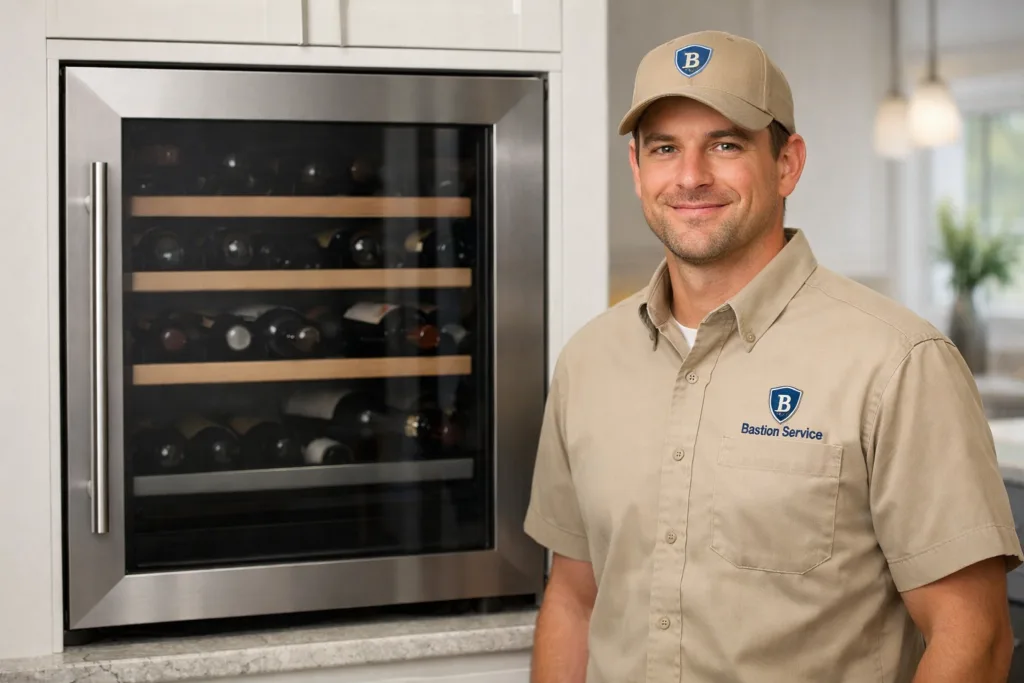
Common wine cooler problems homeowners notice

Wine coolers are designed for stable, consistent storage. When that stability changes, the first signs are usually subtle: bottles no longer feel evenly chilled, the cabinet seems to run longer than usual, or the display temperature does not match what is happening inside. In many homes, these symptoms are tied to airflow restrictions, sensor errors, dirty condenser coils, door seal leaks, fan wear, or early compressor and start-component trouble.
Temperature drift is one of the most common complaints. If the unit cools sometimes but cannot hold a steady range, the issue may be a thermostat problem, a bad temperature sensor, weak airflow across the evaporator, or a control fault that causes the system to cycle at the wrong times. On dual-zone wine coolers, one section staying on target while the other warms up often points to a fan, damper, or control issue rather than a setting mistake.
Noise changes also matter. A low fan hum is normal, but rattling, clicking, buzzing, or repeated attempts to start usually indicate something mechanical or electrical needs attention. Loose panels, worn fan motors, vibration from poor leveling, or a hard-starting compressor can all make a wine cooler noticeably louder than before.
Moisture is another warning sign. Condensation on the glass, damp shelves, interior water, or light frost buildup can mean warm air is entering through a weak gasket, the drain path is restricted, or the cooling system is no longer regulating humidity and temperature correctly. Left alone, those conditions can reduce performance and increase wear on the unit.
What specific symptoms can indicate
Cooling, but not holding a steady temperature
If the cabinet still feels somewhat cool but swings from too warm to too cold, the cooler may be operating with a hidden fault. Common causes include sensor misreadings, dirty coils, a struggling fan motor, or a control board issue that interrupts normal cycling. This is often the best time to schedule service, because the unit is still running but no longer protecting your collection consistently.
Not cooling at all
A wine cooler that has power but produces no meaningful cooling may have a failed start relay, thermostat problem, control issue, compressor failure, or sealed-system problem. If the light comes on and the display works but the cabinet stays warm for hours, the problem is usually beyond a simple reset. Continued operation in this condition can place more strain on already stressed components.
Running constantly
When a wine cooler seems to run nonstop, it is usually trying to overcome heat entering the cabinet or a loss of cooling efficiency. Dirty condenser coils, poor ventilation clearance, a leaking door gasket, or a weak cooling system can all force longer run times. Constant operation does not always mean the compressor has failed, but it does mean the unit is working harder than it should.
Frost or airflow problems inside the cabinet
Frost buildup inside a wine cooler can block airflow and make temperature recovery much slower after the door is opened. In some cases, the root issue is closer to the same airflow and cooling patterns seen in other cold-storage appliances. Freezer Repair in Hermosa Beach If shelves near one area feel much colder while other sections stay warm, fan performance or internal air circulation may be part of the problem.
Simple checks to make before scheduling repair
Before arranging service, it helps to rule out a few basic issues. Confirm that the temperature setting was not changed accidentally, make sure the door closes fully without bottle interference, and check whether dust has collected on accessible vents or lower condenser areas. If the unit is built into cabinetry, verify that ventilation space has not been blocked by stored items or trim changes.
It is also worth noting the pattern of the symptom. Does the cooler struggle most in the afternoon? Does one zone fail while the other works? Is there water only after the door has been opened often? Those details can help narrow the cause quickly, especially when the problem involves sensor behavior, door sealing, or fan cycling.
When to schedule service
It is time to schedule wine cooler repair when the cabinet cannot hold temperature, develops new or louder noise, shows repeated condensation or frost, or cycles almost continuously. Service is also appropriate when the display says one thing but the stored bottles clearly feel warmer than they should. In Hermosa Beach homes, these issues often start small and then become much more disruptive once the unit loses the ability to recover temperature after normal door openings.
Prompt attention is especially important if the cabinet is clicking repeatedly, leaking water onto the floor, overheating on the outside, or showing heavy frost that limits interior airflow. Repeated resets rarely solve those underlying problems, and delay can turn a manageable fan, sensor, or control repair into a larger failure.
Repair versus replacement considerations
Many wine cooler problems are repairable, especially when the failure involves a fan motor, door gasket, switch, sensor, thermostat, drainage issue, or other accessible electrical component. If the cabinet is in good shape and has otherwise stored reliably, repair is often the practical option.
Replacement becomes more likely when the unit has a major sealed-system issue, a failing compressor, repeated cooling breakdowns, or corrosion and cabinet wear that make further work hard to justify. The best decision usually comes after identifying the exact failed part and comparing repair cost with the age, condition, and storage value of the appliance.
How wine cooler issues can overlap with other kitchen refrigeration problems
Some households notice wine cooler trouble at the same time other refrigeration appliances begin acting up. If your main kitchen unit is also showing inconsistent temperature control, food warming, or uneven compartment cooling, Refrigerator Repair in Hermosa Beach may be relevant for the separate full-size appliance diagnosis.
If the concern involves poor ice production, a slow fill cycle, dispenser trouble, or water-related symptoms around the ice system, that points to a different set of components such as the inlet valve, fill tube, or ice-making assembly. Ice Maker Repair in Hermosa Beach Those problems should be evaluated on their own rather than folded into a wine cooler diagnosis.
What a useful diagnosis should include
A thorough service visit should do more than react to the most obvious symptom. It should confirm actual cabinet temperature, compare that reading with the control display, evaluate airflow, inspect the door seal, check fan operation, look for frost or drainage trouble, and test whether the compressor and start components are behaving normally.
That process helps determine whether the issue is a straightforward repair, whether continued operation risks more damage, and whether replacement makes better long-term sense. For homeowners in Hermosa Beach, the goal is not just getting the unit running again, but making sure it can return to stable, reliable storage without guesswork.