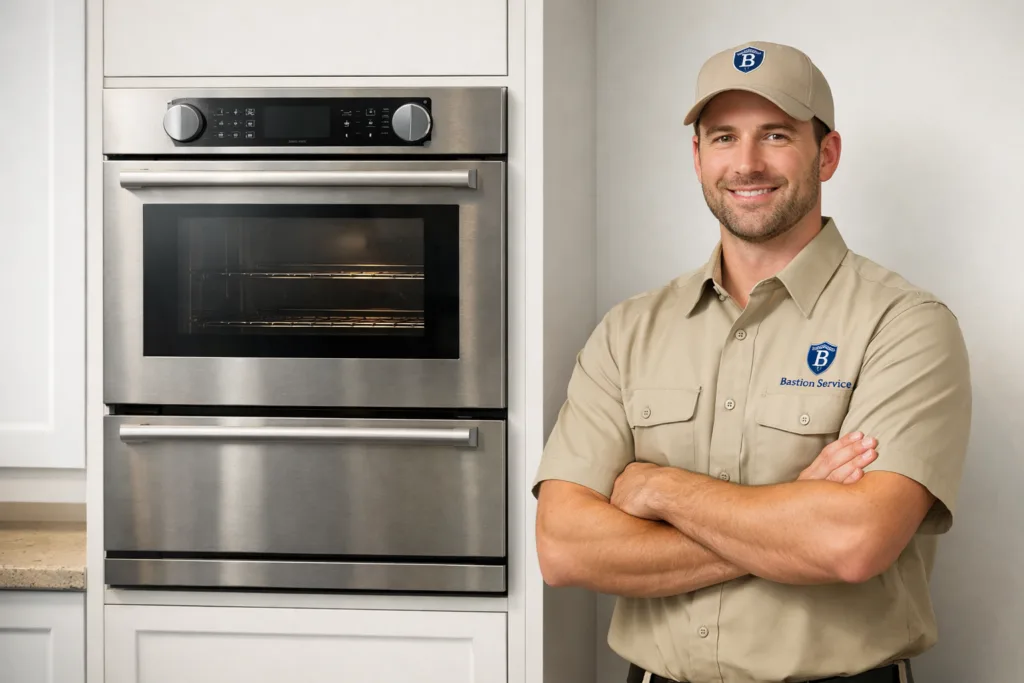
Built-in wall ovens tend to fail in recognizable ways, and the symptom pattern usually says a lot about where the problem starts. With Dacor units, the difference between a heating issue, a temperature-control issue, and an interface problem matters because each one points to a different repair path. In Marina del Rey homes, sorting that out early can prevent wasted parts replacement and help you decide whether the oven is worth repairing.
Common Dacor Wall Oven Problems Homeowners Notice
Some problems are obvious right away, such as an oven that will not heat at all or a display that stops responding. Others show up more gradually, including longer preheat times, hot spots, or food that suddenly starts finishing too early or too late. Even when the oven still turns on, inconsistent performance usually means something in the heating, sensing, airflow, or control system is no longer working as it should.
Dacor wall ovens can also develop faults that affect only one mode. Bake may fail while broil still works, or convection may seem weak even though standard baking remains usable. Those differences are useful because they help narrow the problem to a specific circuit, fan, sensor, relay, or control function instead of treating every complaint like the same repair.
Symptoms that often point to service needs
- Oven does not heat in bake, broil, or both modes
- Preheat takes much longer than normal
- Food cooks unevenly from rack to rack
- Temperature runs too hot or too cool
- Display shows an error code or resets during use
- Touch controls do not respond consistently
- Convection fan is loud, weak, or not running
- Door does not close tightly or heat escapes
- Oven shuts off before the cycle is complete
What No-Heat and Slow-Heat Symptoms Can Mean
If the oven powers on but never reaches cooking temperature, the cause may be a failed bake element, broil element, sensor, relay, control board issue, or wiring fault. In some cases, the unit appears to start normally, but one heating circuit is not energizing, which leaves the oven warming too slowly or not enough to cook properly.
Slow preheat is often dismissed as normal aging, but it can be an early sign that a heating component is weakening or that the oven is struggling to read temperature accurately. A sensor drifting out of range, a relay not closing reliably, or reduced output from a heating element can all stretch preheat times and lower cooking performance long before the oven stops working completely.
Why Uneven Baking and Temperature Swings Happen
When cookies brown differently on the same sheet or casseroles need far longer than expected, the issue is often related to temperature regulation rather than simple user settings. A Dacor wall oven that cycles too high or too low may have a sensor problem, calibration issue, weak element performance, or a convection airflow fault. Door sealing problems can also let enough heat escape to affect consistency.
These symptoms are especially frustrating because the oven still seems usable, but results become unreliable. Homeowners in Marina del Rey often notice this first with baking, where small temperature errors become obvious. If the oven alternates between undercooking and overcooking, the repair should focus on measured temperature behavior rather than guesses based on one meal.
Control Panel, Display, and Error Code Issues
Modern wall ovens rely on electronic controls to manage temperature, timing, and cooking modes. When the touchpad misses commands, the display goes blank, or settings cancel on their own, the fault may involve the user interface, main control, or related wiring connections. Intermittent operation is important because it can mimic other problems and lead to confusion about whether the oven has a heating failure or a communication failure.
Error codes should not be treated as background annoyances if they keep returning. A recurring fault code often means the oven is detecting a sensor, latch, fan, or control problem that needs direct testing. Resetting power may clear the display temporarily, but it does not correct the underlying issue if the code continues to reappear.
Door, Fan, and Airflow Problems That Affect Performance
A wall oven depends on proper airflow and heat retention to cook evenly. If the convection fan is noisy, weak, or not operating, temperatures can become uneven and cooking times can drift. A damaged gasket or misaligned door can have a similar effect by allowing heat to escape during the cycle.
These problems may seem minor at first, but they can put extra strain on heating and control components. An oven that loses heat through the door or circulates air poorly often runs longer to maintain temperature, which can accelerate wear and make a smaller issue more expensive later.
When It Is Best to Stop Using the Oven
Some symptoms can wait briefly for a scheduled repair, while others deserve prompt attention. If the oven overheats, trips power, shuts off unexpectedly, smells like overheating insulation, or shows repeated electronic faults, continued use is not a good idea. Problems involving unstable temperature control or electrical behavior can worsen quickly and may affect nearby components inside the cabinet.
If the door is not closing securely or the controls behave unpredictably, it is also smart to pause use until the cause is confirmed. Built-in appliances are less forgiving when faults spread, and a contained repair can turn into a broader one if the unit keeps running under abnormal conditions.
Repair or Replace: How the Decision Usually Works
Many Dacor wall oven problems are still repairable when the appliance is otherwise in good condition and the failure is limited to one main area, such as a sensor, heating element, fan motor, latch, or control component. Repair makes more sense when the oven structure is sound, the issue is clearly defined, and the expected result is stable normal operation.
Replacement becomes more likely when there are multiple major failures, ongoing electronic problems, significant age-related wear, or parts limitations that make the overall repair path less practical. Because wall ovens are built in, replacement also involves cabinet fit, installation planning, and model compatibility, so it helps to compare the full picture rather than judging the decision on one symptom alone.
What a Helpful Service Visit Should Clarify
The most useful appointment does more than identify that the oven is malfunctioning. It should determine which component or system is actually failing, whether there is related wear that could affect the result, and whether the repair is likely to restore reliable operation. For homeowners, the key questions are usually simple: what failed, is it safe to keep using the oven, and does the repair make sense for this unit?
That kind of practical repair guidance is especially important with a Dacor wall oven, where the same complaint can come from several different causes. A careful diagnosis helps you avoid unnecessary parts replacement and gives you a clearer understanding of the next step for your kitchen in Marina del Rey.