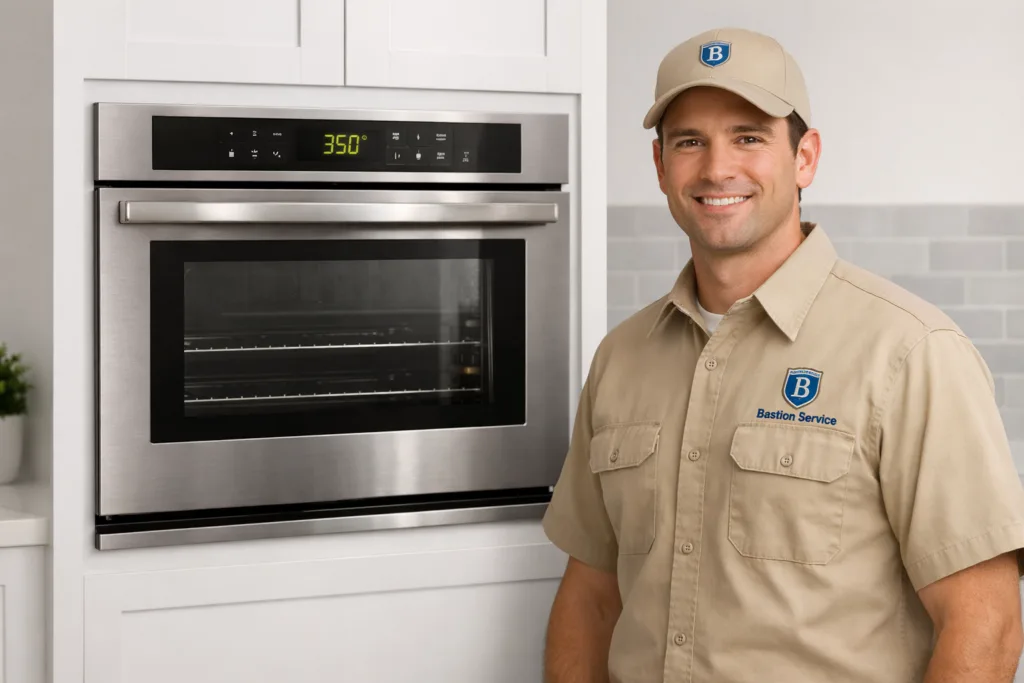
Wall ovens tend to fail in ways that seem simple at first but are often caused by different parts of the heating and control system. An oven that will not preheat, bakes unevenly, or starts flashing errors may have a failed element, a sensor problem, a control fault, a door issue, or a wiring problem behind the cabinet installation. For homeowners in Marina del Rey, that difference matters because the right repair depends on the exact symptom pattern, not just the complaint on the display.
Common Whirlpool wall oven symptoms and what they may mean
Not heating at all
If the cavity stays cold, only warms slightly, or never gets close to the selected temperature, the problem may involve the bake element, broil element, control board, sensor, terminal connection, or incoming power. In some cases, the display and lights work normally even though the heating circuit is not doing its job. That can make the oven look partially functional when it is not actually cooking safely or effectively.
Slow preheat
A Whirlpool wall oven that takes much longer than usual to preheat often has a weak heating component or a control issue that is not energizing the element correctly. Homeowners sometimes notice this first as a timing problem: meals take longer, frozen dishes do not finish on schedule, and recipes that once worked start missing their expected results. Slow preheat is worth checking early because it can be the first sign of a component failing under load.
Uneven baking or temperature swings
If one rack browns faster than another, cookies come out inconsistent, or casseroles look done on top but remain undercooked in the center, the oven may not be regulating heat correctly. A drifting sensor, an element that cycles poorly, or a control problem can all create unstable temperature behavior. These issues are frustrating because the oven still appears usable, but daily cooking becomes unpredictable.
Display or keypad problems
An unresponsive keypad, partial display failure, random beeping, or recurring error codes usually points to an electronic control issue rather than a basic heating problem alone. Some faults affect how the oven reads temperature, while others interfere with cycle selection, timer behavior, or normal start-up. If the controls only work intermittently, the appliance may stop in the middle of a cooking cycle or fail to follow the settings you entered.
Door seal or latch trouble
A wall oven door that will not close fully, feels loose, or does not seal evenly can let heat escape and force longer cook times. If the problem started after a self-clean cycle, the latch system or related switches may also be involved. Continuing to use the oven with a poor seal can make cooking results worse and put extra stress on the heating system.
Why the same symptom can have different causes
One of the most common mistakes with a built-in oven is assuming the visible symptom points to a single failed part. Slow heating, for example, might come from an element that is failing gradually, but it could also come from a sensor that is reading incorrectly or a control board that is not cycling heat properly. An error code may suggest one component while the underlying cause is actually a connection or communication issue elsewhere in the appliance.
That is why diagnosis matters before repair. It helps separate a straightforward part failure from a broader issue and reduces the chance of replacing parts that were not actually causing the problem. With a built-in unit, that matters even more because access can take time and unnecessary disassembly is not helpful.
Signs the oven should not keep being used
Some wall oven problems are inconvenient but manageable for a short time. Others are reasons to stop using the appliance until it is checked. You should avoid continued use if you notice:
- Burning smells that do not go away after normal cooking residue burns off
- Sparking, arcing, or visible damage inside the cavity
- Repeated breaker trips when the oven starts heating
- A door that will not latch or close securely
- Error codes that return right away after resetting power
- The oven shutting off mid-cycle without explanation
These symptoms can point to electrical faults, overheating, or safety-related failures. Even when the oven comes back on after a reset, repeated behavior usually means the underlying issue is still present.
What often happens after self-clean problems
Many homeowners first notice wall oven trouble right after running a self-clean cycle. High-heat cleaning can expose weak components that were already near failure, especially sensors, latch assemblies, control parts, and certain wiring connections. The result may be a locked door, a nonresponsive panel, an oven that no longer heats correctly, or an error that will not clear.
If the problem started immediately after self-clean, it is usually better not to force the door or keep trying to restart cycles. That can complicate the repair and may add unnecessary strain to the latch or control system.
Repair versus replacement for a Whirlpool wall oven
Repair is often the sensible choice when the issue is isolated to a heating element, sensor, latch component, or a specific control-related failure and the rest of the appliance is in good condition. Many built-in ovens still make sense to fix when they have cooked reliably for years and the repair restores normal performance without stacking multiple major parts.
Replacement becomes a stronger consideration when problems are recurring, several expensive systems are failing at once, or the oven shows broader signs of age and wear beyond the current complaint. With a wall oven, that decision also depends on cabinet fit, cutout dimensions, and how much disruption a replacement would cause in the kitchen. For many Marina del Rey homeowners, keeping the existing built-in layout is part of the decision, not just the repair bill alone.
What to expect from a useful service visit
The most helpful service experience is one that stays focused on the symptom you are actually dealing with at home. That means identifying whether the issue is primarily heating, sensing, control, latch, or power related, then explaining how that failure affects cooking performance. From there, you can make a practical repair decision based on the condition of the oven and the likely outcome of the repair.
In residential kitchens, homeowners usually want answers to a few simple questions: why the oven is acting up, whether it is safe to keep using, and whether fixing it is likely to restore normal day-to-day cooking. When those questions are addressed clearly, the next step is much easier.
When to schedule service
It makes sense to schedule Whirlpool wall oven repair in Marina del Rey when the oven no longer reaches temperature, heats unevenly, takes too long to preheat, shows recurring control errors, or has a door problem that affects normal use. Even if the appliance is still partly working, persistent symptoms usually do not improve on their own. Catching the issue before it spreads to related components can help keep the repair more manageable.
If your household relies on the wall oven regularly, acting sooner also helps avoid the cycle of adjusting cook times and temperatures around an appliance that is no longer performing correctly. Once baking results become inconsistent, the problem has already moved beyond normal wear and into a repair decision.