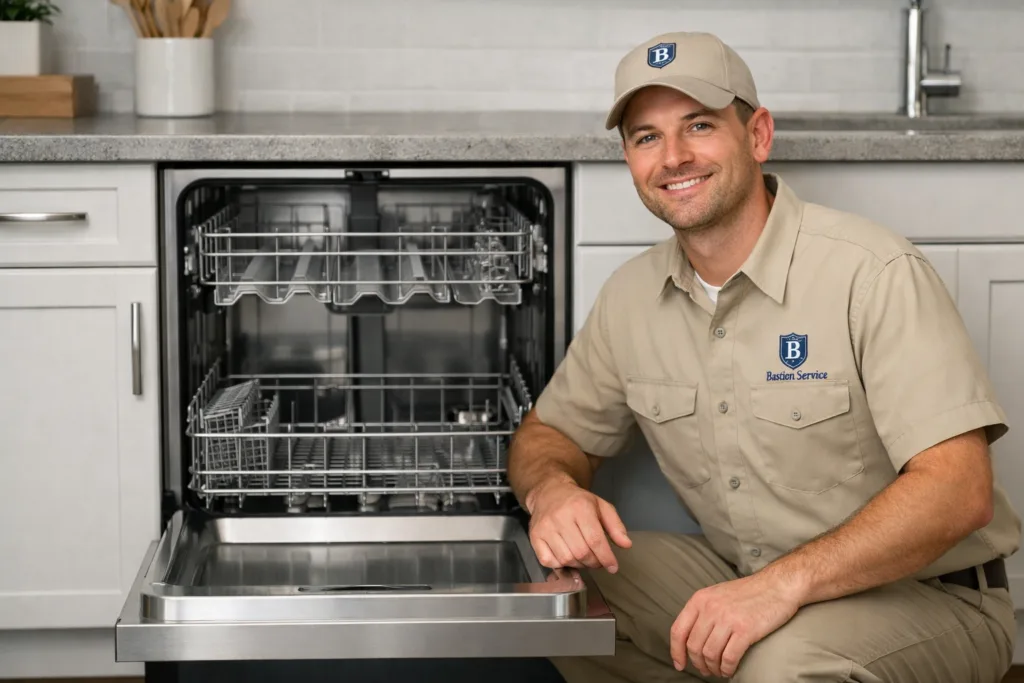
When an LG dishwasher starts leaving standing water, turning out cloudy glasses, or stopping mid-cycle, the most useful next step is to match the symptom to the likely system involved. In Rancho Palos Verdes homes, that usually means looking at drainage, wash circulation, heating, door sealing, or controls rather than assuming one part is automatically to blame.
Start with what the dishwasher is actually doing
LG dishwashers often provide clues before they fail completely. A machine that runs but does not clean well points in a different direction than a machine that will not start, leaks onto the floor, or hums without draining. Since several faults can create similar results, the symptom pattern matters more than guesswork.
For example, poor wash results can come from blocked spray arms, low fill, circulation problems, detergent buildup, or temperature issues. A tub full of water at the end of the cycle may involve the filter area, drain pump, drain hose, or a restriction in the drain path. A dishwasher that powers up but never begins washing may be dealing with a door latch issue, interface problem, or control-related fault.
Common LG dishwasher problems in residential kitchens
Dishwasher not draining
If water remains in the bottom after the cycle, the problem may be as simple as debris in the filter area or as involved as a failing drain pump. Kinked hoses, partial clogs, and installation-related drainage problems can also cause repeat no-drain complaints. Continued use can lead to odor, overflow risk, and extra strain on the drain system.
Signs that usually point to a true drain issue include water left in the tub after every cycle, gurgling without full draining, or a unit that stops and will not complete the drain portion of the program.
Dishes come out dirty, filmy, or still wet
When an LG dishwasher finishes a cycle but dishes still look dirty, the issue is not always detergent quality. Reduced spray pressure, blocked wash arms, low water fill, wash motor trouble, or sensor-related problems can all affect cleaning performance. If dishes are consistently wet at the end, the machine may also be struggling with heating or final rinse temperature.
Cloudiness on glassware, gritty residue, or food left behind after normal loading usually means the dishwasher needs more than a routine rinse aid adjustment.
Leaks around the door or underneath the unit
Water on the floor should be taken seriously, even if it appears minor. Leaks can come from a worn door seal, damaged hose, loose connection, sump issue, overfilling condition, or leveling problem. In a home kitchen, even a slow leak can affect flooring, toe-kick areas, and surrounding cabinetry if it keeps happening.
If leaking occurs during the same part of the cycle each time, that timing can help narrow the source. A leak during fill often points somewhere different than a leak during wash or drain.
Unit will not start or stops during the cycle
An LG dishwasher that does nothing when the door is closed may have a latch problem, power issue, interface failure, or electronic control fault. If it starts but shuts down before finishing, the cause may involve drainage, overheating, sensor input, or intermittent electrical failure.
Error codes can be useful, but they do not always identify the exact failed part. In many cases, the code reflects a condition the dishwasher detected rather than the underlying reason it happened.
Grinding, humming, clicking, or unusual wash noise
Noise complaints often come from debris caught in the pump area, spray arm interference, worn internal components, or a struggling motor. A steady hum with no draining can suggest pump trouble. A sudden rattle may be something loose in the tub or an arm striking an item that shifted during the cycle.
Noise that appears suddenly, gets louder, or happens with poor cleaning or drain problems is usually worth addressing sooner rather than later.
Why symptom-based diagnosis matters
Modern LG dishwashers combine pumps, sensors, valves, controls, and seals in a compact system. That means one symptom can have several possible causes, and one failing component can trigger other problems nearby. Replacing a part based only on a guess may increase cost without fixing the real issue.
A proper evaluation helps separate a maintenance-related problem from an actual component failure. It also helps determine whether the appliance has one isolated fault or a broader pattern of wear that affects the repair decision.
Signs the problem is getting worse
Some dishwasher issues stay inconvenient for a while before they become urgent, while others should not be ignored. It is usually time to stop using the unit and schedule service if you notice:
- Standing water after every cycle
- Recurring leaks under the dishwasher or at the door
- Burning smells or repeated shutoffs
- Loud mechanical noise during wash or drain
- Cycles that stall, cancel, or leave dishes dirty every time
- The need to restart the machine regularly just to finish a load
Problems like these tend to move beyond simple inconvenience and can lead to cabinet damage, floor moisture, or larger internal failures if the dishwasher keeps running in the same condition.
When repair usually makes sense
Repair is often the better option when the issue is limited to one system, such as drainage, circulation, a seal, or a specific electrical component, and the rest of the dishwasher is in solid condition. That is especially true when the machine has been performing normally until the current failure appeared.
For many Rancho Palos Verdes homeowners, the question is less about whether the dishwasher still turns on and more about whether the current repair addresses the full cause of the problem. A single failed pump or latch is very different from a unit with repeated leak history, multiple performance complaints, and broader age-related wear.
When replacement may be the better move
Replacement becomes more reasonable when the dishwasher has several issues at once, a history of repeat breakdowns, significant leak-related damage, or a major control problem combined with overall wear. If one repair is unlikely to restore reliable operation for long, putting more money into the same unit may not be the best household decision.
The most practical choice usually depends on the dishwasher’s age, condition, repair history, and whether the current symptom is part of a larger pattern.
What to note before service
Helpful details can make troubleshooting faster and more accurate. Before service, it helps to note:
- Whether the dishwasher fills with water
- Whether it drains completely at the end
- At what point the cycle stops or the noise begins
- Whether the issue happens on every cycle or only sometimes
- Any display code or flashing lights shown during the failure
- Whether the problem started suddenly or became worse over time
These observations can help connect the complaint to the system most likely at fault and reduce unnecessary parts swapping.
LG dishwasher repair decisions in Rancho Palos Verdes
For households in Rancho Palos Verdes, the best repair decisions usually come from understanding the exact symptom pattern first. A dishwasher that drains slowly, leaks occasionally, or struggles to wash properly may still be very repairable, while a machine with repeated failures across multiple systems may be approaching the point where replacement deserves consideration.
The goal is simple: identify the actual cause, fix the condition that is creating the symptom, and avoid letting a manageable dishwasher problem turn into a bigger kitchen disruption.