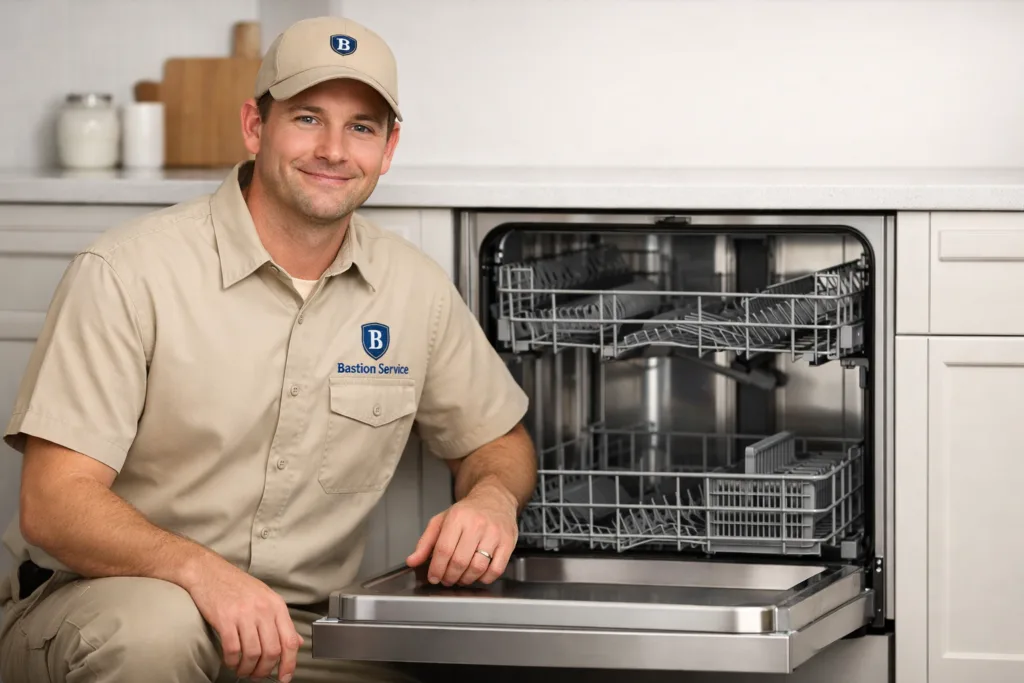
Dishwasher problems tend to show up in the same frustrating ways: dishes come out dirty, the tub holds water, a cycle stops halfway through, or a small leak turns into a bigger kitchen concern. With a Blomberg dishwasher, the most useful approach is to match the symptom to the system involved so the repair decision is based on what the machine is actually doing.
Start with the symptom pattern
One symptom can have several possible causes. Poor cleaning may come from weak spray pressure, restricted water flow, low rinse temperature, or a wash motor problem. Standing water may point to a clogged filter area, a drain restriction, or a failing drain pump. Because of that, guessing at parts rarely helps. A service visit should narrow the issue down to the wash system, drain system, fill system, heating components, latch, or control.
That distinction matters for homeowners in Rancho Palos Verdes because some issues stay limited to one repairable part, while others suggest broader wear inside the appliance. The pattern of when the problem happens is often just as important as the symptom itself.
Common Blomberg dishwasher problems and what they may mean
Water left in the bottom after the cycle
If the dishwasher finishes with water still in the tub, the drain stage is not completing properly. Common causes include debris in the filter area, a kink or blockage in the drain path, a weak drain pump, or a control issue that prevents full drain operation.
Signs that the problem is more than routine maintenance include:
- Water remains after multiple cycles
- The unit hums but does not clear the tub
- Bad odors develop quickly
- Dishes come out with residue because dirty water is not leaving the machine
Repeated draining problems usually should not be ignored, since continued use can put extra strain on the pump and leave moisture sitting inside the appliance.
Dishes are cloudy, gritty, or still dirty
When wash results drop off, many homeowners first suspect detergent, but the dishwasher itself is often the reason. Blomberg dishwashers depend on proper spray arm movement, water circulation, fill volume, and heat during the cycle. If one of those functions weakens, glasses may look cloudy, plates may still feel greasy, or food particles may remain on dishes.
This symptom often points to:
- Clogged or restricted spray arms
- Circulation motor or wash pump trouble
- Inadequate water heating
- Detergent dispenser problems
- Reduced water entering the unit
If the same loading habits used to produce good results and no longer do, that change usually suggests a mechanical or heating issue rather than normal variation.
Leaking from the door or under the dishwasher
Leaks can come from the door gasket, lower door seal, hose connections, overfilling, or internal components that release water during wash or drain operation. Sometimes the leak appears only during part of the cycle, which helps identify whether it is tied to filling, circulating, or draining.
Even a minor leak deserves prompt attention. Water escaping under or in front of the appliance can affect flooring, toe-kick areas, surrounding cabinets, and the subfloor if the issue continues. If towels on the floor have become part of the routine, it is time to stop treating the problem as temporary.
Low rinse temperature or poor drying
When dishes come out wet, cool, or not fully rinsed, the heating portion of the cycle may not be working as intended. A Blomberg dishwasher may struggle with drying and final rinse performance if the heating element, temperature sensing, or control timing is off.
Symptoms tied to low rinse temperature can include:
- Water spots that were not previously a problem
- Plastic items staying unusually wet
- Dishes feeling cool at the end of the cycle
- Detergent not dissolving or rinsing away properly
Because wash quality and drying quality often overlap, this issue is worth checking when both complaints appear together.
Pump noise, grinding, or harsh humming
A dishwasher that suddenly gets loud is often telling you something important. Grinding may mean debris has reached the pump area. A harsh hum can suggest a pump that is trying to run but is not moving water correctly. Rattling or abnormal wash sounds may also come from internal movement problems or weakened circulation.
If noise starts at the same time as poor cleaning or drain failure, the pump system moves higher on the list of likely causes. Catching that early can help prevent a partial performance issue from becoming a complete no-wash or no-drain failure.
Cycle failures, pauses, or no start
When the dishwasher will not start, stops mid-cycle, or seems to get stuck at one stage, the fault may involve the door latch, control board, user interface, fill sensing, or another electrical component. In some cases the unit powers on normally but does not proceed into wash. In others, it begins the cycle and then shuts down or stalls.
One interrupted cycle does not always mean a major repair is needed, but repeated cycle failures usually indicate a part or control problem rather than a one-time glitch.
Useful checks before scheduling repair
There are a few simple checks a homeowner can make before service, as long as the dishwasher is not leaking badly or creating an electrical concern.
- Inspect and clean the filter if it is visibly clogged
- Check for obvious loading issues blocking spray arms
- Confirm the door is closing and latching fully
- Look for standing water or food buildup in the tub bottom
- Note whether the problem happens every cycle or only on certain settings
These checks help describe the issue more accurately, but they do not replace diagnosis when the symptom keeps returning.
When to stop using the dishwasher
It is usually best to stop using the appliance if it is leaking, repeatedly failing to drain, making severe pump noises, shutting off unpredictably, or showing signs of an electrical problem. Continued operation in those conditions can increase the chance of water damage or turn a limited repair into a larger one.
If the problem is only a single poor load after unusual dish placement, a quick filter cleaning or reload may be enough. If the same symptom returns, the machine is likely dealing with a true component issue.
Repair or replacement: what usually decides it
Most repair decisions come down to the failed part, the age and overall condition of the dishwasher, and whether the rest of the machine is holding up well. A targeted repair often makes sense when the racks, door, tub, and basic structure are in good condition and the issue is limited to a pump, seal, latch, heater-related part, or control component.
Replacement becomes a stronger option when several problems stack together, especially if the dishwasher has recurring leak history, heavy rack wear, repeated control issues, or signs that multiple systems are declining at once. The goal is not just getting it running for one cycle, but restoring normal day-to-day use without chasing one failure after another.
What homeowners in Rancho Palos Verdes should expect from service
A worthwhile service visit should explain what system is failing, whether the appliance can be used safely in the meantime, and whether the recommended repair fits the condition of the dishwasher. That kind of practical repair guidance helps homeowners in Rancho Palos Verdes decide whether to move forward confidently, pause use to avoid added damage, or replace the unit if the repair path no longer makes sense.