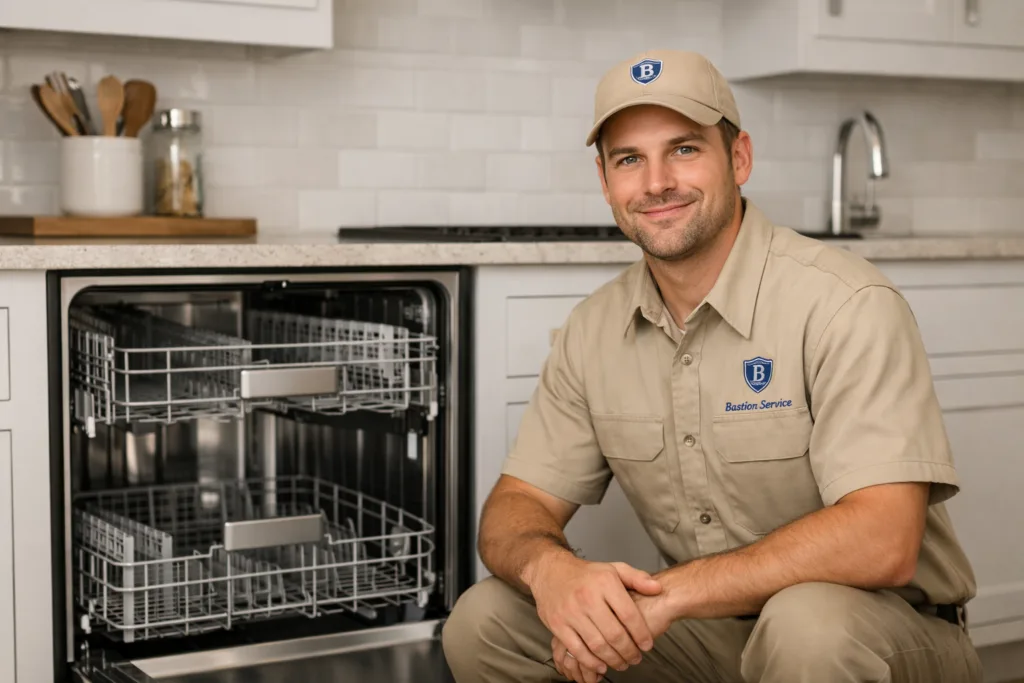
Kenmore dishwashers often give early warning signs before a complete failure. Dishes may come out gritty, the cycle may seem to run longer than usual, or a small amount of water may remain in the bottom after unloading. Paying attention to those changes can help prevent a larger breakdown and reduce the risk of water damage in the kitchen.
Start with the exact symptom, not the most obvious part
One dishwasher problem can have several possible causes. A unit that will not drain may have a blocked filter, a restricted drain path, a failing pump, or a control issue that is not sending power when it should. A machine that stops mid-cycle may be dealing with a latch problem, overheating, or an intermittent electrical fault. Looking at the full pattern usually leads to a better repair decision than guessing based on one symptom alone.
Useful details include whether the issue happens on every load, whether the dishwasher fills normally, whether the sound of the wash cycle has changed, and whether the problem began suddenly or got worse over time.
Common Kenmore dishwasher problems in Rancho Palos Verdes homes
Standing water after the cycle
If water remains in the tub, the dishwasher may not be draining fully. Common causes include a clogged filter, debris in the pump area, a kinked or restricted drain hose, or a failing drain pump. In some cases, the machine completes most of the cycle normally but cannot clear the final water out, which can leave odors behind and affect the next load.
Poor wash performance
When dishes come out with food residue, cloudy glassware, or a film on plates, the issue may involve weak spray pressure, blocked spray arms, low water fill, circulation trouble, or buildup inside the wash system. Poor cleaning can also happen when the dishwasher is technically running but not moving enough water where it needs to go.
Leaking during operation
Leaks may show up at the front corners of the door, underneath the unit, or only during certain parts of the cycle. Possible sources include worn door seals, lower door splash issues, internal hose or pump leaks, and overflow conditions. Even a minor leak is worth addressing quickly because repeated moisture can damage flooring and nearby cabinetry.
Dishwasher will not start
If the control panel is dark or the unit will not respond, the cause could be a power supply problem, door latch failure, wiring issue, touch panel fault, or control failure. If the panel lights up but the cycle does not begin, that often helps narrow the problem to the latch system or control communication.
Grinding, buzzing, or humming sounds
Noise changes matter. A grinding sound can point to debris in the pump area. A loud hum may suggest a struggling motor or a component that is receiving power but not turning properly. Rattling may be as simple as spray arm contact or something loose inside the tub, but persistent noise should be evaluated before continued use causes more wear.
Dishes not drying well
Wet dishes at the end of the cycle can be related to the heating system, temperature sensing, venting, or control timing. Drying problems sometimes appear alongside weak washing performance, especially when the dishwasher is not reaching the right operating temperature or not completing the cycle correctly.
What certain symptom combinations can mean
Looking at symptoms together is often more useful than looking at each one separately.
- Not cleaning well and making a louder wash sound: may suggest circulation or spray system trouble.
- Standing water and a humming noise near the end of the cycle: can point toward drain pump or blockage issues.
- Will not start and door feels different when closing: may indicate a latch or switch problem.
- Leaks plus poor cleaning: can sometimes mean an internal water movement or overflow issue rather than only a bad door seal.
- Stops mid-cycle and restarts unpredictably: may involve controls, overheating, or intermittent electrical faults.
These patterns do not confirm the failed part by themselves, but they do help narrow the repair path.
Why replacing parts by guesswork usually costs more
Dishwashers can be misleading because several faults produce similar results. A no-drain complaint does not automatically mean the pump is bad. A no-start issue does not always mean the control board has failed. Replacing parts one at a time without testing can increase cost without solving the real problem.
For homeowners in Rancho Palos Verdes, a service visit is most useful when it leads to a practical repair plan based on the actual failure, the condition of the appliance, and whether the repair is likely to restore normal daily use.
When to stop using the dishwasher and schedule service
Some symptoms are more than an inconvenience and should be treated as a prompt to stop running the unit.
- Water leaking onto the floor or into surrounding cabinetry
- A burning smell or signs of overheating
- The dishwasher trips power or shuts off unexpectedly
- Loud new motor or pump noises
- Repeated standing water that does not clear
- Cycles that stall with dirty water still inside
Continuing to use the machine in these conditions can make the eventual repair more involved and can create avoidable damage around the appliance.
Repair or replace a Kenmore dishwasher?
Many dishwasher problems are still reasonable to repair when the rest of the machine is in good condition. Drain pump issues, latch faults, seal problems, selected electrical failures, and wash-system obstructions are often repairable. Replacement becomes a more serious consideration when the dishwasher has repeated breakdowns, multiple failing systems, heavy wear, or repair costs that are too close to the value of a reliable replacement unit.
The most important question is whether the current problem is isolated or part of a larger pattern of decline. If the dishwasher has been struggling with cleaning, draining, drying, and noise all at once, that usually points to a different decision than a single targeted fault.
What helps before a technician arrives
If you are preparing for service, a few observations can save time:
- Note whether the problem happens every cycle or only sometimes
- Check whether water is entering the tub normally
- Notice whether the unit gets stuck at the same point in the cycle
- Listen for unusual humming, grinding, or repeated clicking
- Look for where any leak appears first
- Make note of any recent power interruption or plumbing change
Those details often make it easier to identify whether the issue is in the drain system, wash system, controls, door assembly, or another part of the dishwasher.
Focused help for a household dishwasher problem
When a Kenmore dishwasher is no longer cleaning properly, leaving water behind, leaking, or failing to complete cycles, the best next step is to have the symptom pattern evaluated before more loads are run. That approach helps Rancho Palos Verdes homeowners make a smarter repair decision and avoid spending money on the wrong fix.