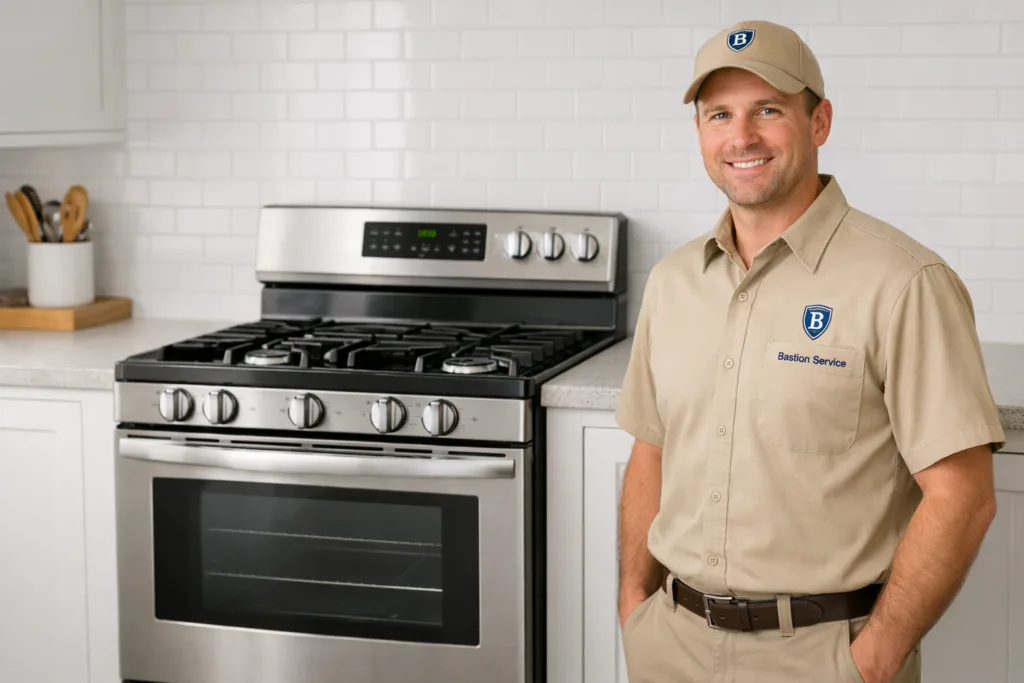
Cooking problems tend to show up in small ways before the range stops working completely. A burner may take longer to respond, the oven may preheat unevenly, or the controls may work one day and act erratically the next. With Amana ranges, those symptom patterns usually point to a specific heating, ignition, sensor, or control issue that should be tested rather than guessed at.
Start with the symptom, not the part
Ranges combine several systems in one appliance: surface cooking, oven heating, temperature regulation, ignition, and electronic controls. Because of that, the same complaint can have more than one cause. An oven that runs cool could involve a bake element, igniter, sensor, relay, or calibration problem. A burner that cuts in and out might be caused by the element itself, a switch, a worn receptacle, or damaged wiring.
That is why symptom-based testing matters. It helps separate a straightforward repair from a larger electrical or control issue, and it reduces the chance of replacing a part that was never the real problem.
Common Amana range problems in Mid-Wilshire homes
Burner not heating properly
If a surface burner does not heat, heats unevenly, or only works on certain settings, the failure may be in the element, infinite switch, terminal connection, or wiring. On smooth-top models, a weak or damaged radiant element can produce hot and cool zones across cookware. On coil-style models, the connection point can loosen or overheat over time.
Homeowners often notice this first when water takes too long to boil, pans heat unevenly, or a burner works only after being adjusted several times. If the affected area shows scorching, sparking, or signs of melting, stop using that burner until it has been checked.
Oven not heating, slow preheat, or uneven baking
An Amana oven that will not reach temperature can behave in several different ways. It may preheat very slowly, stop below the selected setting, or appear to heat but produce inconsistent cooking results. In electric models, a weak bake or broil element is a common cause. In gas models, a failing igniter often allows gas flow problems or weak ignition that keeps the oven from heating correctly.
In day-to-day use, this often shows up as cookies browning on one side, casseroles staying cold in the center, or familiar recipes suddenly taking much longer than usual. If the range has been reliable and this change is new, it is usually worth diagnosing before the problem spreads to additional components.
Gas burner clicking or not lighting
Repeated clicking, delayed ignition, or burners that light only after several tries usually point to an ignition-related problem. Burner caps that are out of position, residue around the igniter, moisture, or a worn ignition component can all create similar symptoms. Sometimes one burner is affected; sometimes several burners begin acting up at once.
If the clicking continues after the burner is lit, or if ignition becomes less reliable over time, service is a smarter choice than waiting. If there is a persistent gas odor, stop using the appliance and address that safety issue first.
Temperature drifting during cooking
When the oven seems hot at first but cannot hold temperature through the rest of the cycle, the cause may involve the sensor, control board, cycling components, or heating element performance. This is different from a complete no-heat failure. The oven may appear to work, but food quality becomes unpredictable.
This kind of problem often leads to repeated adjustments in cooking time, rotating dishes more often, or setting the oven higher than normal just to get acceptable results. Those workarounds can hide a problem that is getting worse.
Display, keypad, or control issues
If the control panel is unresponsive, shows intermittent errors, resets unexpectedly, or does not accept temperature selections, the issue may involve the user interface, control board, or power-related faults. On some Amana ranges, control problems also affect heating because the board manages oven functions and timing.
Intermittent electronic behavior should not be dismissed as random, especially if it happens more than once. When controls fail inconsistently, the appliance can become difficult to use safely and predictably.
Oven door not closing or sealing well
A door that will not shut evenly can lead to heat loss, longer preheat times, and uneven baking. Hinges, springs, door alignment, and the gasket all play a role. Homeowners sometimes assume the heating system is failing when the real issue is that heat is escaping during operation.
If the door feels loose, sits crooked, or allows noticeable heat to escape, the range may still run, but cooking performance usually suffers.
Signs the problem is getting worse
Some range issues stay minor for a while, but others tend to escalate with continued use. It is wise to schedule service when you notice problems such as:
- Preheat times becoming longer week by week
- A burner that works only after being repositioned or retried
- Ignition that clicks repeatedly before lighting
- Food cooking unevenly despite normal settings
- Controls that freeze, blink, or fail intermittently
- Scorch marks, sparking, or signs of overheating near a burner
These symptoms usually mean the appliance is no longer failing in a harmless or isolated way. Early attention can prevent added damage to nearby parts.
When to stop using the range right away
Some conditions call for immediate caution rather than continued testing at home. Stop using the affected function if you notice sparking, a burner that will not shut off correctly, strong burning smells, visible wire damage, repeated tripping at the electrical panel, or persistent gas odor. Those signs go beyond routine cooking inconvenience.
Even when only one function seems affected, continuing to use it can turn a contained repair into a larger one. A weak connection can overheat. A failing igniter can worsen ignition performance. An unstable control can interfere with normal oven cycling.
Repair or replacement depends on the whole picture
Many Amana range repairs are worthwhile when the issue is limited to one failed component and the rest of the appliance is in good condition. Igniters, elements, sensors, switches, door parts, and some control-related failures can make sense to repair when the range has otherwise been dependable.
Replacement becomes more reasonable when there are multiple active problems at once, major control failures, extensive wiring damage, or a pattern of recent breakdowns. Age matters, but condition matters just as much. A range that has one repairable fault is different from one showing decline across several systems.
What homeowners in Mid-Wilshire should pay attention to before service
A few observations can make diagnosis faster and more accurate. Try to note whether the problem affects the cooktop, the oven, or both; whether it happens every time or only intermittently; whether the display shows any unusual behavior; and whether the issue began suddenly or gradually. It also helps to notice whether cookware performance changed on one burner or across multiple burners.
You do not need to troubleshoot deeply on your own. A short, specific description of what the range is doing is usually more useful than trying to identify the part yourself.
Choosing the next step
If your range is no longer heating reliably, clicking abnormally, or giving inconsistent cooking results, the most useful next step is service centered on the exact symptom. That approach helps determine whether the problem is isolated, whether continued use could cause more damage, and whether repair is the sensible path for your Amana range in Mid-Wilshire.