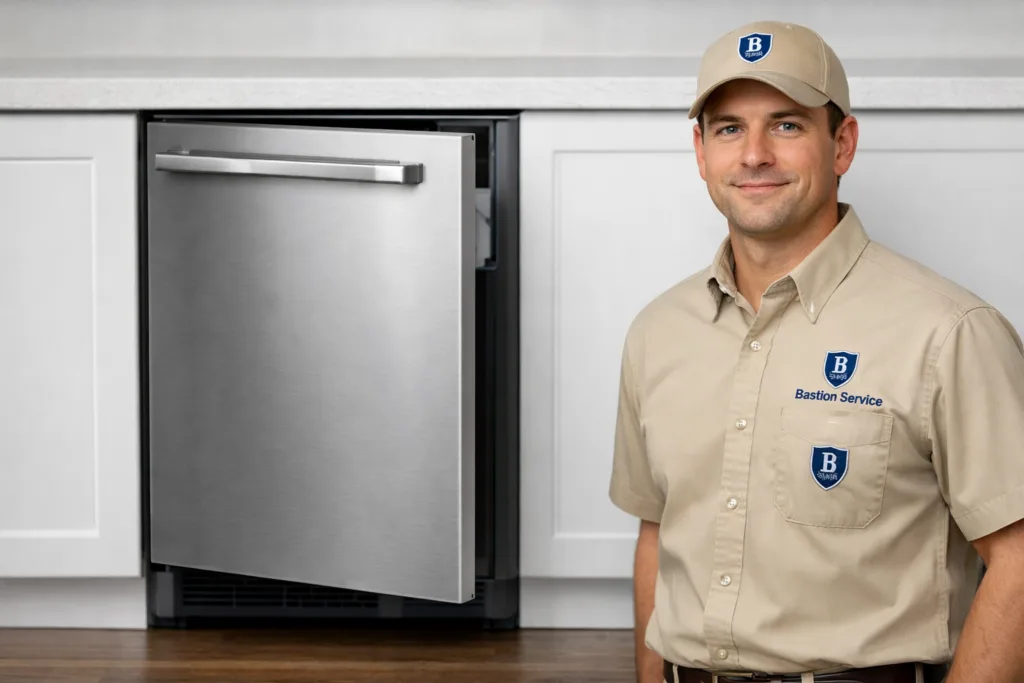
Ice maker failures are often traced by pattern rather than by one obvious bad part. A Marvel unit that stops making ice, produces weak batches, or leaves water around the cabinet may be dealing with a water supply issue, a drain problem, a temperature fault, or a control-related interruption. Looking at what the machine is doing before it fully stops is usually the fastest way to understand what kind of repair makes sense.
What the symptom usually tells you
No ice at all
If the ice maker has power but the bin stays empty, the problem may be as simple as interrupted water flow or as involved as a failed valve, sensor, or cooling issue. In many homes, this shows up after a brief water shutoff, a filter-related restriction, or a condition where the unit is no longer reaching the temperature needed to complete the freeze-and-harvest cycle.
A machine that appears normal from the outside can still be stuck mid-cycle. That is why “it turns on” does not always mean the internal sequence is working correctly.
Slow ice production
When a Marvel ice maker still makes ice but cannot keep up with normal household use, it often points to a performance problem rather than a total failure. Restricted airflow, dirty condenser surfaces, poor heat exchange, weak water fill, or internal temperature instability can all reduce output.
Slow production matters because it can be the early stage of a larger problem. Many units do not fail all at once. They first become inconsistent, then start producing smaller batches, and eventually stop.
Small, hollow, or clumped ice
Changes in cube shape usually mean the water fill is not correct or the freezing conditions are uneven. Small or hollow cubes can suggest low water volume, a partially restricted inlet path, or mineral buildup affecting flow. Clumped ice may point to melting and refreezing inside the bin, which can happen when the cabinet temperature is fluctuating or the harvest cycle is not staying consistent.
If the ice quality changed gradually, buildup or wear may be the cause. If it changed suddenly, a valve, control, or temperature-related fault is more likely.
Leaks or water under the unit
Water around an ice maker should not be ignored. The source may be a loose connection, overfilling, a blocked drain route, a cracked line, or meltwater not moving out as designed. In a built-in installation, even a small recurring leak can affect surrounding cabinetry or flooring before it becomes obvious.
Leaks also tend to create secondary symptoms. Homeowners may first notice reduced ice production, soft ice, or a musty moisture smell before they find visible water.
Buzzing, clicking, or unusual cycling sounds
Some operating noise is normal, especially during fill and harvest. What stands out is a new sound, a repeated clicking pattern, loud buzzing during fill, or vibration that was not there before. These can be clues to a struggling inlet valve, fan trouble, a pump issue, or ice interfering with normal movement inside the machine.
Why accurate diagnosis matters on a Marvel ice maker
Marvel ice makers rely on several systems working together: water delivery, freezing, sensing, harvesting, and drainage. A symptom that looks simple on the surface can have more than one root cause. For example, poor ice output may come from low water flow, but it may also come from a temperature issue that prevents proper cube formation.
That is why replacing a single visible part without testing the actual cause can lead to extra cost without solving the problem. The right repair path depends on whether the fault is with water supply, controls, airflow, drainage, or refrigeration performance.
Signs the issue is getting worse
Homeowners in Playa Vista often notice a decline before a complete stop. Common warning signs include:
- Ice batches getting smaller over time
- Long gaps between harvest cycles
- Wet or slushy ice in the bin
- Recurring puddles or dampness near the unit
- New noises during fill or freeze cycles
- Ice that sticks together soon after production
These symptoms usually mean the machine is under strain. Addressing them earlier can help prevent added wear on valves, pumps, fans, or cooling components.
What you can check before scheduling repair
A few simple observations can help narrow things down:
- Confirm the unit has power and is switched on
- Make sure the water supply valve is fully open
- Look for visible frost, standing water, or unusual condensation
- Note whether the problem is no ice, slow ice, leaking, clumping, or noise
- Think about whether the issue started after a cleaning, filter change, water interruption, or power outage
These checks are helpful because timing often matters. A sudden change after a specific event can point the diagnosis in a different direction than a gradual decline over several weeks.
Beyond that, deeper troubleshooting is best left to service. Ice makers pack water and refrigeration functions into a small space, and repeated resets or continued use during a leak can make the final repair more involved.
When repair is usually worthwhile
Repair is often a good option when the problem is isolated to a serviceable component, such as an inlet valve, drain part, sensor, fan, or control-related failure. In those cases, the goal is to restore normal ice production, proper cube quality, and stable operation without recurring interruptions.
Replacement becomes more likely when the machine has several active issues at once, has a history of repeated breakdowns, shows significant wear, or has a major cooling-system problem on top of age-related decline. The decision usually comes down to the confirmed fault, the overall condition of the appliance, and whether the repair is likely to return it to reliable everyday use.
Built-in ice maker issues in Playa Vista homes
Many Marvel units are installed in kitchens, bars, or entertaining areas where steady performance matters and water problems can affect finished surfaces quickly. In that setting, symptoms like leaking, slow production, or inconsistent cubes are more than minor annoyances. They can interrupt daily use and create cleanup or cabinet concerns if the problem is left unresolved.
For that reason, Marvel Ice Maker Repair in Playa Vista is usually most helpful when it focuses on the actual failure pattern, the condition of the unit, and whether the recommended fix supports long-term use rather than a short-term workaround.
When to stop using the unit
It is smart to pause normal use if the ice maker is leaking repeatedly, creating excessive frost, melting and refreezing ice in the bin, or making loud abnormal sounds. Those conditions can signal a problem that will not correct itself and may lead to more extensive damage if the machine keeps running.
If the unit still works part of the time, that does not necessarily mean it is safe to ignore. Partial operation is often the stage right before full failure, especially when the same symptom keeps returning.