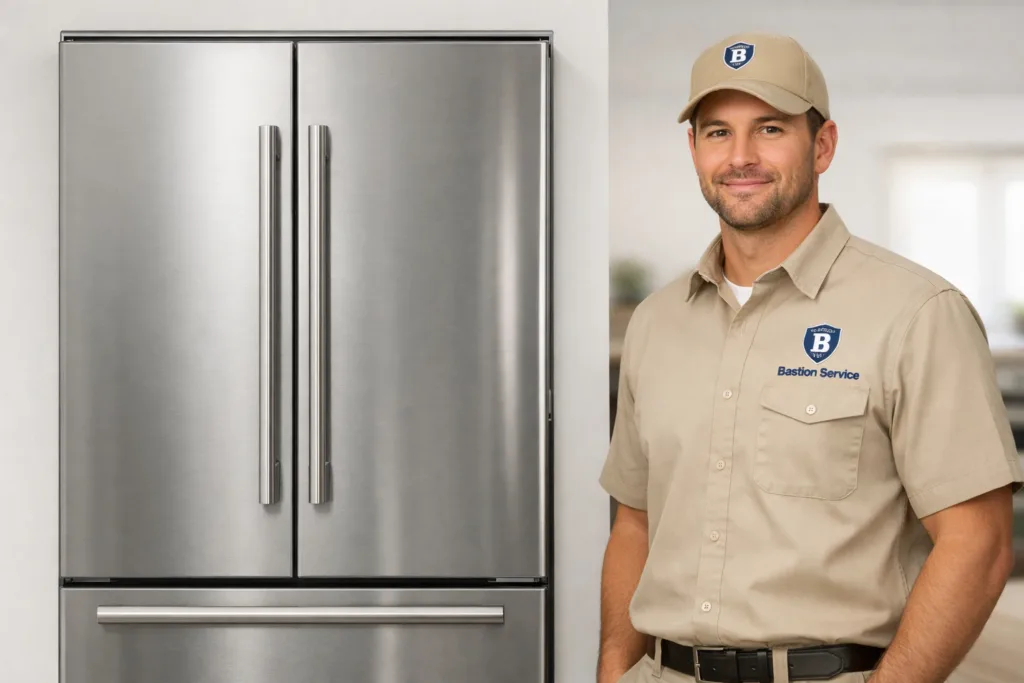
When a Marvel refrigerator starts running warm, leaking, or sounding different than usual, the symptom itself only tells part of the story. The same cooling complaint can come from restricted airflow, a failing fan motor, a control issue, frost blocking circulation, or a more serious system fault. Sorting out which condition is actually present is what determines whether the repair is minor, moderate, or a sign that replacement should be considered.
Common Marvel refrigerator symptoms and what they may indicate
Most household refrigerator problems show up in a few recognizable ways. Paying attention to how the unit behaves over a full day often helps narrow down the likely cause before service begins.
Not cooling enough
If drinks stay lukewarm, groceries spoil early, or the cabinet never seems to reach the set temperature, the issue may involve condenser buildup, weak internal airflow, an evaporator fan problem, damaged door gaskets, or a control component that is not responding correctly. In some cases, the refrigerator cools somewhat at night or after the door stays closed for a while, then struggles again once normal kitchen use resumes.
This pattern matters because “not cooling” does not always point to the same repair path. A blocked vent or failed fan can look very different from a sealed-system problem, even though both may leave the interior warmer than expected.
Temperature swings during the day
Some Marvel units do not fail all at once. Instead, they cycle between acceptable temperatures and noticeable warming. Homeowners in Playa Vista may notice milk spoiling sooner than usual, produce softening too quickly, or items in one section staying cooler than items in another. These swings can be tied to sensors, control behavior, frost buildup, airflow imbalance, or doors not sealing fully.
Intermittent symptoms are especially important to describe clearly, because a refrigerator that seems normal part of the time can still have a developing component failure.
Food freezing in the fresh-food section
When a refrigerator begins freezing leftovers, produce, or drinks that should only be chilled, the problem may involve a thermostat, thermistor, control board response, or damper behavior. This is one of the easiest issues to misread because the refrigerator is technically cooling, just not regulating temperature correctly.
It is also worth noting where the freezing happens. Items near vents, back walls, or certain shelves may freeze first, which can help identify airflow or distribution problems rather than a simple setting issue.
Frost buildup or reduced airflow
Visible frost inside the compartment, icy buildup near vents, or a refrigerator that sounds like air is struggling to move can indicate defrost trouble, circulation issues, or a door-seal problem allowing excess moisture inside. Frost tends to do more than create inconvenience. It can choke airflow, force longer run times, and make the refrigerator appear less efficient even when the compressor is still trying to cool normally.
Leaks, condensation, or standing water
Water under the appliance, moisture around drawers, or repeated condensation on interior surfaces often points to a clogged drain path, a leveling issue, defrost drainage trouble, or warm air entering through a gasket problem. Even a small recurring leak is worth addressing promptly, since moisture can damage flooring, create odors, and contribute to more internal icing.
New noises, clicking, or rattling
Every refrigerator has a normal sound pattern, but a noticeable change usually means something has shifted. Buzzing, clicking, fan noise, rattling panels, or intermittent knocking can come from a fan motor, compressor start components, loose hardware, or ice interfering with moving parts. If the noise starts at the same time as cooling changes, both symptoms should be evaluated together rather than separately.
Signs the problem is getting more serious
Some issues can wait a short time for diagnosis, but others should be treated as more urgent. A Marvel refrigerator should be checked sooner when you notice:
- Food temperatures no longer staying consistently safe
- The compressor running much longer than normal
- Repeated clicking without normal cooling recovery
- Water leaking onto the floor more than once
- Frost returning soon after being cleared
- Interior sections warming unevenly
- The unit turning on and off too frequently
Continued operation under these conditions can add wear to other components. A small airflow problem, for example, may eventually place extra strain on the cooling system if the refrigerator keeps trying to compensate.
What to check before scheduling service
A few basic observations can make diagnosis faster and more accurate. Before service, it helps to note:
- Whether the problem is constant or comes and goes
- Whether interior lights and controls are working normally
- Whether the doors are closing firmly without bouncing open
- Where moisture, frost, or leaks are appearing
- Whether the noise happens at startup, during cooling, or all the time
- Whether the problem started after a power interruption, cleaning, or heavy grocery loading
You do not need to diagnose the appliance yourself, but these details often help identify whether the issue is tied to airflow, drainage, temperature sensing, or startup performance.
Repair or replacement depends on the actual fault
For many Marvel refrigerator issues, repair is still the sensible option when the failure is limited to serviceable parts such as fans, sensors, seals, drain components, or control-related parts. Replacement becomes more likely when the appliance has a major system failure, repeated repair history, or overall condition that no longer supports cost-effective repair.
The important point is that the decision should be based on the diagnosed failure, not just the visible symptom. A warm refrigerator is not automatically at the end of its life, and a noisy one is not always facing a major compressor problem. In many homes, the deciding factors are the exact component involved, the age and condition of the unit, and whether the current problem has caused secondary damage.
How symptom-based diagnosis helps Playa Vista homeowners
In Playa Vista households, refrigerator problems are often first noticed through everyday use rather than through a complete breakdown. The warning signs are usually practical ones: groceries not lasting as long, cold drinks taking too long to chill, moisture collecting where it normally does not, or unusual sounds during the day and night.
That is why symptom-based evaluation is so useful. It helps separate a drain issue from a cooling issue, a control problem from an airflow problem, and a minor serviceable repair from a more significant failure. Bastion Service helps homeowners weigh those possibilities and understand what repair path makes sense for the specific Marvel refrigerator in front of them.
Focused help for Marvel refrigeration issues
Some households dealing with cooling loss are also seeing related performance problems in connected refrigeration products. Depending on the appliance and the symptom pattern, the next step may involve a refrigerator, freezer, ice maker, or wine storage unit rather than assuming every issue starts in the main fresh-food cabinet.
That is why many homeowners also compare symptoms across equipment when deciding on service for Marvel Freezer Repair, Marvel Ice Maker Repair, or Marvel Wine Cooler Repair, especially when temperature control, frost, or moisture issues appear in more than one unit.
When a Marvel refrigerator is no longer holding temperature, starts leaking, develops frost, or begins making unfamiliar noise, the most helpful next move is an informed diagnosis tied to the exact symptom pattern. That approach usually leads to a more accurate repair decision, less guesswork, and a clearer understanding of whether the appliance should be repaired or retired.