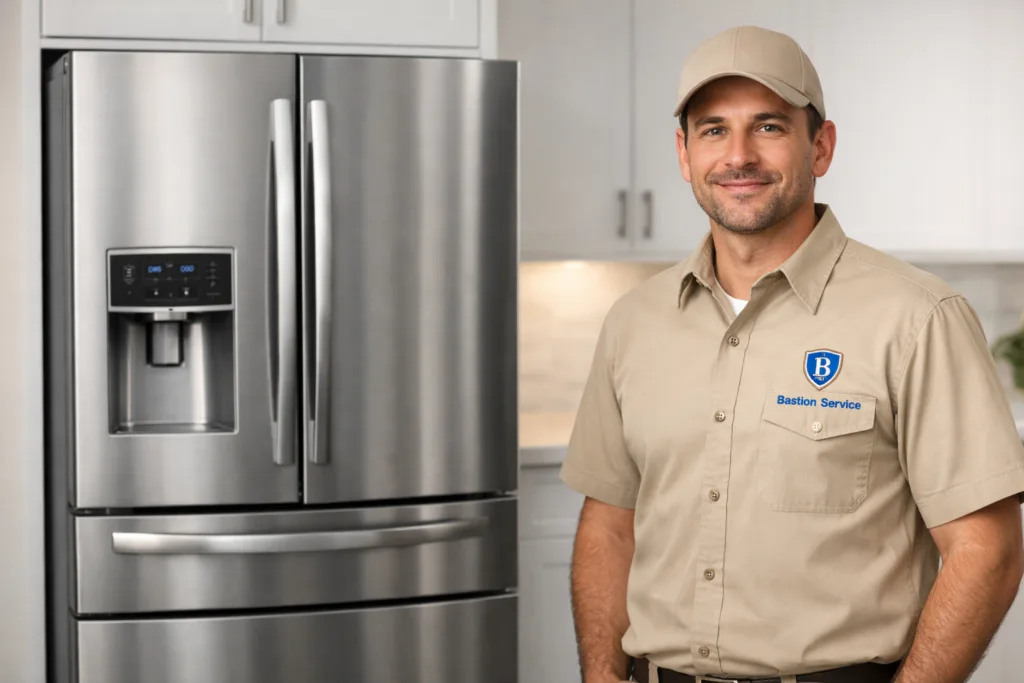
A GE refrigerator that starts warming, leaking, frosting over, or running louder than usual can affect everything from groceries and meal prep to daily routines at home. The most useful next step is to match the symptom pattern to the likely system involved, because similar complaints can come from very different causes.
Common GE refrigerator problems in Palms homes
Many service calls begin with one of a few recurring issues: weak cooling, uneven temperatures, frost buildup, water under drawers, unusual noises, or an ice maker that stops working properly. In some cases, the refrigerator section warms up while the freezer still seems somewhat cold. In others, the unit runs almost nonstop and never quite reaches the right temperature.
These problems are often connected. A fan issue can reduce airflow, poor airflow can cause temperature swings, and temperature instability can affect ice production. Looking at the whole pattern usually tells more than focusing on a single symptom by itself.
Fresh food section is warm but freezer still cools
This is one of the more common complaints with GE refrigerators. When the freezer seems partly normal but the refrigerator compartment is too warm, the issue may involve restricted airflow, evaporator fan trouble, frost blocking vents, sensor problems, or a defrost failure. It can also happen when door gaskets are not sealing well and the refrigerator has to work harder to maintain temperature.
Common signs include:
- Milk or leftovers not staying cold enough
- Produce spoiling faster than usual
- Cold spots in one area and warmth in another
- The unit running longer than normal
Frost buildup inside the freezer
Frost behind interior panels, around vents, or near the back wall often points to a defrost system problem or repeated moisture entering the compartment. Once frost accumulates, airflow drops and cooling becomes less even throughout the appliance. What starts as a frost issue can turn into a broader cooling complaint if left alone.
If the freezer door is not closing fully, containers are blocking the seal, or the gasket is worn, warm air can enter and create recurring frost. In other cases, the refrigerator may need attention to a defrost heater, control, or related component.
Water leaking onto shelves or the floor
Leaks can come from more than one place. Water under the crisper drawers often suggests a blocked defrost drain. Water near the front of the unit may come from condensation, a supply line issue, or an ice maker connection. A dispenser leak may also be related to pressure, valve, or fill problems.
Because water can damage cabinetry, flooring, and surrounding areas, persistent leaks are worth addressing quickly. Even a slow drip can create a larger household problem over time.
Clicking, buzzing, rattling, or constant running
GE refrigerators do make normal operating sounds, but new or noticeably louder noises can signal a problem. Buzzing may point to a fan, compressor area component, or vibration issue. Repeated clicking can be associated with start components or control-related cycling. Rattling may be as simple as a loose panel or as involved as ice buildup interfering with moving parts.
If the sound change happens along with poor cooling, frost, or warming food, it usually means the refrigerator should be inspected sooner rather than later.
Ice maker or dispenser problems
When a GE ice maker stops producing ice, overfills, dispenses inconsistently, or creates misshapen cubes, the root cause is not always the ice maker assembly itself. Low temperatures that are not stable, water supply issues, valve problems, or sensing faults can all affect performance. If the dispenser leaks or slows down, that may also connect back to the refrigerator’s overall cooling and water system condition.
Why symptom-based diagnosis matters
Modern GE refrigerators rely on controls, sensors, fans, sealed cooling components, and defrost parts working together. A single symptom rarely tells the whole story. For example, a homeowner may think the compressor has failed when the actual issue is an airflow restriction or fan problem. An ice maker complaint may begin with a temperature issue elsewhere in the appliance.
That is why service decisions are best based on confirmed findings instead of guesswork. Replacing the wrong part can add cost without solving the actual failure.
Signs the refrigerator should be checked soon
Scheduling service is usually a smart idea when you notice any of the following:
- Food temperatures that rise and fall without explanation
- Frost returning after you clear it
- Water collecting inside the unit or on the floor
- Doors that do not close or seal correctly
- New noises that repeat throughout the day
- An ice maker that stops working after cooling performance changes
- A refrigerator that runs nearly all the time
Recurring temperature swings are especially important. A refrigerator may seem to recover for a short time, then warm again, which often points to an underlying problem that has not gone away.
What homeowners can check before service
There are a few simple things worth checking before a repair visit:
- Make sure doors are closing fully and no containers are blocking them
- Look for torn, loose, or dirty door gaskets
- Confirm temperature settings have not been changed accidentally
- Check whether vents inside the refrigerator are blocked by food items
- Notice whether frost is forming in one area or throughout the freezer
- Watch for patterns, such as leaks appearing after ice maker use
These checks can help describe the issue more clearly, but they do not replace diagnosis when cooling performance is unstable or the unit is leaking, frosting, or making unusual sounds.
Repair or replace: what usually influences the decision
Whether a GE refrigerator should be repaired often depends on the failed system, the age of the appliance, how well it has been performing overall, and whether multiple issues are happening at the same time. Problems involving drains, fans, seals, sensors, controls, and many ice maker components are often repairable when addressed early.
Replacement becomes a more serious consideration when there is major sealed system trouble, repeat failures across different systems, or repair cost that is hard to justify based on the unit’s condition and expected remaining life. The key is knowing what has actually failed before making that call.
What a focused service visit should evaluate
A useful repair visit should be centered on the household’s actual complaint rather than a generic checklist. If the issue is weak cooling, the inspection should consider airflow, fan operation, frost patterns, control response, and temperature behavior. If the issue is leaking, the visit should narrow down whether the source is drainage, condensation, water supply, or the ice maker system.
For homeowners in Palms, that kind of symptom-based approach helps answer the practical questions that matter most: what is causing the problem, whether repair is likely to restore normal use, and whether continued operation could lead to food spoilage, water damage, or added wear on other components.
When early action can prevent a bigger problem
Refrigerator issues often start small. A little frost, occasional warming, or a new sound may seem manageable for a while, but those early signs can point to a problem that gradually affects the rest of the appliance. Addressing trouble early may help avoid lost groceries, heavier strain on key components, and a more disruptive breakdown later.
If your GE refrigerator is no longer cooling consistently, leaking, or showing repeated signs of airflow or frost trouble in Palms, prompt attention usually gives you the best chance of restoring normal kitchen use without unnecessary delay.