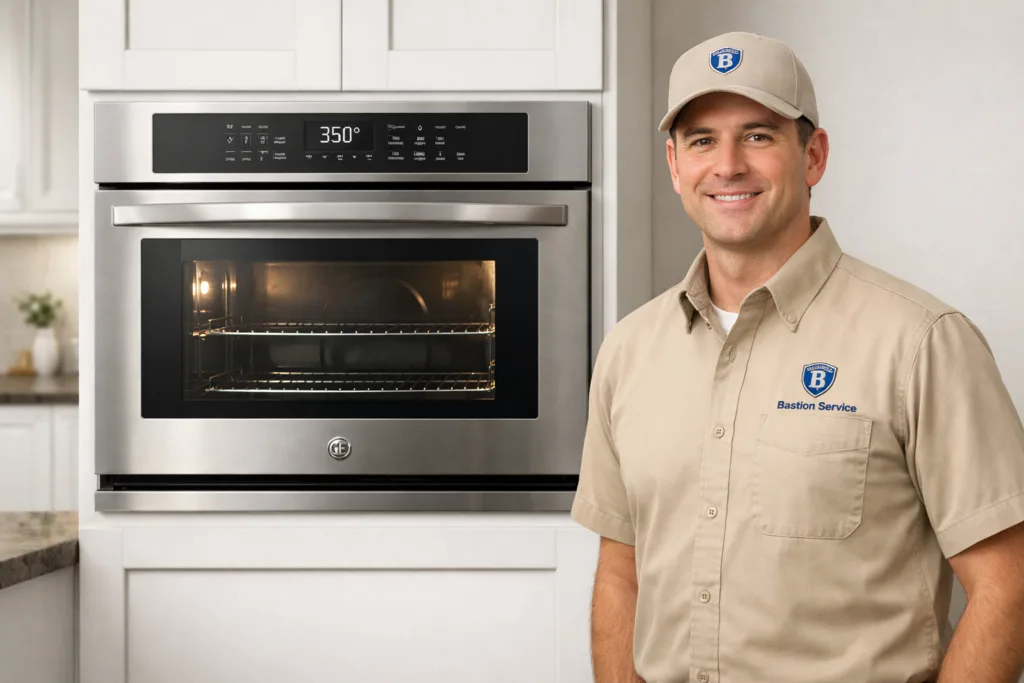
Built-in wall ovens can fail in ways that look similar from the outside but come from very different causes. A GE unit that seems slow to preheat may have a heating problem, a temperature-reading problem, or a control issue that affects how long the oven stays energized. That is why symptom pattern matters. What the oven does during preheat, whether broil still works, whether the display responds normally, and whether the problem happens every time all help narrow down the repair path.
Common GE wall oven symptoms homeowners notice
Most service calls start with one of a few familiar complaints. Some appear suddenly, while others get worse gradually over weeks or months.
- Oven will not heat at all
- Preheat takes far longer than it used to
- Food bakes unevenly from rack to rack
- Temperature seems too hot or too cool
- Display shows an error code or beeps unexpectedly
- Controls do not respond correctly
- Door will not close, lock, or unlock properly
- Convection fan is noisy, weak, or not running
In Hermosa Beach homes, these symptoms often show up first during routine meals rather than complete failure. A casserole that used to finish on time now needs extra minutes, cookies brown unevenly, or the oven appears ready before the cavity is actually hot enough. Those details are useful because they point toward whether the issue is related to heat production, temperature feedback, airflow, or control behavior.
What different symptom patterns can mean
Oven powers on but does not heat
If the display lights up and the oven accepts commands but the cavity stays cold, the problem may involve a failed bake element, broil element, relay, wiring fault, or sensor-related control issue. On some models, one heating circuit can fail while another still works, which can make the appliance seem partly functional even though cooking results are poor.
A homeowner may notice this when broiling still works but baking does not, or when the oven warms slightly without ever reaching a usable cooking temperature. That distinction helps separate a full no-heat condition from partial heating.
Slow preheat
Slow preheat does not always mean the oven is simply aging. It can point to a weakened element, a sensor that is reading inaccurately, low output from part of the heating system, or a control that is not cycling correctly. When preheat gets slower and recipes start finishing late, the oven is often still operating, just not operating correctly.
This is one of the most common situations where early repair can prevent more frustrating cooking problems. Continued use may not seem urgent, but extended heating cycles can place extra strain on components.
Uneven baking and temperature swings
If one rack browns faster than another or dishes come out overcooked on the edges and underdone in the center, the oven may have a sensor issue, a calibration problem, airflow trouble, or inconsistent cycling from the control system. Convection models can also show uneven results when the fan is not moving air properly.
Many households first notice this through familiar recipes that suddenly stop turning out the same way. That kind of change usually means the oven is no longer maintaining stable temperature through the full cooking cycle.
Error codes and unresponsive controls
Electronic faults can appear as flashing codes, random beeping, buttons that stop responding, or commands that do not match what the oven actually does. While a fault code can provide a clue, it does not automatically confirm that the main control board has failed. Sensors, door-latch assemblies, communication faults, and intermittent wiring problems can all trigger electronic errors.
When the panel behavior changes along with heating problems, both issues should be considered together rather than treated as separate failures.
Door latch and self-clean problems
GE wall ovens can also develop problems around the door system, especially when the self-clean cycle has been used recently. A door that will not lock, will not unlock, or does not seal tightly may involve the latch motor, switch, hinges, gasket, or control logic. Heat-related stress can also affect nearby parts.
If the door does not close properly, the oven may lose heat during use. That can lead to longer cooking times, inconsistent temperature, and repeated complaints that seem at first like heating-element failure.
Signs the oven should not keep being used
Some issues are inconvenient but manageable for a short time. Others are better treated as stop-use problems until the appliance is checked.
- Breaker trips repeatedly when the oven runs
- Burning electrical smell appears during operation
- Visible sparking or arcing is noticed
- Oven overheats or will not shut off correctly
- Control panel behaves unpredictably
- Door lock remains stuck after a cycle
If any of these are happening, continued use can increase the chance of added component damage. Electrical symptoms in particular should not be ignored. Even when the oven still seems to work part of the time, unstable operation is a sign that the problem may be larger than a simple cooking-performance complaint.
When repair makes sense
Many GE wall oven failures are repairable when the oven cavity, cabinet fit, and overall structure are still in good condition. Heating elements, sensors, latches, fans, switches, and a number of control-related parts can often be addressed without replacing the whole appliance.
Repair is usually a strong option when the symptom is specific and the rest of the oven has been functioning normally. An oven that has a single fault, such as inaccurate temperature or a failed latch, is very different from one showing multiple age-related issues at the same time.
When replacement may deserve consideration
Replacement becomes more reasonable when several major problems stack up, the oven has a long history of unreliable operation, or the needed repair no longer offers good value relative to the appliance condition. A built-in wall oven is not the same as a freestanding unit, so the decision should account for installation fit, cabinet configuration, and whether a targeted fix is likely to restore everyday reliability.
For many households in Hermosa Beach, the key question is not just whether the oven can be repaired, but whether the repair is likely to return it to stable daily use rather than postpone another failure.
What homeowners can observe before service
A few simple observations can make diagnosis faster and more accurate:
- Whether the oven reaches any heat at all
- Whether broil works differently from bake
- Whether preheat completes unusually fast or unusually slow
- Whether the problem happens on every cycle or only sometimes
- Any exact error code shown on the display
- Whether the issue started after self-cleaning or a power interruption
It also helps to note whether the oven is overcooking, undercooking, or doing both unpredictably. Those differences can point toward distinct causes rather than one generic “not heating” problem.
What a service visit should accomplish
A useful appointment should do more than identify a broad symptom. It should determine which system is failing, explain why the oven is behaving the way it is, and outline whether repair is the sensible next step. On a built-in GE wall oven, access and configuration matter, so accurate diagnosis is especially important before any part is recommended.
If your oven in Hermosa Beach is underheating, preheating slowly, baking unevenly, or showing control problems, a practical repair plan starts with matching the symptom to the actual fault instead of replacing parts by guesswork. That approach gives homeowners a clearer decision and a better chance of restoring consistent cooking performance.