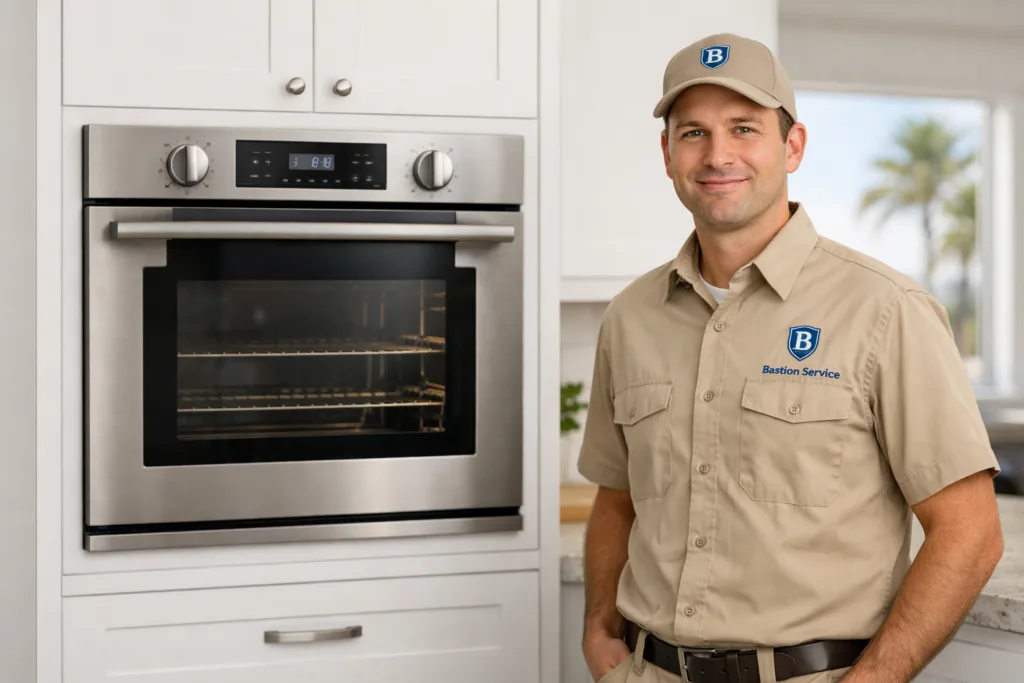
Wall oven problems tend to show up at the worst time: dinner prep, holiday cooking, or a weeknight when the kitchen needs to work without surprises. In many cases, one symptom can have several possible causes. Slow preheating may point to a weak bake element, a faulty temperature sensor, a relay problem, or an issue in the control system. An oven that will not power on at all may involve the incoming power supply, a thermal fuse, wiring damage, or an electronic failure behind the panel.
Common wall oven problems and what they may mean
If a wall oven is heating unevenly, running too hot, staying too cool, or shutting off in the middle of a cycle, the fault is often tied to how the appliance senses and regulates heat. Temperature swings can come from a drifting sensor, a failing control board, or an element that is energizing inconsistently. When baking results suddenly change, the appliance is usually telling you something before it stops working completely.
A blank display, unresponsive keypad, or intermittent power loss can suggest a different kind of issue. These symptoms may involve loose electrical connections, failed controls, damaged wiring, or a component that overheats and resets. If the kitchen also has separate surface-cooking issues such as burners not responding correctly, homeowners sometimes compare those symptoms with Cooktop Repair in Hermosa Beach to determine whether the problem is isolated to the wall oven or part of a broader cooking-appliance concern.
Door-lock failures after self-cleaning are another common complaint. High-heat cleaning cycles can stress the latch assembly, control board, and safety components. If the door will not unlock, the oven will not start, or an error code remains on the display, forcing the door or repeatedly cutting power can make the repair more complicated.
Signs the oven should not be used until it is checked
Burning smell, smoke, or sparking
A mild odor during first use after cleaning can be normal, but a persistent burning smell is not. Smoke, popping noises, or visible sparking can point to a shorted element, failing wire connection, or insulation damage. These are signs to stop using the oven and have it inspected, especially if the breaker has tripped or the control panel behaves unpredictably.
Very slow preheat or failure to reach temperature
If preheating takes much longer than normal, the oven may still turn on and appear functional while underperforming every time it is used. Weak heating elements, sensor problems, or relay failures are common causes. In kitchens where a standard oven shows similar heat-performance symptoms, some homeowners also review Oven Repair in Hermosa Beach for comparison, but a built-in wall oven needs diagnosis based on its own wiring, controls, and installation setup.
Uneven baking from rack to rack
Food that burns on top while staying pale underneath, or dishes that cook differently depending on rack position, can indicate poor heat distribution rather than a recipe issue. Depending on the model, the cause may involve bake or broil performance, convection airflow, temperature sensing, or a control that is not cycling heat correctly. A simple calibration adjustment sometimes helps, but not when a component is failing.
Control panel issues and error codes
Beeping, flashing fault codes, unresponsive touch controls, and random shutoffs usually point to a control-side problem. That may include a failing board, keypad trouble, communication errors, or power interruptions inside the appliance. Intermittent electronic issues can be especially frustrating because the oven may work one day and fail the next.
Why self-clean cycles often trigger wall oven failures
Self-clean functions expose internal parts to intense heat for an extended period. On aging units, that extra thermal stress can push marginal parts past their limit. Door-latch motors, thermal fuses, control boards, and wire connections are all common failure points after a self-clean cycle. If the oven worked normally before self-clean and then stopped heating, locked shut, or showed an error immediately afterward, that timing is often meaningful.
This is also why homeowners should avoid assuming the control board is always the problem. Sometimes a safety component opens to protect the oven. Other times the latch assembly does not return to the correct position, preventing normal operation. Proper testing matters more than replacing parts based on a guess.
Repair or replacement?
That decision usually depends on the age of the appliance, the condition of the cavity and door, part availability, and whether the failure is limited to one major component or spread across several systems. Repair is often worthwhile when the cabinet opening is custom, the appliance otherwise fits the kitchen well, and the fault is isolated. Replacement can make more sense when there is severe control damage, repeated electrical issues, or multiple expensive failures at once.
Built-in appliances deserve a more careful evaluation than freestanding units because installation and fit matter. In some homes, replacing a wall oven may involve trim, cabinet adjustments, or matching an existing kitchen layout. That makes an accurate diagnosis especially useful before deciding the appliance is finished.
How wall oven issues compare with other cooking appliances
Some heating complaints sound similar across cooking equipment, but the repair path can be very different. A wall oven that cannot hold temperature is not diagnosed the same way as a freestanding unit with combined oven-and-burner issues. When the problem affects both oven performance and the surface-cooking area on a combined appliance, homeowners may also compare symptoms with Range Repair in Hermosa Beach because ranges share some heating and control behaviors that built-in wall ovens do not.
Likewise, if the household refers to the kitchen appliance more generally as a stove and the concern includes ignition, burner behavior, or broader cooking performance, Stove Repair in Hermosa Beach may help separate surface-cooking problems from true wall oven faults. That distinction matters because the right repair starts with identifying which appliance system is actually failing.
What a useful service visit should accomplish
A productive wall oven repair visit should identify the failed system, explain whether the appliance can be used safely in the meantime, and clarify whether the repair is sensible for the oven’s age and condition. For homeowners in Hermosa Beach, the goal is not just getting a symptom confirmed. It is understanding why the oven is misbehaving, what the repair involves, and whether that fix is likely to restore reliable everyday cooking.
When scheduling service makes sense
If the wall oven is still usable but acting inconsistently, it is usually better to address the issue before it becomes a complete failure. Slow preheat, recurring error codes, breaker trips, temperature drift, and post-self-clean lock problems rarely improve on their own. Early service can prevent additional damage, reduce the chance of repeated interruptions, and help preserve the appliance if the problem is caught before surrounding parts are affected.