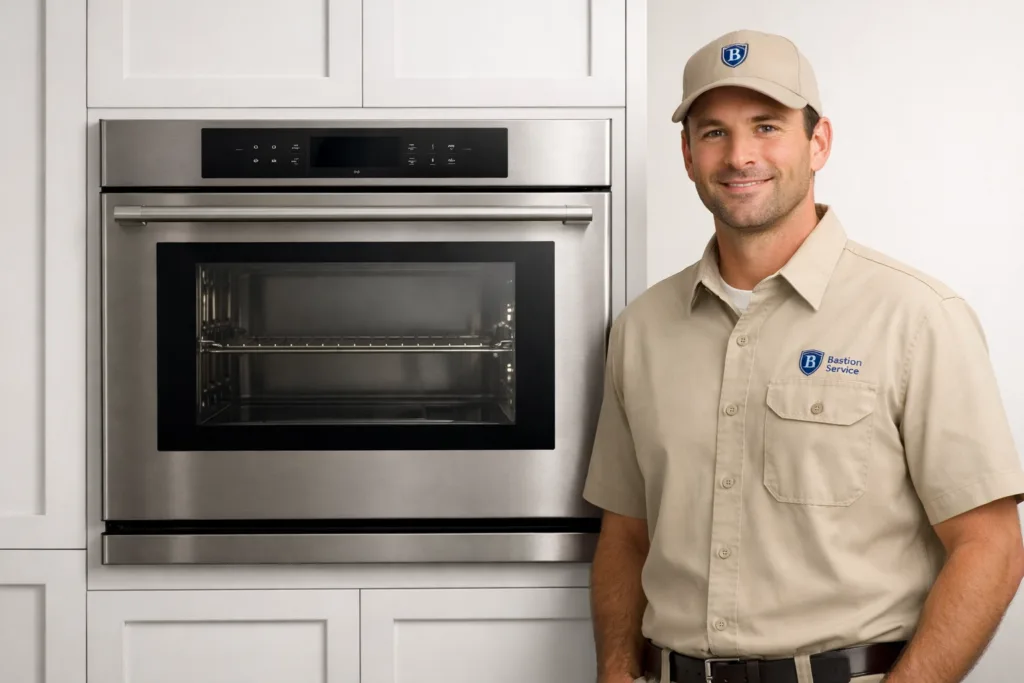
Wall oven problems are rarely all the same, even when the symptom sounds simple. An oven that “isn’t heating” may actually have a failed bake circuit, a temperature sensor reading off target, a relay that is not closing properly, or a door issue that lets heat escape. On a built-in Dacor unit, narrowing down the exact cause matters because it affects both repair cost and long-term reliability.
How Dacor wall oven problems usually show up
In Hermosa Beach homes, the most common complaints tend to be slow preheating, uneven baking, temperature drift, control problems, and doors that do not close or lock the way they should. Some ovens still power on and look normal at the display while the actual cooking performance is clearly off. Others may stop mid-cycle, flash an error, or seem to run but never reach the set temperature.
Because Dacor wall ovens rely on a combination of heating elements, sensors, control boards, relays, fans, and door components, the same kitchen symptom can come from more than one failing part. That is why the useful first step is testing the oven’s real operating behavior instead of assuming the first visible part is bad.
Common symptoms and what they can mean
Oven will not heat at all
If the control panel responds but the cavity stays cold, possible causes include a failed bake element, a broil element problem, a sensor fault, a bad relay, wiring damage, or a control issue. In some cases, the oven receives enough power for lights and display functions but not enough for normal heating performance.
This symptom is especially important to address quickly if the oven recently tripped a breaker, gave off an unusual odor, or shut down during cooking. Those details can point toward an electrical fault rather than simple wear.
Uneven baking or roasting
When one rack browns too fast, the center of food stays underdone, or cooking times become unreliable, the problem may involve inaccurate temperature sensing, weak element output, poor convection airflow, or controls that are not cycling heat correctly. Homeowners often notice this first with baked goods, casseroles, or anything that used to cook predictably and no longer does.
Uneven results do not always mean the oven has fully failed. It can be a gradual performance problem that gets worse over time, which is why changes in cooking consistency are worth checking before the issue spreads to additional components.
Slow preheat
A long preheat often means the oven is still producing some heat, but not enough to reach target temperature efficiently. A partially failed element, a sensor that is misreading the cavity temperature, or a control that is not energizing both heating circuits properly can all lead to this pattern.
If preheat times keep getting longer from week to week, that usually suggests a real component problem rather than normal variation. Continuing to use the oven this way can also put more stress on controls and relays.
Temperature swings during cooking
If the oven overshoots, runs cooler than the setting, or cycles in a way that leaves food overdone one day and underdone the next, likely causes include sensor drift, calibration errors, control board issues, or inconsistent heating from one of the elements. Temperature instability is frustrating because the oven may still appear usable while quietly becoming less reliable.
Error codes, beeping, or unresponsive controls
Electronic faults can show up as flashing codes, buttons that stop responding, a display that resets, or a unit that starts and then cancels the cycle. These issues may involve the touch interface, communication problems between control components, failing relays, or wiring faults inside the cabinet.
Because electronic symptoms can overlap, model-specific testing is more useful than replacing parts by guesswork.
Door not closing, locking, or sealing properly
A wall oven door that sits unevenly or does not seal well can affect both heating performance and safety. Heat loss changes cooking results, and latch or hinge issues may stop the oven from starting certain functions. After a self-clean cycle, some units may also develop lock problems that leave the door stuck or prevent normal use.
Why built-in wall oven issues need careful diagnosis
Built-in appliances are less forgiving than freestanding models. Access is tighter, heat management inside the cabinet matters more, and replacement decisions are more complicated because fit and installation details come into play. For that reason, it helps to determine whether the problem is isolated to one repairable component or whether several systems are declining at once.
With Dacor wall ovens, that distinction matters. A single failed sensor, element, or latch assembly can often be a sensible repair. But if heating performance, controls, and door function are all deteriorating together, the better choice may depend on overall condition, age, and parts availability.
When to stop using the oven until it is checked
Some symptoms suggest it is safer not to keep testing the unit:
- Burning smell that does not clear after the oven cools
- Breaker trips during preheat or while cooking
- Visible sparking or signs of arcing
- Control panel flickering, resetting, or shutting down unexpectedly
- Door that will not latch or unlock correctly
- Oven getting excessively hot on the exterior trim or surrounding area
These signs can point to wiring, relay, or overheating problems that should not be ignored. Continued use may turn a limited repair into a broader electrical failure.
When repair is often worth considering
Repair is usually the more practical path when the oven has one main symptom, the cabinet and interior are still in good shape, and the fault appears limited to a serviceable heating, sensing, control, or door component. Many homeowners in Hermosa Beach choose repair when the oven otherwise fits the kitchen well and has been performing reliably until this recent problem.
Replacement becomes more likely when there are recurring electronic failures, multiple major issues at the same time, or enough wear that fixing one problem is unlikely to restore dependable use. In a built-in application, that decision should account for more than the immediate repair itself.
What homeowners can note before service
A few observations can make the problem easier to identify:
- Whether the oven fails during preheat or after reaching temperature
- If the broil function works when bake does not, or vice versa
- Any recent error code, even if it disappeared
- Whether the issue affects all cooking modes or only one
- If the door feels loose, misaligned, or harder to close than before
- Whether the problem began suddenly or developed gradually
These details often help separate a heating circuit problem from a sensor, control, or latch-related fault.
A focused repair approach for Hermosa Beach homes
For a residential Dacor wall oven, useful service should confirm the complaint under real operation, test the parts connected to that symptom, and identify whether the issue is isolated or part of a larger pattern. That kind of practical repair guidance helps homeowners make a better decision about next steps instead of treating every heating problem like the same repair.
In Hermosa Beach, the goal is straightforward: restore stable, predictable cooking performance if the oven is a good repair candidate, or give an honest recommendation when it is not. When the symptom is correctly identified from the start, it becomes much easier to judge timing, parts needs, and whether the unit should stay off until repairs are completed.