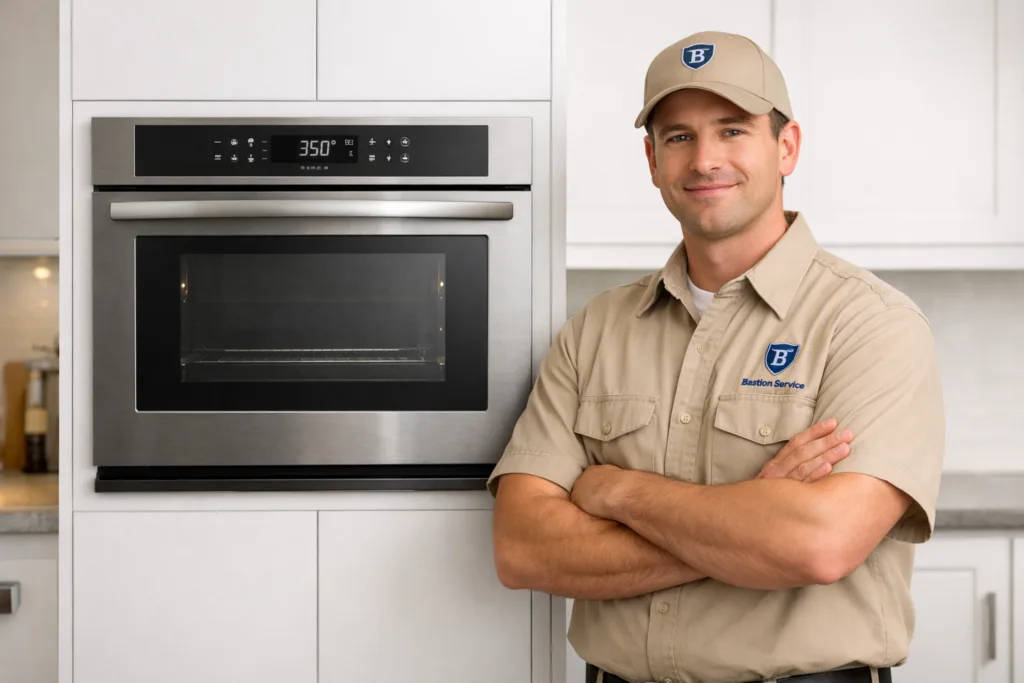
Built-in ovens tend to fail in patterns. A unit that will not heat at all is usually a different problem than one that heats slowly, runs too hot, or bakes unevenly from rack to rack. With Whirlpool wall ovens, the most useful approach is to match the symptom to the system involved so the repair decision is based on testing rather than parts guessing.
Common Whirlpool wall oven symptoms in Hermosa Beach homes
Many households first notice a cooking performance issue before the oven stops completely. Dinner takes longer than expected, baked goods come out unevenly browned, or the control panel starts acting strangely. These early signs often point to a developing problem with heat production, temperature sensing, airflow, the door system, or the electronic controls.
Oven will not heat
If the display turns on but the cavity stays cold, the fault may involve the bake element, broil element, temperature sensor, thermal protection component, control board relay, or the electrical supply feeding the oven. On some models, a problem in one part of the heating circuit can make the oven appear completely dead even though lights and the display still work normally.
If the oven starts heating and then shuts down early, the issue may be more intermittent. That can happen when a component works briefly under low demand but fails once temperatures rise.
Slow preheat or weak heating
Long preheat times are often dismissed as normal aging, but they usually mean the oven is not producing full heat when it should. A weak element, inaccurate temperature sensor, failing relay, or wiring problem can all cause slow preheat. In everyday use, that shows up as longer meal times, recipes that need extra minutes, and an oven that never seems quite ready when the preheat alert sounds.
Uneven baking and temperature swings
When one side browns faster, the top cooks before the center, or repeated recipes stop turning out the same way, the problem often involves temperature regulation. Whirlpool wall ovens rely on the sensor and control system to cycle heat correctly. If the sensor reads inaccurately or the control does not manage the heating cycle properly, the oven can swing above and below the selected temperature more than it should.
Convection models can also develop airflow-related issues. If the fan is not operating correctly, heat may not circulate evenly, which leads to hot spots and inconsistent results across multiple racks.
Broil works but bake does not, or bake works but broil does not
This symptom is especially helpful because it narrows the diagnosis. If one cooking mode works and the other does not, the issue is often isolated to a specific heating component, part of the wiring path, or a control function tied to that mode. That is usually more encouraging than a full no-power condition because it can point to a more defined repair path.
Error codes, beeping, or control problems
Recurring fault codes, random beeping, frozen touch controls, or a display that responds inconsistently can indicate a failing user interface, control board issue, latch system fault, or sensor problem. Some errors appear after a power interruption and never return, but repeated codes usually mean the oven has identified a condition that needs direct inspection.
Door will not close, lock, or unlock
A door problem affects more than convenience. If the seal is not tight, heat escapes and cooking performance suffers. If the lock system fails, the oven may refuse to start certain cycles or remain stuck after self-clean. Whirlpool wall ovens that act up after a self-clean cycle may have heat-stressed components in the latch or control area.
What these symptoms can mean
Different failures can create similar complaints, which is why symptom-based testing matters. For example, “not heating” may sound straightforward, but the cause could range from a failed element to a sensor reading problem to a control board that is not sending power where it should. Likewise, “uneven baking” might come from calibration drift, poor airflow, or a heating circuit that is only working part of the time.
- No heat: possible element, fuse, sensor, relay, or supply issue
- Slow preheat: possible weak heating output or improper cycling
- Temperature too high or too low: possible sensor or control regulation problem
- Intermittent shutoff: possible overheating, loose connection, or failing electronic component
- Locked door or self-clean trouble: possible latch assembly or switch fault
Why wall oven repairs need a careful diagnosis
Wall ovens are built into cabinetry, tied into a dedicated electrical supply, and often combine several systems that depend on each other. Replacing the most obvious part is not always enough. If the real problem is upstream in the control circuit or wiring, the same symptom can return after a part change.
This matters even more with intermittent issues. A Whirlpool wall oven that works one day and fails the next can be harder to evaluate based on description alone. Testing helps determine whether the fault is isolated, whether there is secondary wear, and whether repair is a sensible investment for the appliance in its current condition.
Signs you should stop using the oven until it is checked
Some symptoms are more than a cooking inconvenience. It is smart to stop using the unit and schedule service if you notice any of the following:
- The oven trips the breaker
- There is a burning smell that does not quickly clear
- The control panel shuts off during operation
- The door will not latch correctly
- The cabinet area around the oven seems unusually hot
- Error codes return again and again after resetting power
Continuing to run the oven through these symptoms can sometimes turn a limited repair into a larger one, especially if overheating or electrical stress is involved.
Repair or replace a Whirlpool wall oven?
For many Hermosa Beach homeowners, the decision depends on the age of the oven, the overall condition of the appliance, the failed component, and parts availability. Repair is often worthwhile when the problem is limited to a heating element, sensor, door component, or another identifiable part and the rest of the oven is in good shape.
Replacement may make more sense when there are multiple failing systems, major control damage, repeated breakdowns, or costs that rise close to the value of a newer built-in unit. Because wall ovens are not as simple to swap out as freestanding ranges, knowing the exact failure helps you compare repair costs against the time, fit, and installation considerations of replacement.
What to pay attention to before service
If you are scheduling Whirlpool wall oven repair in Hermosa Beach, a few details can make the symptom easier to trace. It helps to note whether the problem happens during bake, broil, convection, or self-clean; whether the oven reaches any heat at all; whether the display shows a code; and whether the issue is constant or comes and goes.
Useful observations include:
- Whether preheat finishes too quickly or takes too long
- Whether the oven temperature seems consistently off or randomly inconsistent
- Whether the problem began after self-clean
- Whether the door feels misaligned, loose, or hard to close
- Whether one cooking mode still works while another does not
Focused help for everyday cooking problems
Most residential wall oven calls come down to restoring reliable, predictable cooking. Whether the issue is no heat, uneven baking, a stuck door, or controls that no longer respond properly, the right next step is identifying the failed system and weighing the repair path against the condition of the oven as a whole. For households in Hermosa Beach, that keeps the decision practical and centered on getting normal kitchen use back without unnecessary guesswork.