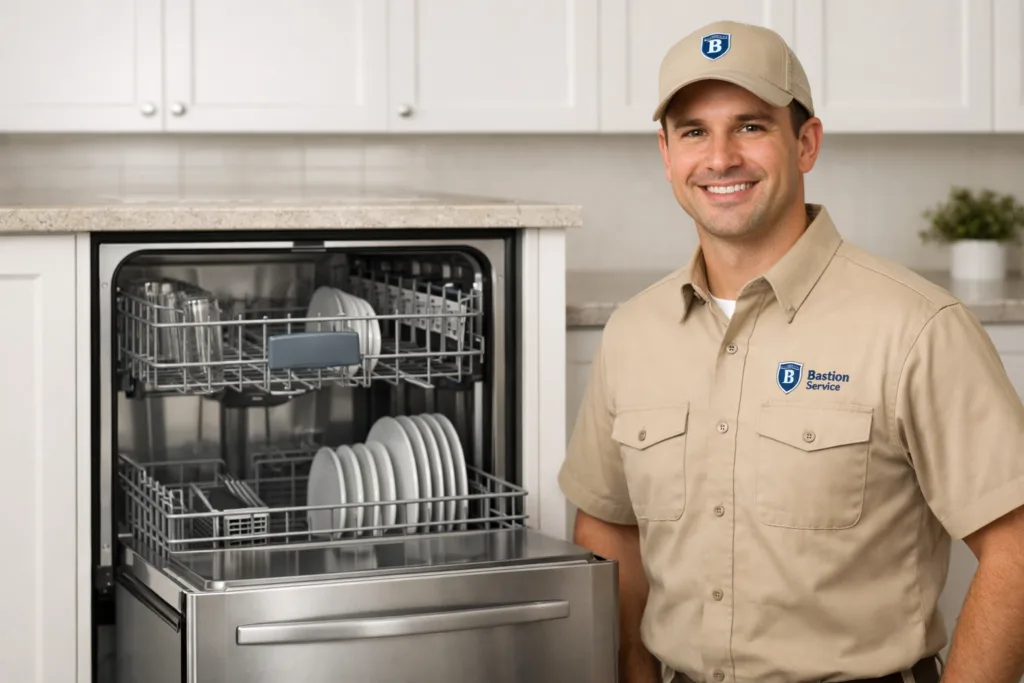
Dishwasher problems rarely stay contained for long. A unit that leaves water in the tub can start to smell, a small leak can affect flooring or cabinetry, and weak wash performance often turns into repeated rewashing by hand. With Amana dishwashers, the most useful approach is to match the repair plan to the exact symptom instead of assuming one common part is to blame.
Common Amana dishwasher symptoms and what they often mean
Many homeowners in El Segundo first notice that something is off before the dishwasher fully stops working. The pattern matters. Whether the problem happens at the start of the cycle, during washing, or at the drain stage can help narrow down the likely cause.
Standing water after the cycle
If water remains at the bottom after a normal run, the problem may be tied to the filter area, drain hose, air gap, drain pump, or the control sequence that tells the machine when to empty. Sometimes the dishwasher hums without clearing water, which can point to a pump issue or an obstruction. Running repeated cycles to “push it through” usually does not solve the underlying fault and can add stress to the drain system.
Dishes come out dirty, gritty, or cloudy
Poor wash results can come from reduced water circulation, blocked spray arms, dispenser problems, low fill, or a failing wash motor. If glasses look cloudy, plates still have food on them, or detergent does not dissolve correctly, the issue may be more than loading technique. A sudden drop in cleaning performance is often a stronger sign of a mechanical or water-flow problem than a gradual change.
Water leaking from the front or underneath
Leaks can start at the door gasket, pump area, internal hoses, inlet connections, or from drainage problems that cause water to back up where it should not. Some leaks only appear during certain parts of the cycle, which is why it helps to note whether the floor gets wet during fill, wash, or drain. Even a minor leak deserves attention early because dishwasher moisture can spread below cabinets before it becomes obvious.
The dishwasher will not start
When an Amana dishwasher will not begin a cycle, the issue may involve the latch, power supply, user interface, or main control. In some cases the machine appears dead; in others, lights respond but the cycle never begins. If the dishwasher worked recently and then stopped without any gradual warning signs, that sequence can be especially helpful during diagnosis.
Cycle stops midway through
A dishwasher that fills and then quits, or washes but never reaches drain, may be dealing with a motor problem, heating issue, drain fault, or an electronic control problem. Mid-cycle failure is important to address because it can leave water trapped inside and may cause the next cycle to behave unpredictably.
Grinding, buzzing, or unusually loud operation
Noise complaints often point to debris in the pump area, spray arm interference, worn internal components, or strain on the motor during wash or drain. A brief sound from a hard object can be minor, but repeated grinding or harsh buzzing should not be ignored. Noise that gets worse over time often means the repair window is getting smaller.
Symptoms that usually call for prompt service
Some dishwasher issues are inconvenient. Others can lead to bigger household problems if the machine keeps running in that condition. It makes sense to stop regular use and schedule service when you notice:
- Water leaking onto the floor
- Standing water that does not drain out
- A burning smell or signs of overheating
- Repeated cycle failure or shutdown
- New grinding or mechanical noise
- Consistently poor cleaning even with normal loading and detergent
Leaks, electrical interruptions, and pump-related symptoms are the main issues that tend to worsen with continued use. In those cases, the appliance problem can turn into a home repair problem as well.
Why the same symptom can lead to different repairs
Dishwasher complaints are often less straightforward than they seem. “Not draining” can mean a blockage, a failing pump, or a control issue. “Not cleaning” can point to circulation trouble, poor fill, or spray-arm restrictions. “Leaking” might involve the door seal, a loose connection, or water being pushed to the wrong place during the cycle.
That is why diagnosis matters before parts are replaced. When the symptom is matched to the exact failed component, the repair is more likely to solve the issue the first time and give the homeowner a realistic idea of the appliance’s condition.
Repair or replace an Amana dishwasher?
For many homes in El Segundo, repair makes sense when the dishwasher has one clearly defined problem and the rest of the unit is still in solid working order. Pumps, valves, latches, seals, and some control-related failures are often practical to address when the machine has otherwise been reliable.
Replacement becomes more worth considering when there are multiple active problems at once, recurring leaks, major wash-system wear, or a repair path that approaches the value of keeping the unit going. The age of the dishwasher, how often it has needed service, and whether performance has been declining across more than one function all factor into that decision.
What to note before service
A few simple observations can make troubleshooting faster and more accurate. Before service, it helps to note:
- Whether the dishwasher fills with water
- Whether spray action seems normal or weak
- If the drain problem happens every cycle or only sometimes
- Where water appears when leaking starts
- Any blinking lights or error behavior
- Whether the noise happens during wash or drain
You do not need to diagnose the machine yourself, but details like these often help separate a drainage problem from a wash-system issue or an intermittent control fault.
Household conditions that can affect dishwasher performance
Not every complaint starts with a failed part. Restricted filters, heavy soil buildup, incorrect loading, or drain-line issues can affect how an Amana dishwasher performs. That said, when the same symptom keeps returning after normal cleaning and routine care, the machine usually needs closer inspection.
If dishes remain dirty despite proper detergent use, if the tub repeatedly holds water, or if the dishwasher stops mid-cycle more than once, the problem has typically moved beyond basic maintenance.
Focused help for Amana dishwasher issues in El Segundo
When an Amana dishwasher begins leaking, draining poorly, cleaning weakly, or failing mid-cycle, the best next step is to identify the actual source of the problem and weigh the repair against the condition of the appliance. For homeowners in El Segundo, that means fewer guesses, less repeat trouble, and a clearer decision about whether the dishwasher is worth fixing.