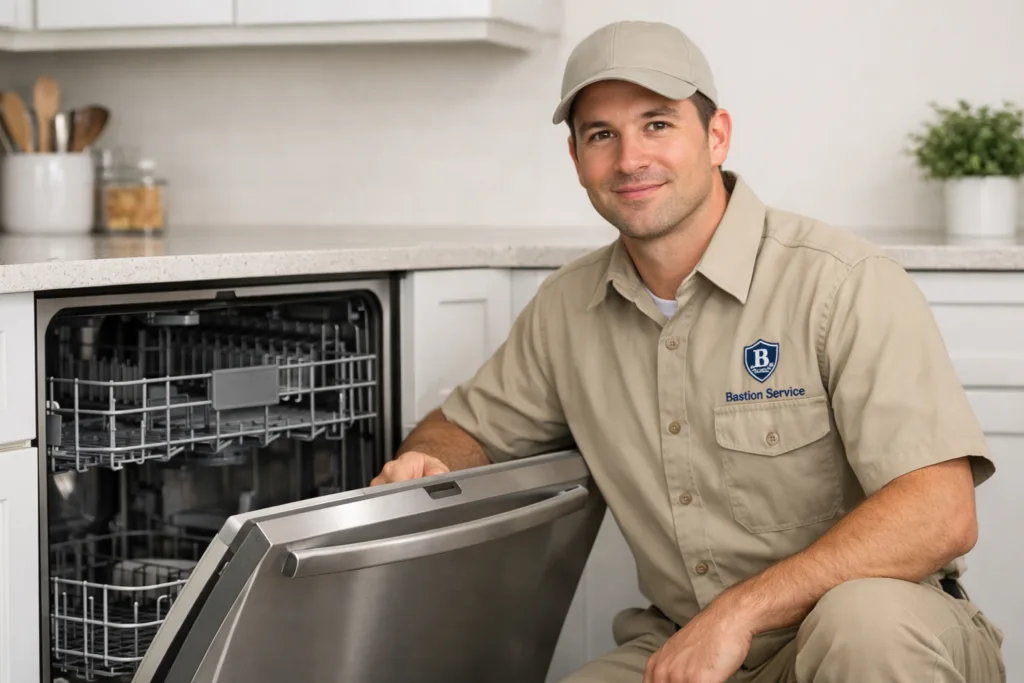
Dishwasher problems usually get easier to solve when the symptom is narrowed down early. A Bosch unit may still power on and run a cycle while quietly developing a drain restriction, wash system problem, heating issue, or leak source that affects results from load to load. Looking at what the machine is doing before and after the cycle often points the repair in the right direction.
Common Bosch dishwasher symptoms in El Segundo homes
Most service calls start with one of a few patterns: water left behind, poor cleaning, a leak, a cycle that will not complete, or a change in sound. While those issues can seem straightforward, several different parts may cause the same complaint.
Water left in the bottom after the cycle
If the tub still has standing water at the end, the problem may involve a clogged filter area, blocked drain path, drain pump trouble, a kinked hose, or an installation issue that prevents proper drainage. In some cases, the dishwasher drains slowly rather than failing completely, which can make the problem seem inconsistent at first.
Signs that help narrow it down include:
- Clean water remaining after the cycle
- Food debris or cloudy water left in the sump area
- A humming sound during the drain portion
- Odor developing between loads
- Water returning after the machine seemed to empty
Continued use with standing water can lead to odor, residue buildup, and extra strain on the pump.
Dishes come out dirty, gritty, or cloudy
Poor wash results often trace back to weak circulation, restricted spray arms, low water fill, detergent dispensing problems, or a heating issue that keeps the cycle from performing normally. When the top rack is not cleaning well, glasses stay cloudy, or food remains on dishes after a full cycle, the machine usually needs more than a reset.
Helpful symptom clues include:
- One rack washing worse than the other
- Detergent not fully dissolving
- Greasy residue on plastics and dishes
- White film on glasses or dark cookware
- Shortened or interrupted cycle behavior
Because wash performance depends on water movement, heating, and timing working together, the failed part is not always the most obvious one.
Leaking from the door or underneath
A Bosch dishwasher leak may come from the door gasket, lower door seal area, sump assembly, fill components, internal hoses, or an overfilling condition. Even a small recurring leak deserves attention because moisture can spread under flooring and into adjacent cabinet areas before it becomes visible.
Watch for these patterns:
- Water at the front corners of the machine
- Moisture appearing only during certain parts of the cycle
- Water under the dishwasher with no obvious door spill
- Drips after the machine has finished running
- A sudden no-start condition after a leak event
If leaking is active, it is best to stop using the dishwasher until the source is identified.
Will not start or stops mid-cycle
When the dishwasher does nothing after pressing start, pauses unexpectedly, or shuts down before finishing, the cause may involve the door latch, control system, user interface, power supply, or a safety response to moisture where it should not be. Sometimes the unit appears dead, while in other cases lights respond but the cycle will not begin.
This symptom often needs testing rather than guesswork because the same behavior can come from very different failures.
Unusual noise during wash or drain
Bosch dishwashers are usually quiet, so a noticeable change in sound is useful information. Grinding can point to debris in the pump area. A loud hum may suggest a pump struggling to move water. Rattling can come from a spray arm contacting an item in the rack, while a rougher wash sound may indicate circulation trouble.
If the sound repeats at the same stage of every cycle, that timing can help identify whether the issue is connected to filling, washing, draining, or drying.
What low rinse temperature or poor drying can mean
If dishes come out wet, cool, or not fully rinsed, the issue may be related to heating performance rather than just loading habits. Low rinse temperature can affect drying, leave detergent residue behind, and reduce overall cleaning results. Homeowners often first notice this when glasses look dull, plastics stay very wet, or the machine seems to finish without the usual amount of heat inside the tub.
Heating-related problems may overlap with other complaints, including:
- Poor wash results
- Longer than normal cycles
- Cycle failure partway through operation
- Cloudy residue on dishes
- Incomplete drying at the end of the program
Pump and circulation issues often show up gradually
Not every Bosch dishwasher failure is sudden. Wash pump and circulation problems often build over time. The machine may start by cleaning less effectively, sounding slightly louder, or leaving occasional residue before the issue becomes obvious on every load.
A pump-related problem may be more likely when you notice:
- Weak cleaning across multiple cycles
- Intermittent humming or buzzing
- Spray arms not moving as expected
- Detergent left behind despite hot water supply at the sink
- Cycle interruptions paired with poor wash performance
Because pump, fill, and heating faults can mimic each other, symptom-based testing is usually the fastest way to separate one from another.
Why the same symptom can have different causes
Dishwashers rely on several systems working in sequence. Water has to enter correctly, circulate at the right pressure, heat when required, and drain at the proper time. If any one step fails, the symptom at the rack level may look similar to several other issues. For example, dirty dishes may be caused by a circulation fault, but they can also be the result of underfilling or low heat. A drain complaint may be a pump failure, but it can also come from blockage or backflow.
That is why replacing parts based on the symptom alone often leads to repeat problems. The more useful approach is to verify which system is actually failing and whether other wear is developing around it.
When to stop using the dishwasher and schedule service
It is a good idea to schedule service when the machine leaks, leaves standing water, repeatedly stops mid-cycle, shows persistent error behavior, or no longer cleans properly after normal filter and loading checks. Early service is especially helpful when the problem is getting worse from week to week.
Stop using the dishwasher if you notice:
- Active leaking onto the floor
- Burning smell or electrical concerns
- Repeated failure to drain
- Water collecting beneath the unit
- A cycle that trips power or shuts down unexpectedly
Waiting too long can turn a manageable repair into cabinet, flooring, or moisture damage around the installation area.
Repair or replace a Bosch dishwasher?
For many homeowners in El Segundo, the decision depends on the dishwasher’s age, condition, repair history, and the exact failed component. A well-kept Bosch dishwasher with a single repairable fault often remains worth fixing. Replacement becomes more likely when the machine has multiple developing issues, clear signs of internal wear, or a repair cost that does not make sense for its remaining service life.
The most useful decision point is not the symptom by itself, but what the diagnosis shows once the failure is confirmed. That gives a better picture of whether the repair is straightforward or whether broader deterioration is making future problems more likely.
What homeowners can check before service
Before scheduling a visit, a few basic checks can help rule out simple causes without taking the machine apart:
- Make sure the filter area is clean and properly seated
- Check that spray arms can turn freely
- Confirm dishes or utensils are not blocking the dispenser or spray pattern
- Look for visible kinks in the accessible drain hose path
- Note whether the problem happens on every cycle or only certain programs
If the issue continues after those checks, or if there is leaking, standing water, pump noise, or cycle failure, repair is usually the safer next step.
A focused approach for Bosch dishwasher repair in El Segundo
In a busy household, dishwasher trouble quickly turns into stacked dishes, extra cleanup, and an interrupted kitchen routine. The best service visit is one that matches the repair to the actual symptom pattern, checks the likely failure points, and helps the homeowner decide whether the appliance is a good candidate for repair. For Bosch dishwasher repair in El Segundo, that approach usually leads to fewer surprises and a more reliable next step.